

Quick Answer: Alopecia Areata Treatment in Nepal
Quick Answer: Alopecia areata is an autoimmune condition that causes sudden, round patches of hair loss on the scalp, beard, or eyebrows. It can be treated with steroid injections, topical creams, minoxidil, immunotherapy, and JAK inhibitors for severe cases. The best treatment depends on the extent of hair loss, age, and medical history. At Nepal Skin Hospital, dermatologists provide personalized alopecia areata treatment to help manage hair loss and encourage regrowth.
You wake up and find a round bald patch on your head. It is smooth. It does not hurt. A few weeks ago, it was not there. This can feel scary. But you are not alone, and help is here.
This is often a sign of alopecia areata. About 2 in every 100 people get it at some point in life. It can happen to children, teens and adults, both men and women.
The good news is that alopecia areata treatment works well for many people. In this guide, our skin and hair doctors explain the causes, the signs, the best treatments and the cost of alopecia areata treatment in Nepal.
What is alopecia areata?
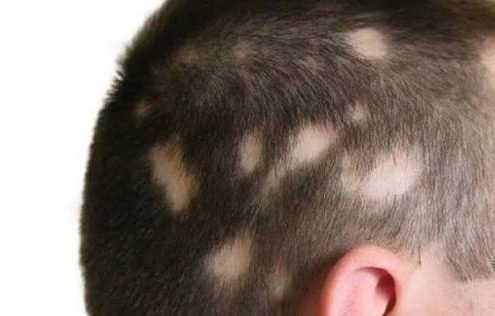
Alopecia areata is a type of hair loss. It is not caused by stress alone, bad hair oil or poor hair care.
Here is what happens. Your body has a defence system. It is called the immune system. Its job is to fight germs. In alopecia areata, it attacks your own hair roots by mistake. The hair roots stop making hair for a while. So the hair falls out in patches.
The hair roots are not dead. They are only resting. This is why the hair can grow back, even after a long time.
It does not spread. You cannot catch it from someone, and you cannot pass it on.
Signs of alopecia areata
• One or more round or oval bald patches, often about the size of a coin
• The skin in the patch looks smooth and normal. It is not red or scaly.
• Short hairs at the edge of the patch that look like exclamation marks (!)
• Patches in the beard, eyebrows or eyelashes
• Small dents or pits in the fingernails
• Sometimes, a little itching or tingling before the hair falls
Types of alopecia areata
| Type | What happens |
| Patchy alopecia areata | One or a few round bald patches. This is the most common type. |
| Ophiasis | Hair loss in a band around the sides and back of the head. It is harder to treat. |
| Alopecia totalis | All the hair on the head falls out. |
| Alopecia universalis | All the hair on the head and body falls out, including eyebrows and eyelashes. |
| Diffuse alopecia areata | Hair gets thin all over the head, not in patches. It can look like normal hair fall. |
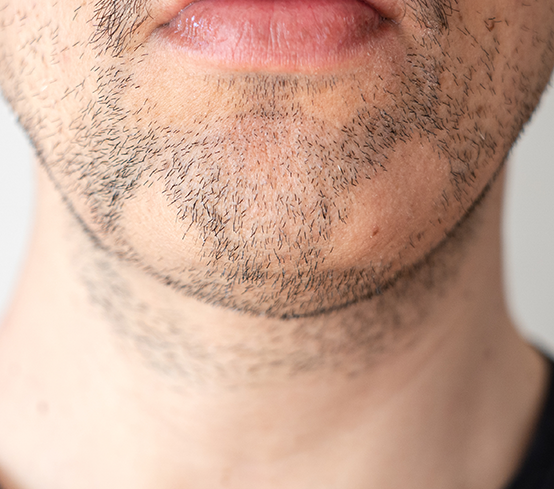
| Beard alopecia areata | Round bald patches in the beard area in men |
What causes alopecia areata?
Doctors do not know the exact cause yet. But some things make it more likely:
• Family history. It often runs in families.
• Other immune problems. These include thyroid disease, white patches on the skin (vitiligo), eczema, asthma and allergies.
• Stress or illness. A big shock, a fever or a hard time in life can start it or make it worse in some people.
• Down syndrome. People with Down syndrome have a higher chance of getting it.
How do doctors find alopecia areata?
A skin doctor can usually tell just by looking. Most people do not need many tests. At your visit, the doctor will:
1. Look at your scalp, beard, brows and nails. The doctor checks the size and shape of the patches.
2. Use a dermoscope. This is a small, bright magnifier. It shows tiny signs, like “exclamation mark” hairs and black dots, that are special to alopecia areata.
3. Do a pull test. The doctor gently pulls a few hairs. If many come out easily, the hair loss is still active.
4. Order blood tests, if needed. These may check your thyroid, vitamin D, iron and B12 levels.
5. Take a small skin sample, rarely. This is only done if the cause is not clear.
Some other problems look the same. These include a scalp fungus (common in kids), hair pulling and tight hairstyles. The right diagnosis is the first step to the right treatment.
Alopecia areata treatment options
There is no single cure for alopecia areata yet. But there are many treatments that help hair grow back. The best alopecia areata treatment depends on:
• how much hair you have lost
• where the patches are
• how long you have had it
• your age
• your other health problems
Here are the main options, from simple to strong.
1. Steroid injections into the patch
This is the most common first treatment for adults with a few patches. The doctor puts small amounts of a steroid medicine into the bald patch with a very thin needle. It calms the immune attack in that spot.
• Done every 4 to 6 weeks
• New hair often starts to grow in 1 to 3 months
• Works best for small patches, the beard and the eyebrows
• It may cause a small dent in the skin for a while. This usually gets better on its own.
2. Steroid creams, lotions and foams
These are put on the patch every day. They are a good choice for children, because there are no needles. They work slower than injections. They are often used along with other treatments.
3. Minoxidil
Minoxidil is a lotion or foam that helps hair grow. It does not stop the immune attack. But it can help the hair grow faster when used with other treatments. Your doctor may also suggest it as a low-dose tablet.
4. Contact immunotherapy
This is used for big or many patches. The doctor puts a special liquid on the bald skin each week. It causes a mild rash on purpose. This rash “distracts” the immune system, so it stops attacking the hair roots. It takes a few months to work.
5. Tablets for the whole body
When hair loss is large, fast or keeps coming back, your doctor may suggest tablets. These include:
• Steroid tablets. Given for a short time to stop fast hair loss. They are not used for long because of side effects.
• Methotrexate or cyclosporine. These calm the immune system. They need regular blood tests.
6. JAK inhibitors: the newest tablets
JAK inhibitors are a new group of tablets. They block the signals that tell the immune system to attack the hair roots. They are the first tablets made just for alopecia areata.
| Tablet | US approval | Who it is approved for |
| Baricitinib | 2022 | Adults with severe alopecia areata |
| Ritlecitinib | 2023 | People aged 12 and above with severe alopecia areata |
| Deuruxolitinib | 2024 | Adults with severe alopecia areata |
In studies, many people with severe hair loss got most of their scalp hair back after about 6 months to 1 year. But these tablets are costly. They need regular blood tests. They can raise the risk of some infections and other side effects. If you stop them, the hair often falls out again.
These tablets are only for severe cases. They must be given and watched by a skin doctor. Never buy them on your own.
7. Other treatments
• PRP (platelet-rich plasma). This uses a small amount of your own blood to help hair grow. Some small studies show it may help, but there is less proof than for the treatments above.
• Laser and light treatments. Some doctors use these for small patches. The proof is still limited.
• Wigs, hair patches and brow tattoos. These are not a treatment, but they can help you feel good while your hair grows back.
Which alopecia areata treatment is best for you?
There is no one best treatment for everyone. Here is how doctors usually choose:
| Your situation | Usual first treatment |
| Adult with 1 to 3 small patches | Steroid injections into the patch, plus minoxidil |
| Child under 10 | Steroid creams or lotions, plus minoxidil. Injections are rarely used. |
| Beard or eyebrow patches | Small steroid injections or steroid creams |
| Many large patches | Contact immunotherapy, tablets or a mix of treatments |
| Loss of all head or body hair | Tablets, including JAK inhibitors if right for you |
| Hair loss that comes back again and again | A long-term plan with regular check-ups |
Your doctor will make a plan just for you. You may need to try more than one treatment. Be patient. Hair grows slowly. Most treatments take 3 to 6 months to work.
Alopecia areata treatment in Nepal
In Nepal, many people try home remedies first. Some rub onion juice, garlic or hot oils on the patch. Some buy steroid creams from the pharmacy without advice. Others wait for months, hoping it goes away.
Waiting can work for small patches. But for many people, early treatment gives the hair a better chance to come back. Strong home remedies can also burn the skin.
Alopecia areata treatment in Nepal: cost and price
The cost of alopecia areata treatment in Nepal is not the same for everyone. It depends on:
| What affects the cost | Why it matters |
| Type of treatment | Creams cost less. Tablets and JAK inhibitors cost more. |
| Number and size of patches | More patches may need more injections or more medicine. |
| Number of sessions | Most people need several visits, often every 4 to 6 weeks. |
| Tests needed | Some people need blood tests or a skin sample. |
| How long treatment lasts | Some people need treatment for many months. |
A few small patches cost much less to treat than total hair loss. At your first visit, our doctor will explain your plan. You will get a clear price before you start.
Alopecia areata treatment at Nepal Skin Hospital
At Nepal Skin Hospital, our skin doctors treat this hair loss every week. Here is what you can expect:
1. A full check-up. We look closely at your scalp, beard, brows and nails with a dermoscope.
2. The right tests. We check for thyroid problems and other linked conditions, if needed.
3. A plan just for you. This may include steroid injections, creams, minoxidil, immunotherapy or tablets.
4. Clear costs. We explain the cost of your plan before we start.
5. Regular follow-up. We take photos at each visit, so you can see your progress.
We also give advice for children and their parents, in a calm and friendly way. You can visit any of our branches in the Kathmandu Valley.
Living with alopecia areata
Simple tips at home
• Be gentle with your hair. Avoid tight hairstyles, harsh dyes and very hot tools.
• Use a mild shampoo.
• Wear a hat or sunscreen on bald patches when you go out in the sun.
• Eat a healthy, balanced diet with enough protein, iron and vitamins.
• Find ways to handle stress, like walking, yoga or talking to a friend.
• Take photos of your patches each month to track changes.
Common myths
| Myth | Fact |
| Alopecia areata is caused by poor hair care. | It is caused by the immune system attacking hair roots. |
| You can catch it from another person. | It is not contagious. |
| Shaving your head makes hair grow back thicker. | Shaving does not change how hair grows. |
| Onion juice or garlic will cure it. | There is no strong proof. These can burn and irritate the skin. |
| Once hair falls out, it is gone forever. | The hair roots are only resting. Hair can grow back, even after years. |
Look after your feelings too
Hair loss can make you feel sad, shy or worried. This is normal. Children may get teased at school. Talk to your doctor if you feel low. Talking to friends, family or a counsellor can help a lot. You are more than your hair.
Frequently asked questions
What is the best treatment for alopecia areata?
There is no single best treatment. For adults with a few small patches, steroid shots into the patch work well. For children, steroid creams are often used first. For bad hair loss, new tablets may help. A skin doctor will pick the best one for you.
Which tablet is best for alopecia areata?
For severe cases, JAK inhibitor tablets are the newest choice. These include baricitinib, ritlecitinib and deuruxolitinib. Steroid tablets and methotrexate are also used. No tablet is right for everyone. Each one has side effects. Only take them with a doctor’s care.
Can alopecia areata be treated permanently?
Not yet. There is no cure that lasts forever. But many people get their hair back with treatment. Some never lose it again. Others get new patches later. If this happens, it can be treated again.
How much does hair treatment cost in Nepal?
The cost depends on your hair problem and your treatment. Creams cost less. Shots, PRP and laser need many visits, so they cost more. New tablets cost the most. Ask a skin doctor for a clear price for your case.
Will my hair grow back without treatment?
Sometimes, yes. Small patches can grow back on their own within a year. But this is hard to predict. Treatment can help the hair come back faster. It is best to see a doctor early.
Is alopecia areata serious?
It does not harm your body in other ways. But it can affect how you feel. It is also linked to thyroid problems. So a check-up is a good idea.
Can children get alopecia areata?
Yes. It often starts in childhood. Children are mostly treated with gentle creams. Shots are rarely used in young kids. Ask a skin doctor for the safest plan for your child.
Where can I get the best alopecia areata treatment in Nepal near me?
Look for a skin doctor who treats hair loss often. At Nepal Skin Hospital, our skin doctors treat this hair loss at all our branches in the Kathmandu Valley.
Get help for alopecia areata today
Losing hair in patches can be upsetting. But it is common. It is not your fault. And it can be treated. The sooner you see a doctor, the sooner your hair can start to grow.
Book your visit at Nepal Skin Hospital today. Our doctors will help you find the right alopecia areata treatment.
Note: This blog is for general information only. It does not replace a visit to a qualified doctor. Do not start or stop any medicine without your doctor’s advice.
Sources
• American Academy of Dermatology: Alopecia areata overview
• AJMC: JAK inhibitors in alopecia areata and FDA-approved therapies
• The Medical Letter: Deuruxolitinib (Leqselvi) for severe alopecia areata