

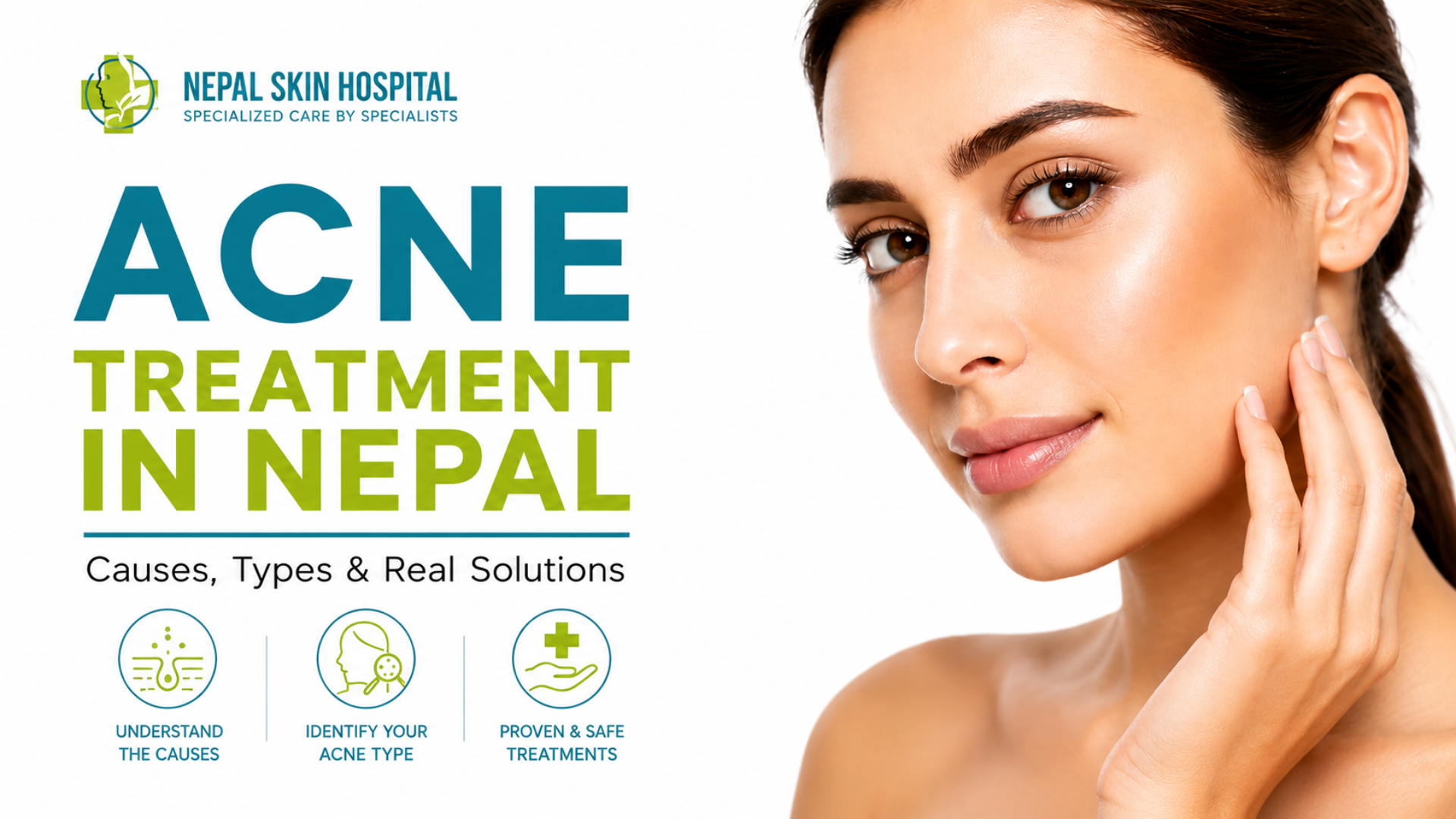
If you’re exhausted from breakouts that just won’t quit, acne treatment in Nepal is closer than you think, and it starts with understanding what’s really going on with your skin. You’ve tried the face washes. You’ve tried cutting out oily food. You’ve even tried the home remedies your aunt swore by, from besan and honey to ice cubes and toothpaste dabbed on overnight. And yet, the breakouts keep coming back.
If this sounds familiar, you’re not alone. In fact, acne is one of the most common skin concerns dermatologists in Kathmandu see every single day. It affects teenagers, and it affects adults well into their 30s and 40s. The good news? Acne is also one of the most treatable skin conditions. However, it needs to be approached the right way, with the right diagnosis.
This guide breaks down what actually causes acne. It also covers the different types you might be dealing with, why home remedies often fall short, and what real, medically-backed acne treatment in Nepal actually looks like.
What Causes Acne?
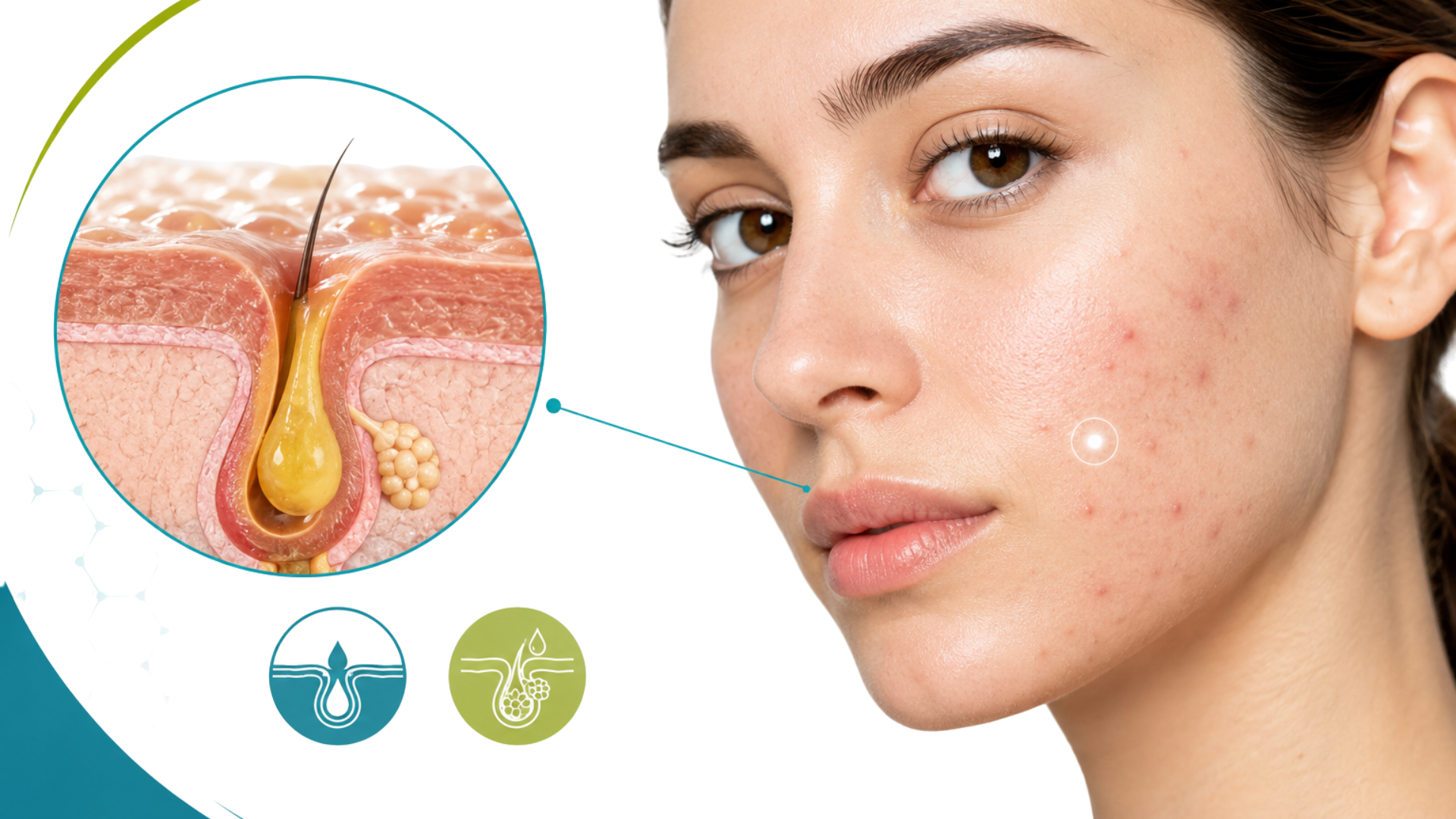
Acne isn’t just about “dirty skin.” It’s also not simply about eating too much oily food, though both can play a small role. Instead, it’s a combination of factors working together beneath the surface of your skin.
Excess oil production. Your skin’s oil glands can go into overdrive. This often happens during hormonal shifts. As a result, pores get clogged, creating the perfect environment for breakouts.
Hormonal changes. This is one of the biggest triggers. Puberty, menstrual cycles, pregnancy, and PCOS (polycystic ovary syndrome) can all spike hormone levels. Even stress can do it. That’s why so many adults, especially women, deal with breakouts well past their teenage years.
Genetics. If your parents struggled with acne, you’re statistically more likely to as well.
Clogged pores and bacteria. Dead skin cells don’t always shed properly. When they don’t, they trap oil and bacteria inside pores. This leads to inflammation.
Climate and pollution. Kathmandu Valley’s dust, pollution, and humidity swings may aggravate skin irritation in some people, though this isn’t a proven major cause of acne on its own.
Diet and lifestyle. Diet alone rarely causes acne. That said, some evidence suggests a high-glycemic diet, and in some people cow’s milk, may worsen existing breakouts. These effects vary from person to person and shouldn’t replace proper treatment. Poor sleep and chronic stress may also make acne worse.
Skincare habits. Heavy, pore-clogging makeup is a common culprit. Skipping a proper cleansing routine doesn’t help either.
Because acne rarely comes from just one cause, effective treatment starts with pinpointing which factor is driving your specific case. According to the American Academy of Dermatology, acne develops when a combination of these triggers work together beneath the skin. That’s exactly why a home remedy alone can’t fix it.
Types of Acne: Not All Breakouts Are the Same
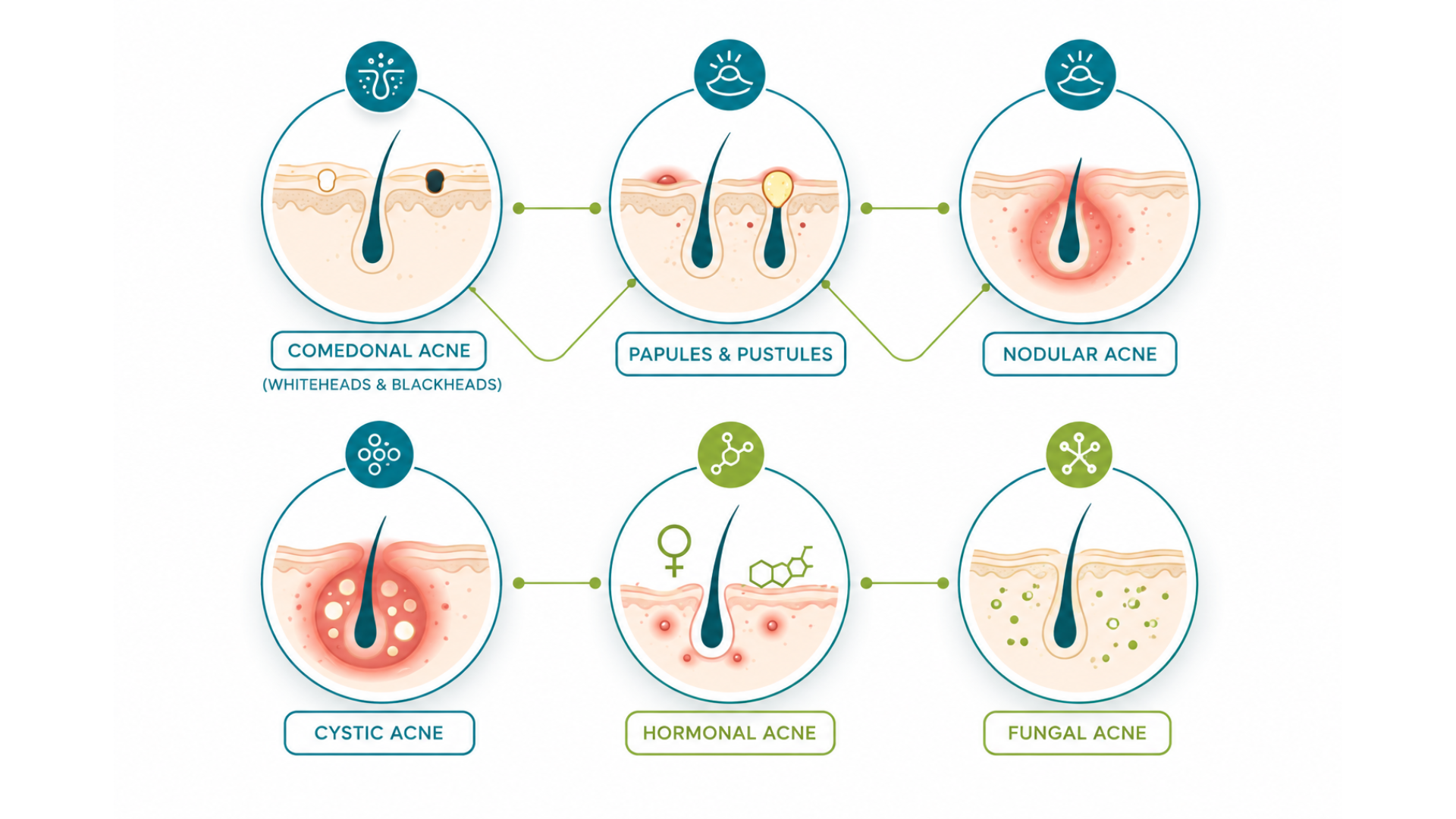
One of the biggest mistakes people make is treating every pimple the same way. In reality, acne comes in several distinct forms. The right treatment depends entirely on which type you’re dealing with.
Comedonal acne. This is the mildest form, caused by clogged pores. Whiteheads are closed. Blackheads are open and oxidized.
Papules and pustules. These are small, inflamed red bumps or pus-filled ones. This is what most people picture when they think “pimple.”
Nodular acne. These are larger, firm, painful lumps that sit deep under the skin. Often, they don’t come to a head. They can take weeks to resolve on their own.
Cystic acne. This is the most severe form. It shows up as deep, painful, pus-filled lesions that are highly prone to scarring. Because of this, it almost always needs professional medical treatment.
Hormonal acne. This type typically appears along the jawline, chin, and lower cheeks. It tends to flare around menstrual cycles.
Possible Malassezia folliculitis (often called “fungal acne”). This is a popular term for small, itchy, uniform bumps, often on the forehead, chest, or back, caused by yeast in hair follicles rather than true acne. It can resemble acne but is treated differently, so persistent bumps like these are worth having assessed by a dermatologist rather than self-treated with regular acne products.
Why Home Remedies and OTC Products Often Don’t Work
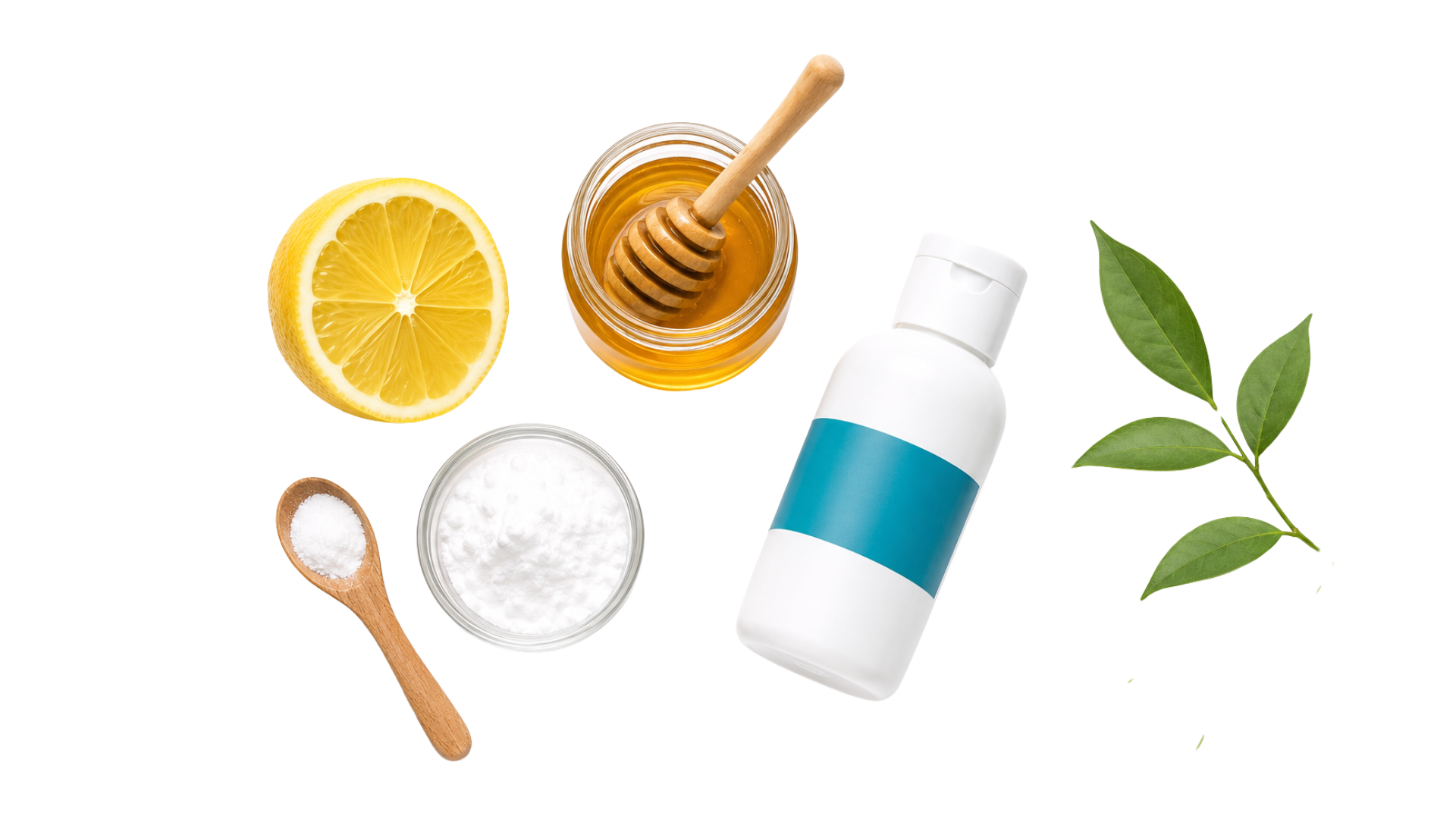
There’s nothing wrong with a good skincare routine. That said, relying on home remedies or random drugstore products for persistent acne usually leads to one of two outcomes: no real improvement, or worse irritation.
Here’s why:
- Wrong diagnosis, wrong treatment. Malassezia folliculitis treated like regular acne won’t clear up. Neither will hormonal acne treated with only topical creams.
- Harsh ingredients. Raw lemon juice, toothpaste, and baking soda can damage your skin barrier. Over time, this causes post-inflammatory hyperpigmentation, meaning dark marks that can last far longer than the pimple itself.
- Unaddressed root causes. If PCOS or hormonal imbalance is driving your acne, no topical product alone will fix it.
- Scarring risk. Picking, popping, or simply waiting out cystic and nodular acne significantly increases the risk of permanent scarring.
To be fair, suitable non-prescription products, such as those containing benzoyl peroxide or adapalene, can help manage mild acne. But for persistent, painful, or severe breakouts, trial and error simply takes too long. That’s when a dermatologist’s evaluation makes the real difference.
Medical Options for Acne Treatment in Nepal
Acne treatment in Nepal, like anywhere else, works best when it starts with a proper skin evaluation. A dermatologist identifies the type, severity, and likely cause first, then builds a treatment plan around that, drawing from the range of dermatology and aesthetic services available.
Topical medications. Retinoids, benzoyl peroxide, azelaic acid, and salicylic acid are standard, evidence-based options that help clear pores, reduce oil, and calm inflammation.
Oral medications. For hormonal or moderate-to-severe acne, dermatologists may prescribe oral antibiotics (typically time-limited and paired with a topical treatment), hormonal therapy, or isotretinoin under close medical supervision. Isotretinoin in particular requires specialist monitoring, including pregnancy prevention measures where applicable, and should never be started without a prescription.
Chemical peeling. Superficial chemical peels may help selected patients by removing dead skin cells and unclogging pores. They’re not automatically suitable for every skin type, particularly for those prone to pigmentation, so this should be chosen and performed by a qualified dermatologist rather than assumed as a default treatment.
Professional microneedling. Performed by a trained clinician, this may improve certain depressed acne scars once active breakouts are under control. It’s worth noting that this is different from at-home derma rollers, which are not equivalent and can cause infection, irritation, or pigmentation if used without guidance.
Mesotherapy. This is not a first-line acne treatment, but some clinics offer it as an additional aesthetic option. Its usefulness depends on the specific formulation and diagnosis, so it’s worth discussing the evidence and risks with a dermatologist before considering it for acne specifically.
Laser treatment. Certain laser procedures may improve selected acne scars or redness, though results vary depending on scar type, skin tone, and the specific laser used.
Extraction procedures. For appropriate lesions, sterile extraction by a trained professional is far safer than DIY popping at home, though not every inflamed or deep lesion is suitable for extraction.
Most patients need a combination of these approaches, tailored after an in-person exam rather than picked off a shelf. Alongside any treatment plan, a few general safety habits matter: use a gentle cleanser, a non-comedogenic moisturizer, and broad-spectrum sunscreen daily. Avoid combining multiple strong actives (like retinoids and strong peels) without professional guidance, and never use oral antibiotics or isotretinoin without a prescription.
Acne Scarring: Prevention and Treatment
Even after active breakouts clear up, marks can remain. Often, this is the part that bothers people the most. True textural scars generally fall into a few categories: icepick scars (narrow and deep), boxcar scars (broad with defined edges), and rolling scars (a shallow, wave-like texture). The dark or red marks left behind after a pimple heals are usually post-inflammatory pigmentation or redness rather than true scarring, and these tend to fade over time, though it can take months.
The best approach is prevention. Treating active acne early reduces the chance of true scarring, a point dermatologists widely agree on. If scarring or persistent marks have already happened, treatments like chemical peels, professional microneedling, and laser resurfacing may help improve skin texture, though results vary by scar type and skin tone and usually take a series of sessions performed with appropriate precautions.
When Should You See a Dermatologist for Acne?
Not every breakout needs a hospital visit. Still, certain signs mean it’s time to stop self-treating and get a professional opinion:
- Acne that hasn’t meaningfully improved after 8–12 weeks of consistent treatment (most treatments genuinely take this long to show results)
- Painful, deep, or cystic breakouts
- Acne leaving behind persistent dark spots or true scarring
- Sudden new breakouts as an adult, especially along the jawline
- Acne alongside irregular periods or excess hair growth, which may warrant assessment for PCOS or another hormonal condition
- Any breakout you’re tempted to pick or pop repeatedly
- Acne that’s causing you real emotional distress, regardless of how “mild” it looks
Early professional treatment doesn’t just clear your skin faster. It also lowers the risk of long-term scarring and pigmentation that are much harder to treat later.
Why Choose Nepal Skin Hospital for Acne Treatment
According to Nepal Skin Hospital, the hospital has spent over a decade treating skin, hair, and aesthetic concerns, and reports having cared for more than 120,000 patients across Kathmandu Valley. Its team includes dermatologists and venereologists offering a range of treatments, from chemical peels to microneedling to laser therapy, with plans meant to be tailored to each patient’s skin type and acne pattern rather than a one-size-fits-all routine.
The hospital operates multiple locations in Kathmandu Valley, plus an online appointment system. As with any provider, it’s worth confirming current branch details and doctor credentials directly with the hospital before booking.
FAQs(acne Treatment in nepal)
1. Is acne treatment permanent?
Not necessarily. Acne can often be well controlled, and treatments like isotretinoin may lead to long remission for some people, but recurrence is possible and isn’t guaranteed to be permanent. Ongoing skincare, and sometimes maintenance treatment, helps keep it from coming back, especially when hormonal factors are involved.
2. How long does it take to see results from acne treatment?
Some improvement may show up within 4–6 weeks, but most treatments genuinely need 8–12 weeks to show a clearer response. Scarring or persistent marks often take months, and sometimes multiple procedures, to improve.
3. Can adults get acne, or is it just a teenage problem?
Adult acne is extremely common, particularly in women. It’s often linked to hormonal shifts, stress, or conditions like PCOS rather than the causes typical in teenage acne.
4. Does diet really affect acne?
Diet alone rarely causes acne. Some evidence suggests a high-glycemic diet, and in some people dairy, may worsen existing breakouts, but the effect varies and isn’t the same for everyone. It’s one piece of the puzzle, not the whole picture, and shouldn’t replace proven treatment.
5. Are chemical peels safe for acne-prone skin?
They may be, for selected patients, when chosen and performed by a qualified dermatologist. They’re not automatically the right fit for everyone, particularly those prone to pigmentation, so a proper skin assessment matters before booking one.
Ready to Finally Get Your Acne Under Control?
Acne is common and treatable, but the right approach depends on the type and severity you’re dealing with. Mild acne may respond well to a consistent routine and suitable non-prescription ingredients. Painful, deep, scarring, persistent, or hormonally linked acne is worth having assessed by a dermatologist, who can recommend procedures like chemical peels, microneedling, extraction, or laser treatment where appropriate, after an actual examination.
If you’d like that kind of evaluation, you can book a consultation with the dermatology team at Nepal Skin Hospital below.
This article is intended for general educational purposes and isn’t a substitute for professional medical advice. Please consult a qualified dermatologist for diagnosis and treatment tailored to your skin.