

A wart on your face, hand, or foot can be hard to ignore. It may hurt when you walk. It may keep coming back after home treatment. You may even wonder if it is a wart at all.
Safe wart removal starts with knowing what the growth really is. Then it depends on choosing a treatment that suits your skin, your wart, and your health.
This guide explains what warts are, what causes them, and how they spread. You will learn about the main types, when to see a skin specialist, and how professional wart removal works. We also cover aftercare, recurrence, prevention, and how to find care in Kathmandu and across Nepal.
What Are Warts?
Warts are small, rough skin growths. They are caused by a virus called the human papillomavirus (HPV). Most ordinary warts are harmless, but they can look unpleasant, feel sore, or spread to other spots on the body.
Here is what to know at a glance:
- Warts are skin growths caused by HPV.
- They can appear at any age.
- They can grow on the hands, feet, face, and other areas.
- They can be bothersome even when they are harmless.
- Some go away on their own, and some do not.
The NHS explains that warts usually go away on their own, but this can take months or even years. The American Academy of Dermatology (AAD) also notes that warts are common.
That is why some people wait. Others want wart removal sooner because of pain, appearance, or fear of spreading the wart.
A changing, bleeding, rapidly growing, painful, or uncertain growth should be examined by a dermatologist.
What Causes Warts?
Warts are caused by certain types of HPV. The virus enters the skin through tiny cuts or breaks, which are often too small to notice.
Once inside, the virus makes skin cells grow faster than normal. This creates the rough bump you see.
Many HPV types exist, and different types tend to cause different kinds of warts. Some affect the hands and feet. Others affect the genital area.
You are more likely to get warts if you:
- Have a weakened immune system
- Bite your nails or pick at your skin
- Have cuts, scratches, or dry, cracked skin
- Walk barefoot in damp public places
- Share personal items such as towels or razors
Not everyone who meets the virus gets a wart. Each person’s body responds differently.
Are Warts Contagious?
Yes, warts can be contagious. They can spread in these ways:
- Direct contact: touching a wart, then touching your own skin or another person’s skin
- Surfaces: walking barefoot on damp floors, or using shared towels, in some situations
- Self-spreading: scratching, picking, or shaving over a wart
Genital Warts Are Different
Ordinary hand or plantar warts are not the same as genital warts. They are caused by different HPV types and are not treated the same way.
Genital HPV spreads mainly through intimate skin-to-skin sexual contact. Penetration is not required. Condoms and dental dams can reduce risk but cannot provide complete protection, because they do not cover all genital skin.
According to the CDC’s STI Treatment Guidelines, HPV types 6 and 11 cause more than 90% of genital warts. This figure does not show how common genital warts are in Nepal.
If you have a wart, keep it covered and wash your hands after touching it. Do not share towels, socks, or razors.
Common Types of Warts
Different warts look different and may need different care. This is why a proper diagnosis matters before any wart removal treatment.
Common Warts
Common warts are rough, raised bumps. They often appear on the fingers, hands, and knees. Some have tiny black dots, which are small clotted blood vessels.
Plantar Warts
Plantar warts grow on the soles of the feet. Walking presses them inward, so they can feel like a stone in your shoe. They can be painful, especially at the heel or ball of the foot.
Flat Warts
Flat warts are small, smooth, slightly raised bumps. They often appear in groups on the face, neck, hands, or legs. They may be pink, brown, or yellowish.
Filiform Warts
Filiform warts look like thin, thread-like growths. They often appear on the face, around the eyes, nose, or mouth. Because they are on visible skin, people often seek professional care for them.
Genital Warts
Genital warts appear on or near the genital and anal areas. They can be small and flesh-colored, or they can form clusters. They need medical evaluation. Never treat them with home products made for other warts.
Where Do Warts Commonly Appear?
Warts can grow almost anywhere. The most common spots are:
- Fingers and hands
- Soles of the feet
- Face and neck
- Knees and elbows
- Around or under the nails
- Genital or anal areas
Warts on the face, near the nails, or in the genital area often need extra care. The skin there is delicate. That is one reason many people prefer to see a skin specialist for wart removal in these places.
Symptoms and Appearance of Warts
Warts do not look the same on everyone. Signs to look for include:
- A rough, bumpy, or cauliflower-like surface
- A small, smooth, flat-topped bump
- A thread-like growth
- Tiny black dots inside the bump
- Tenderness or pain, especially on the feet
- Skin lines that stop or bend around the growth
Many warts cause no pain at all. But a wart on a pressure point, such as the foot, can make walking uncomfortable.
Is It Really a Wart? Other Skin Growths That Look Similar
Not every skin bump is a wart. Several other conditions can look like one, such as:
- Corns and calluses
- Skin tags
- Moles
- Molluscum contagiosum
- Seborrheic keratosis
- Precancerous or cancerous skin lesions, in some cases
This matters because the right treatment for one growth can be wrong for another. Treating a growth that is not a wart can delay proper care. A dermatologist can examine the growth and tell you what it is.
When Should You See a Dermatologist?
Most ordinary warts are harmless. But a changing, bleeding, rapidly growing, painful, or uncertain growth should be examined by a dermatologist.
See a dermatologist or skin specialist if:
- The growth is painful
- It bleeds
- It changes in color, shape, or size
- It grows quickly
- It keeps returning
- You have many warts
- The growth is on your face or a sensitive area
- You are not sure it is a wart
- Home treatment has not worked
- You have diabetes, poor circulation, reduced sensation, or a weak immune system
If you have any of the last conditions, do not treat foot warts on your own. Get professional advice first.
How Are Warts Diagnosed?
Dermatologists can often diagnose a wart clinically, by looking at it. The doctor may also:
- Ask how long you have had it and whether it has changed
- Ask about previous treatments
- Check the skin around it
- Look closely at the surface, sometimes with a small magnifying tool called a dermatoscope
A dermatologist may perform a skin biopsy when the diagnosis is uncertain, the growth has suspicious features, or it has not responded as expected. A biopsy is not routinely needed for a typical wart. Getting the right wart diagnosis is the first step toward safe treatment.
Wart Removal and Treatment Options
There is no single best treatment for every wart. Your dermatologist will choose based on:
- The type of wart
- Its location
- Its size
- How many warts you have
- Your age
- Your skin type
- Previous treatments
- Your medical history
Below are the common approaches. Which ones are suitable depends on your clinical assessment.
Topical Treatments
These are medicines applied to the skin. Some contain salicylic acid or other agents that slowly break down the wart. They often take weeks of regular use. A doctor may prescribe them for certain warts, or for people who prefer to avoid procedures.
Cryotherapy
Cryotherapy uses extreme cold, often liquid nitrogen, to freeze the wart. The frozen tissue then peels away over days to weeks. It can cause a stinging feeling, and a blister may form. Many people need more than one session.
Electrosurgery and Curettage
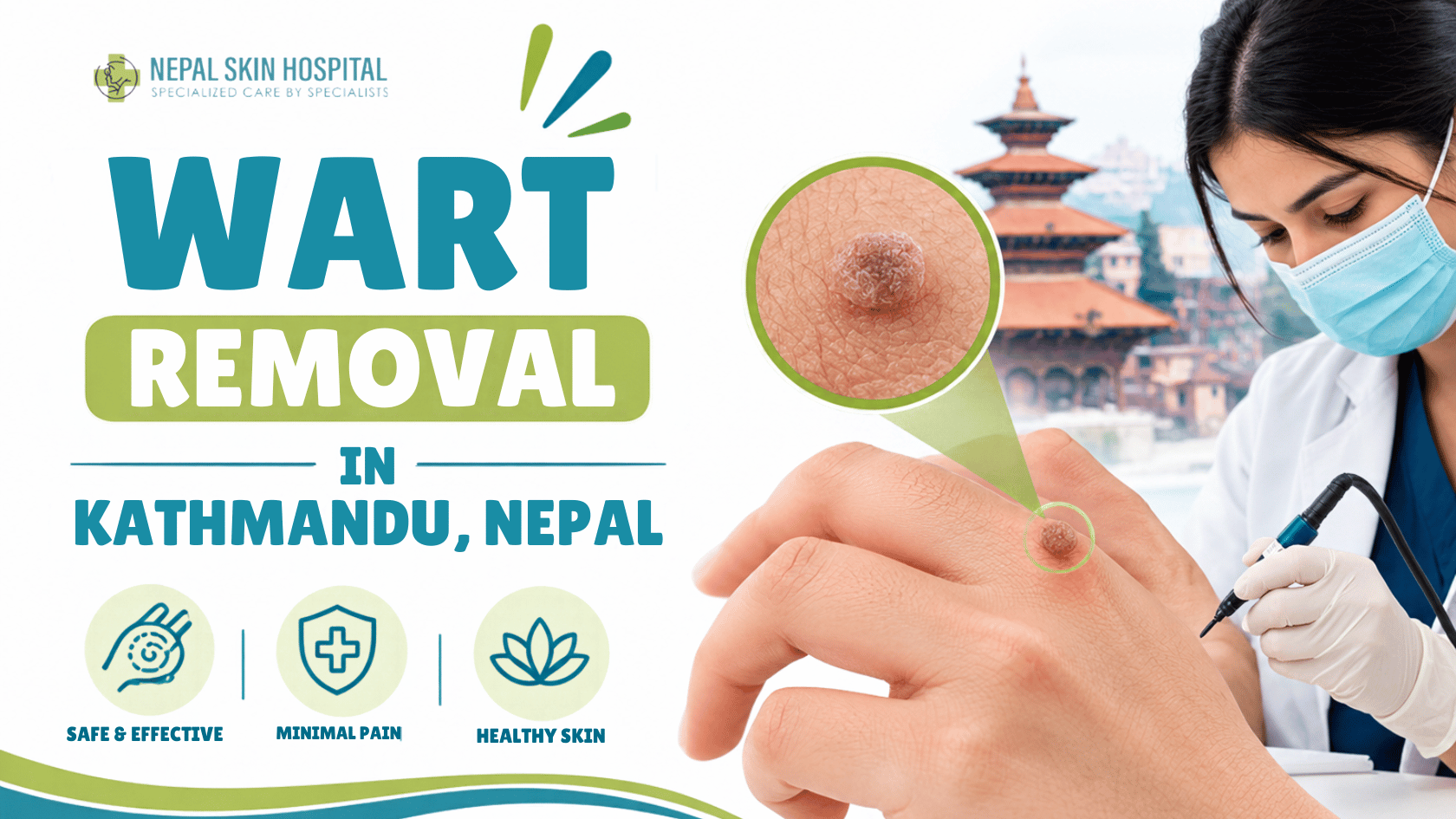
In this approach, a doctor uses heat from an electrical device to destroy the wart tissue. The area is usually numbed first. The doctor may also scrape away the treated tissue with a small tool called a curette. This is done only by trained professionals.
Laser and Other Specialist Treatments
Laser or other specialist treatments may be considered for selected resistant or difficult-to-treat warts. They are not necessary for every patient, and availability varies.
Other Selected Specialist Options
In selected cases, a dermatologist may suggest options such as:
- Immune-supporting treatments
- Injection-based treatments
- Combination approaches
These are specialist options, not routine treatment for every wart.
Some warts need more than one session. Results vary from person to person, and no treatment can promise that a wart will never return.
What Happens During Professional Wart Removal?
Every clinic works a little differently. But a typical wart removal procedure follows these steps:
- Consultation: The doctor examines your skin and reviews your history.
- Diagnosis: The doctor confirms that the growth is a wart and rules out other conditions.
- Treatment plan: You discuss the options, what to expect, and the possible side effects.
- Preparation: The area is cleaned. Numbing may be used if the method requires it.
- Procedure: The chosen method is carried out by the doctor.
- Aftercare advice: You receive clear instructions for home care.
- Follow-up: A repeat visit may be needed to check healing or treat remaining warts.
Comfort levels vary. Some people feel mild stinging or pressure. Others feel more discomfort, especially on the feet. Tell your doctor if you have concerns about pain. They can explain what to expect for your case.
Professional Wart Removal vs. At-Home Treatment
It is natural to try treatment at home first. Some at-home options are legitimate, but others can cause harm.
Unverified home remedies can injure the skin. These include cutting, burning, or aggressively scraping a wart, applying corrosive chemicals, or using irritating substances. They can cause:
- Skin injury
- Bleeding
- Infection
- Scarring
- Spread of the wart to nearby skin
Some over-the-counter salicylic-acid products may be appropriate for selected common or plantar warts when used exactly as directed. The AAD recognizes salicylic acid as an at-home treatment for common, plantar, and some flat warts, but not flat warts on the face. It also advises seeing a dermatologist if you have many warts, doubt the diagnosis, or have a wart on your face or genital area.
Read the label and follow the instructions exactly. Do not use salicylic-acid wart products on the face, genital area, broken or infected skin, or near the eyes. If you have diabetes, poor circulation, reduced sensation, or a weakened immune system, ask a clinician before treating a wart yourself.
If you are unsure that the growth is a wart, or it is in a sensitive area, ask a doctor first.
Here is a simple comparison:
| Factor | Professional care | At-home treatment |
| Diagnosis | Examined by a clinician | May be guessed |
| Treatment | Selected for the wart and location | Limited and not suitable for every growth |
| Safety | Medical supervision | Risk of irritation, burns, or misdiagnosis |
| Follow-up | Available if the wart persists | Usually limited |
Professional wart removal is often the safer choice when the wart is painful, stubborn, or in a sensitive spot.
Recovery and Aftercare
Healing depends on the treatment used and the location of the wart. Your doctor will give you specific advice. In general, wart aftercare may include:
- Keeping the area clean and dry
- Covering it if your doctor advises
- Not picking at blisters, scabs, or peeling skin
- Wearing comfortable shoes after treatment on the foot
- Protecting the area from the sun as advised
- Watching for signs of infection, such as increasing redness, swelling, pus, or fever
Contact your doctor if pain gets worse, bleeding does not stop, or the area looks infected. Attend your follow-up visits, as some warts need repeat care.
Can Warts Come Back?
Yes, warts can return after treatment. HPV may persist in surrounding skin or remain undetected, which may contribute to recurrence. Recurrence can also reflect reinfection or incomplete treatment. Warts also tend to return in people with weaker immune systems.
If you have recurring warts, your dermatologist may:
- Check for missed warts nearby
- Try a different treatment
- Combine treatments
- Ask about other health conditions
Recurring warts are frustrating, but they are not a sign that you did something wrong. Professional follow-up can help you decide on the next step.
How to Prevent Warts From Spreading
You cannot prevent every wart. But these habits can lower your risk:
- Wash your hands often, especially after touching a wart
- Keep your feet dry and wear sandals in public wet areas
- Do not pick, bite, or scratch warts
- Use your own towels, socks, shoes, and razors
- Cover warts with a bandage
- Use a separate nail file or clipper for the affected nail
- Protect cuts, and keep excessively dry, cracked skin moisturized, since breaks in the skin may make it easier for the virus to enter
- Talk to a doctor about HPV vaccination
HPV vaccination helps prevent new infections with certain HPV types, including those linked to genital warts. It does not treat an existing wart. It is also not a way to prevent ordinary hand or plantar warts. Current CDC guidance recommends routine vaccination at ages 11–12 and catch-up vaccination through age 26. Some adults aged 27–45 may be vaccinated after shared clinical decision-making with a doctor.
Good wart prevention protects you and your family.
Wart Removal in Kathmandu, Nepal
People look for wart removal in Kathmandu for many reasons:
- Cosmetic concerns: Warts on the face, neck, or hands can affect confidence.
- Painful plantar warts: Foot warts can make walking hard.
- Multiple or recurring warts: Some people have many warts, or warts that keep returning.
- Failed home treatment: Some people try home methods for months without success.
- Uncertainty: Some are not sure if a skin growth is a wart.
Wart treatment in Kathmandu is available through dermatology clinics and hospitals. Wart removal in Nepal is best done under the care of a qualified skin specialist. There is no reliable local data on how common warts are in Kathmandu, so it is best to focus on your own skin and your own symptoms.
Treatment availability varies by clinic. Ask whether the dermatologist offers the specific method recommended for your wart.
When choosing a wart removal doctor in Kathmandu, consider:
- Is the doctor a qualified dermatologist? Confirm their qualifications.
- Will they examine you and give a diagnosis before treatment?
- Do they explain the options, benefits, risks, and side effects?
- Do they discuss costs and the likely number of sessions?
- Do they explain the aftercare and follow-up plan?
Why Seek Professional Dermatological Care?
A dermatologist is trained to understand skin conditions. This helps in several ways:
- Accurate diagnosis: They can separate warts from other growths.
- Suitable treatment: They choose a method that fits the wart and your skin.
- Safer care: Treatment is done with proper tools and hygiene.
- Better guidance: You learn how to reduce spread and recurrence.
- Follow-up: They can adjust treatment if the wart does not respond.
This is especially useful for warts on the face, feet, nails, or genital area, and for people with diabetes or low immunity.
Nepal Skin Hospital: Professional Care for Skin Growths
Nepal Skin Hospital is a dermatology hospital in Kathmandu where people can seek professional evaluation for skin concerns. This includes warts and other skin growths that are bothersome, painful, recurring, changing, or uncertain.
A consultation focuses on:
- Understanding your symptoms and history
- Examining the growth
- Confirming the diagnosis
- Discussing suitable treatment options
- Explaining aftercare and follow-up
The treatments offered depend on your clinical assessment. If you are interested in a specific method, ask the hospital team whether it is available and suitable for you.
If you have a wart that worries you, or a growth you cannot identify, you can book an appointment at Nepal Skin Hospital to consult a qualified dermatologist.
Frequently Asked Questions About Wart Removal
1. What is the best treatment for wart removal?
There is no single best treatment for every wart. The right option depends on the wart type, location, size, number, and your health. A dermatologist can recommend cryotherapy, topical medicine, electrosurgery, or another method after examining you.
2. Can warts go away on their own?
Yes, many warts go away without treatment. This can take months or even years, according to the NHS. Warts that are painful, spreading, or changing should still be checked.
3. Are warts contagious?
Yes, warts can spread through direct contact and, in some cases, through contaminated surfaces. Covering the wart, washing your hands, and not sharing towels or razors can help.
4. What causes warts?
Warts are caused by certain types of human papillomavirus (HPV). The virus enters the skin through small breaks or cuts and causes skin cells to grow more quickly.
5. Can I remove a wart at home?
Some over-the-counter salicylic-acid products may suit selected common or plantar warts when used exactly as directed. You should never cut, burn, or scrape a wart yourself. Do not use these products on the face, genital area, broken skin, or near the eyes. If you have diabetes, poor circulation, reduced sensation, or a weak immune system, ask a doctor first.
6. Is professional wart removal painful?
Comfort levels vary from person to person and depend on the method and location. Some treatments cause mild stinging or pressure. Foot warts can be more uncomfortable. Ask your doctor what to expect for your treatment.
7. How long does wart removal take?
The procedure itself is often short, but total treatment time varies. Some warts clear after one session. Others need several visits over weeks or months, depending on the wart and how your skin responds.
8. Can warts come back after removal?
Yes, warts can return. HPV may persist in surrounding skin, or you may be reinfected. Treatment may also have been incomplete. No treatment can guarantee that a wart will not come back. Follow-up care and good hygiene can help.
9. Can a dermatologist tell if a skin growth is a wart?
Yes, a dermatologist can often tell by examining the growth. If the diagnosis is uncertain or the growth looks suspicious, they may perform a biopsy.
10. When should I see a dermatologist for a wart?
See a dermatologist if the growth is painful, bleeds, changes, grows fast, keeps returning, or is on your face or a sensitive area. Also go if there are many warts, if you are unsure of the diagnosis, or if home treatment has failed.
11. How much does wart removal cost in Kathmandu?
The cost varies, so it cannot be given as one fixed price. It depends on the type, size, number, and location of the warts, and on the treatment method and number of sessions. Contact Nepal Skin Hospital for current pricing.
12. Where can I get wart removal in Kathmandu?
You can get wart removal in Kathmandu from a qualified dermatologist at a dermatology clinic or hospital. Nepal Skin Hospital offers consultations for people with warts and other skin growths. Contact the hospital to check which treatments suit your case.
Final Thoughts
Warts are common skin growths caused by HPV. Some clear on their own. Others are painful, spread, or return. Different types, such as common, plantar, flat, filiform, and genital warts, need different care.
Many things can look like warts, so a correct diagnosis matters. Cutting or burning a wart at home can cause harm. The right treatment depends on the type and location of the wart, and on your health and history. No treatment can promise permanent results, but professional care gives you a safer, clearer path.
If a wart is painful, spreading, changing, recurring, or simply unclear, do not wait and guess. Book a consultation with a qualified dermatologist at Nepal Skin Hospital to get a proper diagnosis and a treatment plan that fits you.
Medical disclaimer: This article is for general information only. It does not replace advice from a qualified doctor. Please consult a dermatologist for diagnosis and treatment of any skin growth.