

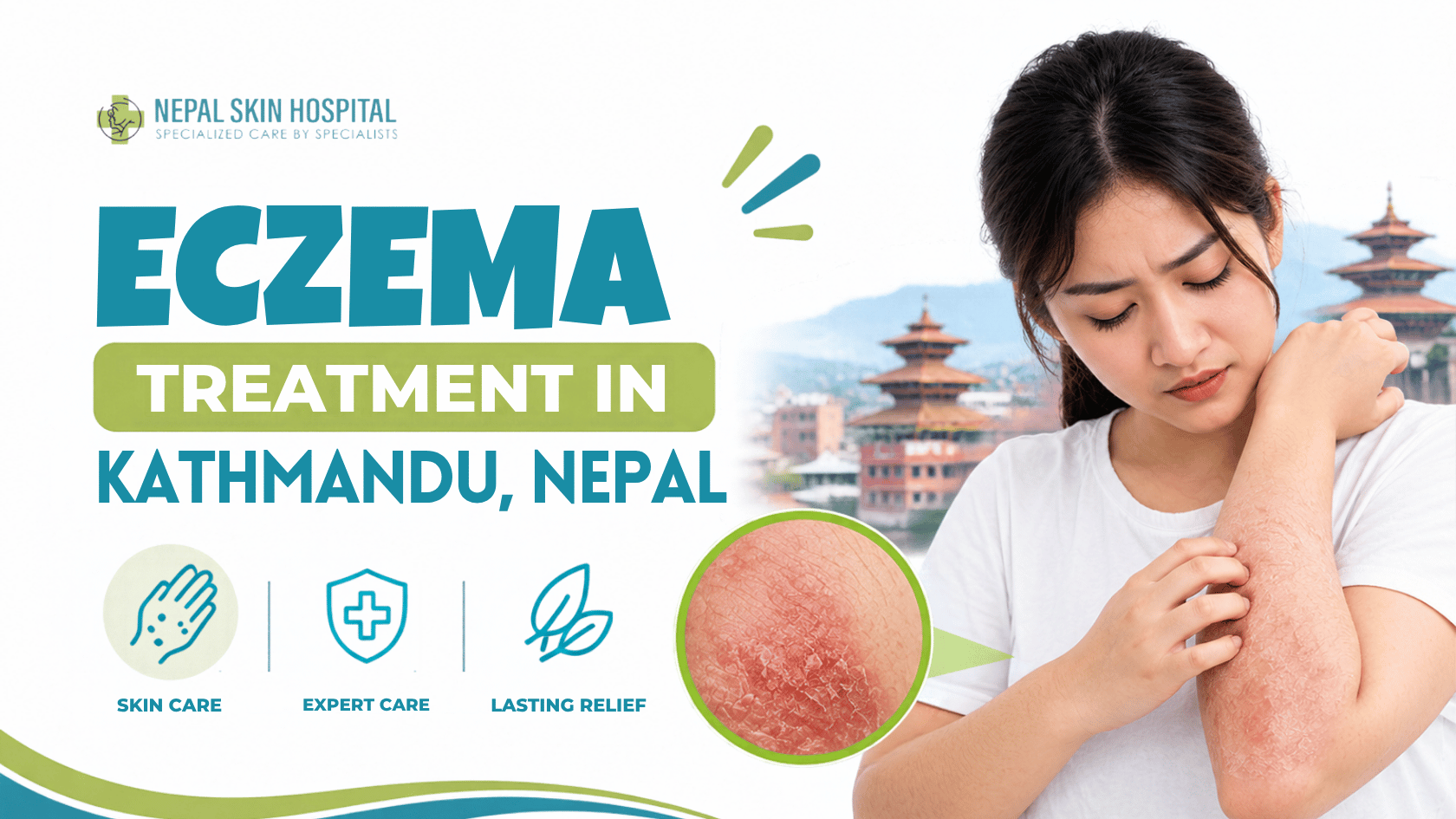
Itchy skin that keeps you awake. Dry, cracked patches that sting. A red rash that fades, then comes back. If basic skincare is not helping, you may be wondering what proper eczema treatment looks like and who can guide you.
Eczema is a common, long-lasting skin condition, and it can be managed. This guide explains the types, symptoms, triggers, diagnosis, and treatment options. It also covers eczema in children, prevention, and when to see a skin specialist in Kathmandu and across Nepal.
What Is Eczema?
Eczema is a group of inflammatory skin conditions. The most common type is atopic dermatitis. It causes itchy, dry, inflamed skin, and it often comes and goes in cycles called flare-ups.
The exact causes are not fully understood. NIAID (a US health research institute) notes that the causes of eczema remain unclear. Experts believe it involves a mix of skin barrier problems, the immune system, genes, and things in the environment. Eczema is not contagious, and it is not caused by dirt.
Eczema is common worldwide. In the United States, NIAID reports that it affects 10 to 30 percent of children and 2 to 10 percent of adults. These are US figures. They do not show how common eczema is in Kathmandu or Nepal, and we do not have reliable local numbers.
Common Types of Eczema
“Eczema” covers several conditions. The most common ones are:
- Atopic dermatitis: the most common type, often starting in childhood
- Contact dermatitis: caused by skin touching an irritant or allergen
- Hand eczema: affects the hands, often after frequent washing or work exposure
- Nummular eczema: coin-shaped, itchy patches
- Dyshidrotic eczema: small, itchy blisters on the hands or feet
- Seborrheic dermatitis: greasy, flaky patches, often on the scalp and face
- Stasis dermatitis: swollen, irritated skin on the lower legs
These types can need different management. For example, allergic contact dermatitis depends on finding and avoiding the cause, while stasis dermatitis relates to leg circulation. That is one reason a proper diagnosis helps.
Symptoms of Eczema
Eczema symptoms vary from person to person. Common signs include:
- Itchy skin, often worse at night
- Dry skin that feels rough or tight
- A red, brown, purple, or gray eczema rash, depending on skin tone
- Swollen, inflamed skin
- Cracked, flaky, or thickened skin
- Small bumps that may leak fluid or crust over
- Sore skin from scratching
Eczema often appears on the inner elbows, behind the knees, on the hands, neck, and face. In babies it often begins on the cheeks and scalp.
Not Every Dry or Itchy Skin Problem Is Eczema
Fungal infections, scabies, psoriasis, allergic reactions, and other skin problems can look like eczema. Please do not assume. If an itchy rash is severe, spreading, or not improving, a healthcare professional should check it.
Common Causes and Triggers
Eczema starts with a weak skin barrier and an overactive immune response. A flare-up often happens when something irritates the skin. Triggers vary between people, so you may react to some of these and not others.
The American Academy of Dermatology (AAD) lists common triggers such as skin care products, hot or cold weather, wool clothing, stress, fragrance, and harsh detergents.
Other possible triggers:
- Heat and sweating
- Dry air
- Certain soaps and cleansers
- Rough or tight fabrics
- Allergens, in some people
- Too much bathing or scrubbing
- Scratching, which damages the skin and worsens itching
Try to find your own triggers. Keep a short diary of flare-ups, products, foods, weather, and stress. Bring it to your doctor.
Who Is More Likely to Develop Eczema?
Risk is higher in people who have:
- A family history of eczema, asthma, or allergies
- Very dry or sensitive skin
- Frequent contact with irritants, such as harsh cleaning products
- Long-term stress or poor sleep
Children are affected more often than adults. But eczema can begin at any age, including in adulthood.
How Eczema Is Diagnosed
Eczema diagnosis is usually made in a clinic. A dermatologist will:
- Ask about symptoms, when they started, and what makes them better or worse.
- Ask about family history of eczema, asthma, or allergies.
- Examine your skin closely.
- Ask which soaps, creams, and medicines you use.
- Sometimes suggest tests to rule out other conditions, such as a skin scraping or an allergy patch test.
The AAD notes that a dermatologist diagnoses atopic dermatitis by carefully examining the skin and asking questions.
Professional diagnosis is especially useful when:
- Symptoms are severe or painful
- The rash keeps returning
- Eczema affects sleep or daily life
- The rash is spreading
- There are signs of infection
- Creams from a pharmacy are not helping
- You are not sure what the rash is
Eczema Treatment Options
Treatment depends on the type of eczema. For many forms, care focuses on reducing inflammation and itch, repairing the skin barrier, avoiding relevant triggers, and treating complications such as infection. There is no single treatment that works for everyone. The AAD says a dermatologist can create an individualized plan that may include skin care, trigger management, and medication or phototherapy when needed.
Treatment also depends on:
- Age
- Severity
- Location on the body
- How often flare-ups happen
- Your personal triggers
- Other skin conditions
1. Moisturizing and Skin Barrier Care
This is the base of eczema management for many people. A good moisturizer for eczema helps seal water into the skin. The AAD advises moisturizing after bathing and whenever skin feels dry, and applying it while the skin is still damp. Apply moisturizer at least daily, and more often when the skin is dry or during flares, following your clinician’s advice.
Tips for choosing one:
- Prefer products labeled “fragrance-free.” “Unscented” does not always mean that no fragrance-related ingredients are present. If you have sensitive skin, check the ingredient list, and stop using any product that causes irritation.
- Thick creams and ointments are usually gentler than thin lotions.
- Test a new product on a small area first.
2. Gentle Bathing
- Use lukewarm water, not hot.
- Keep baths and showers short.
- Use a mild, fragrance-free cleanser.
- Pat the skin dry. Do not rub.
3. Topical Treatment From a Doctor
An eczema cream or ointment from a dermatologist may reduce redness and itch during a flare-up. Some are steroid creams. Others are non-steroid options. The right one depends on your age, the type of eczema, and the part of the body affected.
Steroid creams are useful, but side effects, such as skin thinning, are possible. The risk depends on the steroid’s strength, the body area, the amount used, and how long it is used. The face and skin folds are more sensitive.
- Use topical medicines according to the treatment plan your doctor gave you.
- Some doctors give a written flare plan that says when to start and stop a cream. Follow it as written.
- Do not start, stop, or reuse a prescription without understanding the instructions.
- Some steroid-containing creams may be available without a prescription in some locations. Ask a qualified clinician or pharmacist before using them, especially on the face, skin folds, or a child.
4. Bleach Baths and Wet Wraps (Only When Recommended)
Dermatologists may suggest wet wrap therapy or bleach baths for selected patients. They are not suitable for everyone. Never apply household bleach directly to the skin or add an unmeasured amount to bathwater. If a dermatologist recommends a bleach bath, it must use the correct dilution and the exact instructions you are given.
5. Other Prescription Treatments for Moderate or Severe Eczema
If eczema is widespread or does not respond to creams, a dermatologist may discuss other options. These can include light therapy (phototherapy) and prescription medicines taken by mouth or by injection. Availability, cost, and suitability vary. A specialist must decide whether they are safe for you.
6. Treating Infection
Scratched, cracked skin can get infected. Signs include pus, yellow crusts, and increasing pain or warmth. Antibiotics are not always needed. A clinician should decide whether the infection requires antimicrobial treatment, and which one.
7. Follow-Up
Eczema is often long-term. Follow-up visits help adjust the plan as your skin changes.
For more, see the AAD guide to atopic dermatitis diagnosis and treatment.
How to Manage Eczema Flare-Ups
When a flare-up starts:
- Moisturize more often, especially right after bathing.
- Avoid your known triggers.
- Keep nails short and clean to reduce skin damage from scratching.
- Wear soft, breathable cotton.
- Use only the medicine your doctor prescribed, as directed.
- Keep the room comfortable, not too hot or dry.
- See a doctor if the flare-up is severe or not settling.
Eczema Treatment for Children
Eczema is common in children. It can disturb children’s sleep, especially during itchy flares. Sleep problems are common in children with atopic dermatitis, and published estimates vary.
If your child has eczema:
- Use gentle, fragrance-free soap and moisturizer.
- Apply a fragrance-free moisturizer at least once daily and after bathing. Some children need it more often during flares.
- Dress them in soft cotton.
- Do not use adult creams or steroid creams on a child without medical advice.
- Take babies with eczema to a doctor for a proper plan.
- Do not use bleach baths unless a dermatologist recommends them, and follow the instructions exactly.
Most children’s eczema does not have one clear cause, and skin care is a key part of management. See the AAD’s atopic dermatitis self-care tips for more.
Can Eczema Be Cured?
There is no single universal cure for eczema. For many people it is a chronic or recurring condition. But it can be managed. With good skin care, trigger control, and the right treatment plan, many people have fewer flare-ups and clearer skin. Some children see improvement as they grow older, but this varies.
The National Eczema Association’s eczema facts page offers a wider overview of the condition.
How to Prevent Eczema Flare-Ups
Eczema prevention is about protecting your skin every day:
- Moisturize daily, even when your skin looks clear.
- Identify and avoid your personal triggers.
- Choose fragrance-free soaps, detergents, and skin products.
- Take short, lukewarm baths.
- Wear soft, breathable clothing, and avoid rough wool.
- Rinse laundry well and do not use too much detergent.
- Manage stress and sleep.
- Protect your hands with gloves when using cleaning products.
When to See a Dermatologist
See a dermatologist or skin specialist if:
- Itching is severe or keeps you awake
- Eczema affects work, school, or daily life
- Flare-ups keep coming back
- The rash is spreading or painful
- Pharmacy creams are not helping
- You have eczema on a baby’s skin
- You are not sure it is eczema
Get Medical Care Quickly If You Have
- Pus, yellow crusts, or oozing sores
- Fever along with a worsening rash
- Rapidly spreading redness, swelling, or pain
- Eczema that covers large areas of the body
Same-Day Medical Care
Clusters of painful, similar-looking blisters or punched-out sores, especially with fever, fatigue, or rapidly worsening eczema, need same-day medical assessment. They can be a sign of eczema herpeticum, a potentially serious herpes-virus infection that needs urgent treatment. Do not wait.
Eczema Treatment in Kathmandu, Nepal
People looking for eczema treatment in Kathmandu can usually find care at dermatology clinics, hospital skin departments, and skin hospitals. For eczema treatment in Nepal outside the capital, check larger regional hospitals and health centers.
Local Factors That May Affect Eczema
Some conditions in Kathmandu may affect eczema in some people. These are possible triggers, not proven causes. We do not have Nepal-wide evidence showing a unique eczema pattern in Kathmandu.
- Seasonal changes, such as a switch from monsoon humidity to dry winter air
- Dry or cold weather, which can dry the skin
- Heat and sweating in warm months
- Dust and environmental irritants, which some people find irritate their skin
- Hot water and frequent scrubbing
- Fragranced soaps and detergents
- Traditional or herbal products, which can irritate the skin in some people
Notice what affects your own skin and tell your doctor.
Choosing an Eczema Doctor in Kathmandu
When looking for an eczema doctor in Kathmandu, consider:
- A qualified dermatologist or doctor with skin training
- A doctor who examines your skin and asks about triggers
- A clear, personalized plan
- Follow-up visits for long-term care
Bring your current products and medicines with you.
Why Professional Dermatology Care Matters
Eczema often needs more than moisturizer. A dermatologist can:
- Confirm whether it is eczema or a similar condition
- Help identify your triggers
- Recommend the right skin care routine
- Prescribe eczema skin treatment suited to your age, skin, and type of eczema
- Check for and treat infection
- Adjust treatment when it stops working
Nepal Skin Hospital: One Option in Kathmandu
Nepal Skin Hospital is one dermatology hospital that readers in Kathmandu can consider for skin treatment in Kathmandu. Its website lists dermatology services and has pages about its doctors. You can read about its dermatologists and browse its dermatology services on its site.
Before visiting any hospital, including this one, confirm directly:
- Doctor names, qualifications, and availability
- Current opening hours
- Consultation fees
- Whether eczema consultation and treatment are offered
- Whether tests such as patch testing or biopsy are available, if you need them
You are free to choose any qualified dermatologist, hospital skin department, or reputable clinic. What matters most is an accurate diagnosis and a plan that fits your skin, age, and health.
FAQs: ECZEMA TREATMENT IN KATHMANDU, nEPAL
What is the best treatment for eczema?
The best treatment is a personalized plan from a doctor, and it depends on the type of eczema. It usually combines daily moisturizing, trigger avoidance, and prescribed medicine when needed. Severe cases may need other prescription options.
Can eczema be completely cured?
There is no single universal cure for eczema. It is often a long-term condition with flare-ups. With the right care, many people keep symptoms under good control.
What causes eczema flare-ups?
Flare-ups are caused by triggers, and these differ from person to person. Common triggers include dry air, heat and sweat, fragrances, harsh soaps, rough fabrics, stress, and allergens.
How can I reduce eczema itching?
Moisturize regularly, especially right after bathing, and avoid your triggers. Keep nails short and avoid scratching. If itching is severe or disturbs sleep, see a doctor.
Is eczema contagious?
No, eczema is not contagious. You cannot catch it from touching someone who has it. However, infected eczema skin needs medical assessment.
Can eczema affect children?
Yes, eczema is common in children and babies. It often begins in early childhood. Children with eczema should be seen by a doctor for a safe, age-appropriate plan.
What should I avoid if I have eczema?
Avoid your known triggers, such as fragranced products, harsh soaps, hot water, and rough fabrics. Avoid heavy scrubbing and scratching. Do not use strong prescription creams without medical advice.
When should I see a dermatologist for eczema?
See a dermatologist if eczema is severe, painful, spreading, or keeps returning. Also go if it disturbs sleep, does not improve with basic care, or looks infected. Get same-day care for clusters of painful blisters, especially with fever.
Can eczema come back after treatment?
Yes, eczema can return. It is often chronic, so flare-ups can happen again. Daily skin care and trigger control lower the chance.
What treatment is available for severe eczema?
Severe eczema may need treatments beyond creams. A dermatologist may discuss phototherapy or other prescription medicines. The right choice depends on your health, age, and how your eczema behaves.
Where can I get eczema treatment in Kathmandu?
You can get eczema treatment from a qualified dermatologist at a skin clinic or hospital dermatology department in Kathmandu. Nepal Skin Hospital is one option. Confirm services, fees, and availability before you visit.
How can I prevent eczema flare-ups?
Moisturize daily, use fragrance-free products, and avoid your triggers. Take short, lukewarm baths and wear soft, breathable clothes. Manage stress and follow your doctor’s plan.
Final Thoughts
Eczema is common, not contagious, and manageable. The main points:
- Eczema is a group of skin conditions, and symptoms and treatment vary by type.
- Not every itchy or dry skin problem is eczema.
- Triggers differ between people, so find your own.
- Daily moisturizing and gentle skin care are the base of management.
- Treatment should be personalized. No single medicine suits everyone.
- Eczema is often long-term, so follow-up matters.
- Severe, painful, spreading, infected, or recurring eczema needs professional care.
If your itching, rash, or flare-ups are not improving, see a qualified dermatologist. Nepal Skin Hospital is one option in Kathmandu, and you can find more at nepalskinhospital.com.
Medical disclaimer: This article is for general educational purposes only and is not a substitute for professional medical advice, diagnosis, or treatment. If you have symptoms, are pregnant, are treating a child, or have a persistent or worsening rash, consult a qualified healthcare professional or dermatologist.