


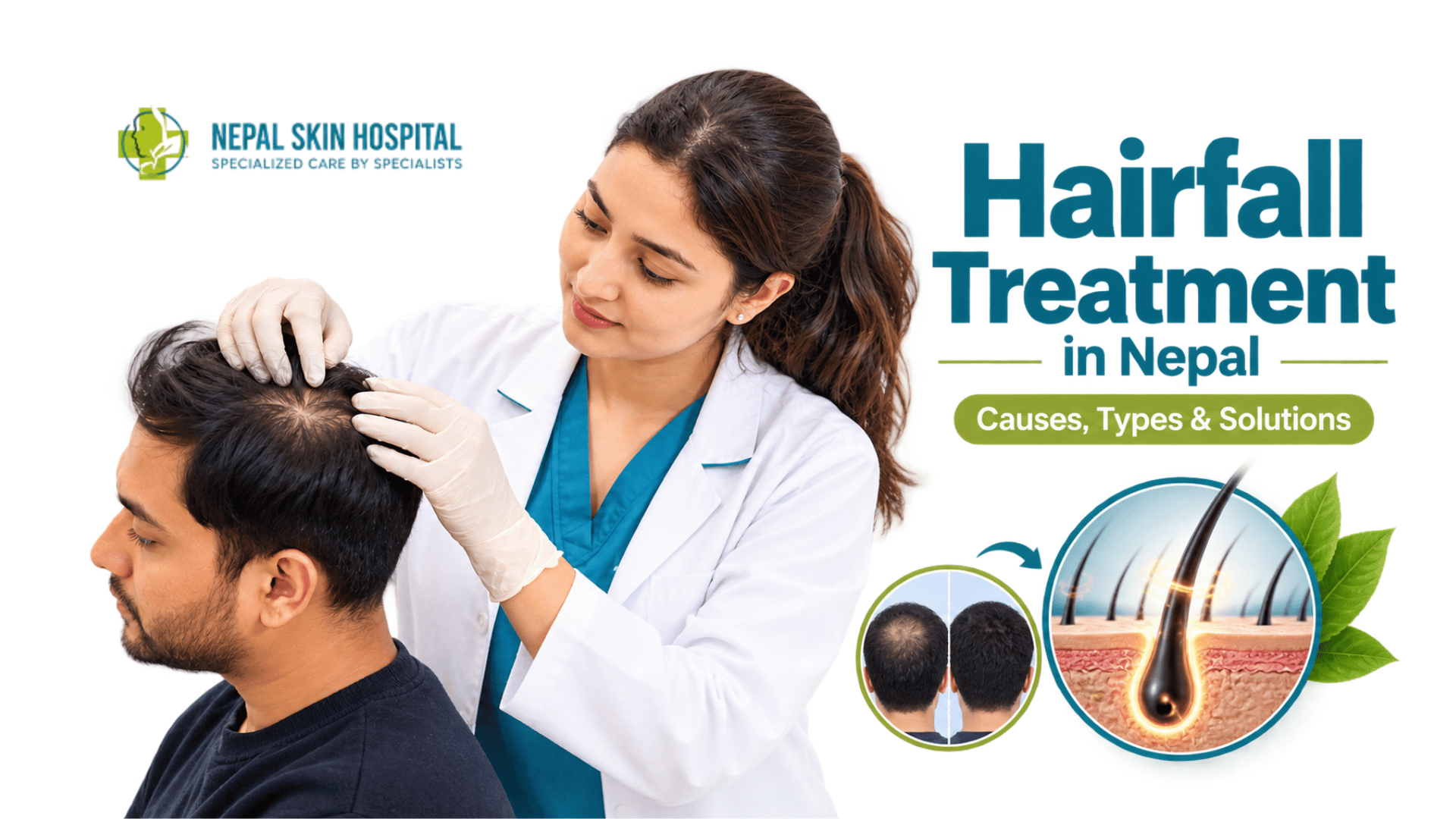
If you’ve noticed more hair on your pillow, in the shower drain, or caught in your comb than usual, you’re not imagining it, and you’re far from alone. Hair fall is one of the most common concerns dermatologists in Kathmandu see, and it’s rarely caused by just one thing.
The good news is that effective hairfall treatment in Nepal is available, and the right treatment depends entirely on identifying what’s actually driving the shedding. This guide walks through the real causes behind hair fall in the Kathmandu Valley, the different types of hair loss, and what dermatologist-backed treatment actually looks like.
What Causes Hair Fall in Kathmandu Valley?
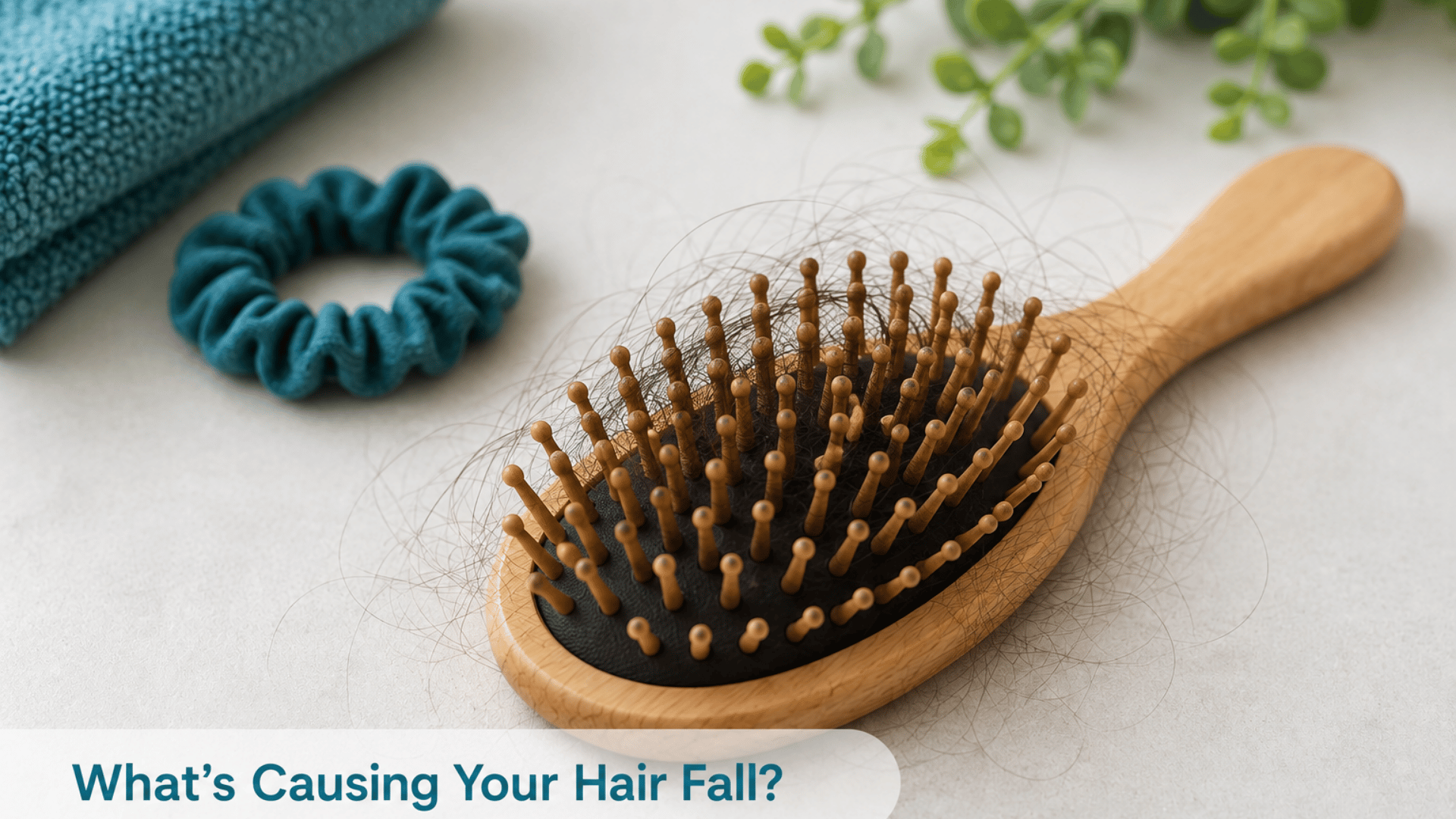
In most cases, hair fall isn’t caused by a single factor, it’s usually a combination of a few working together. Some of the most common causes we see include:
Genetics (Androgenetic Alopecia)
This is the single most common cause of hair loss in both men and women. It’s driven by DHT (dihydrotestosterone), a hormone that gradually shrinks hair follicles until they stop producing visible hair. In men, it typically shows up as a receding hairline or thinning crown, while in women it more often presents as diffuse thinning across the top of the scalp.
Kathmandu’s Hard Water and Air Pollution
Much of Kathmandu Valley’s tap and groundwater carries a high mineral content, commonly known as hard water. Over time, mineral buildup on the scalp can weaken hair strands and make them more prone to breakage, and this effect is often compounded by everyday exposure to urban air pollution, which can irritate the scalp and follicles.
Nutritional Deficiencies
Hair follicles are highly sensitive to shortages in iron, protein, vitamin D, and B vitamins. Restrictive diets, poor absorption, and unbalanced meals, all fairly common patterns in urban Nepal, can show up first as hair thinning before other symptoms appear.
Stress and Illness
Physical or emotional stress can push large numbers of follicles into a resting phase at once, causing noticeable shedding a few months later, a pattern called telogen effluvium. That said, the relationship between everyday stress and hair fall isn’t as clear-cut as it’s often made out to be. A study conducted among medical students in Kathmandu actually found no significant association between stress levels and hair fall in that group, a useful reminder that hair loss usually has a more specific underlying trigger worth identifying rather than defaulting to “stress” as the explanation.
Hormonal Changes and Underlying Health Conditions
Thyroid disorders, PCOS, postpartum hormonal shifts, and certain illnesses can all trigger noticeable hair shedding. This is one of the main reasons a proper evaluation matters more than guessing at the cause.
Types of Hair Loss You Might Be Dealing With
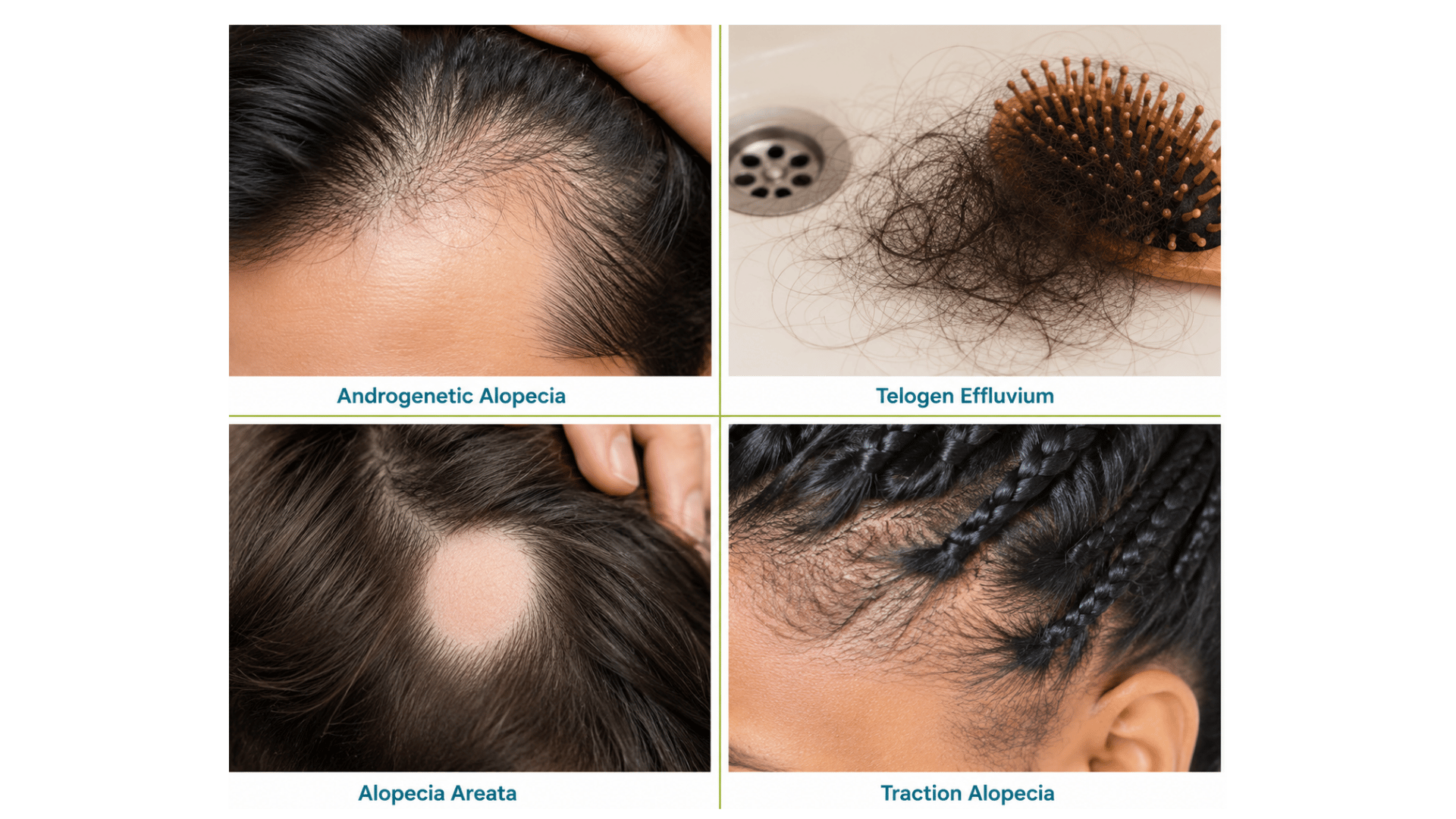
Beyond the causes above, it helps to know which pattern of hair loss you’re actually seeing, since that shapes the treatment plan.
Androgenetic Alopecia (Pattern Baldness)
The most common type, progressive and driven by genetics and DHT. In men, it follows a predictable pattern of recession and crown thinning; in women, it’s usually more diffuse.
Telogen Effluvium
Sudden, diffuse shedding that typically appears two to three months after a triggering event, illness, surgery, major stress, or rapid weight loss. It’s usually temporary and often resolves once the underlying trigger is addressed.
Alopecia Areata
An autoimmune condition that causes sudden, well-defined bald patches. It’s unrelated to genetics or lifestyle factors and needs a different treatment approach entirely.
Traction Alopecia
Gradual hair loss caused by consistent pulling or tension, often from tight hairstyles, braids, or extensions. It’s preventable and, if caught early, usually reversible.
Recognizing When Hair Fall Needs Medical Attention
Losing 50 to 100 strands a day is completely normal. What isn’t normal is hair fall that’s sudden, patchy, accompanied by scalp itching or redness, or that continues for more than a few months without improvement. If any of that sounds familiar, it’s worth getting evaluated by one of our dermatologists rather than waiting to see if it resolves on its own, since starting hairfall treatment in Nepal earlier generally means more options are still on the table.
How Hair Fall Is Diagnosed
A proper diagnosis usually starts with a detailed history and a close scalp examination to identify the pattern and extent of shedding. Depending on what’s found, your dermatologist may also order blood tests to check thyroid function, iron levels, and vitamin D, since these are common, easily correctable contributors that are often missed with home remedies alone. Getting this step right is what separates effective hairfall treatment in Nepal from months of trial and error with over-the-counter products.
Hairfall Treatment in Nepal That Actually Works
Once the cause is identified, treatment can be tailored accordingly rather than applying a one-size-fits-all approach.
1. Topical and Oral Medications
Minoxidil (applied directly to the scalp) and, for men, finasteride (an oral medication that blocks DHT) are the most well-established first-line treatments for pattern hair loss. Nutritional supplements may also be recommended if bloodwork shows a specific deficiency.
2. Scalp Mesotherapy and Nutrient Therapy
For thinning that’s linked to nutritional or scalp health factors, mesotherapy delivers a targeted mix of vitamins, minerals, and amino acids directly into the scalp to support regrowth from within.
3. Microneedling with Derma Roller Therapy
Derma roller therapy uses controlled micro-injuries to stimulate collagen production and improve blood flow to dormant follicles, often used alongside topical treatments for a stronger combined effect.
4. Hair Transplant for Advanced Hair Loss
When hair loss is more advanced and non-surgical options haven’t given the density someone’s looking for, a hair transplant moves your own permanent, DHT-resistant follicles to thinning areas for a natural, lasting result. It’s a bigger step than the treatments above, so it’s usually considered after other options have been tried or when hair loss is significant.
5. Lifestyle and Home Care
Alongside any medical treatment, a few daily habits genuinely support results:
- Use a clarifying shampoo occasionally to counter hard water mineral buildup
- Avoid tight hairstyles that put constant tension on the scalp
- Eat a protein and iron-rich diet, and address any confirmed deficiencies
- Manage stress through sleep, exercise, or relaxation practices
- Avoid excessive heat styling and harsh chemical treatments
Preventing Hair Fall: Daily Habits That Help
Prevention largely overlaps with the lifestyle steps above, but a few Kathmandu-specific habits are worth calling out. Rinsing with filtered water where possible, or using a shower filter, can meaningfully reduce hard-water buildup on the scalp over time. Beyond that, staying consistent with a gentle hair care routine matters more than any single product, most improvement comes from steady habits rather than occasional intensive treatments.
Frequently Asked Questions About Hairfall Treatment in Nepal
To wrap up, here are direct answers to the questions we hear most often from patients.
How much hair fall per day is considered normal?
Losing 50 to 100 strands a day is generally normal and part of the natural hair growth cycle. It only becomes a concern when shedding noticeably increases, continues for months, or comes with visible thinning or bald patches.
Is hair fall in Kathmandu really worse because of the water?
Hard water alone doesn’t cause permanent hair loss, but it does weaken hair strands and increase breakage, which can make existing thinning look more severe. It’s usually one contributing factor among several, not the sole cause.
Can hair fall be reversed?
It depends on the cause. Temporary types like telogen effluvium and early-stage traction alopecia often reverse once the trigger is addressed, while genetic pattern baldness can be slowed and partially regrown with treatment but isn’t fully reversible without a transplant.
What is the fastest way to stop hair fall?
Identifying and addressing the underlying cause is the fastest real path to results, since guessing with random products often wastes months. Once the cause is known, treatments like minoxidil or nutrient correction typically show initial results within three to six months.
Does stress actually cause hair fall?
Stress can trigger a specific type of temporary shedding called telogen effluvium, but it isn’t the universal explanation it’s often assumed to be. A Kathmandu-based study among medical students found no significant link between everyday stress and hair fall, so it’s worth ruling out other causes rather than assuming stress is the reason.
Is hairfall treatment in Nepal expensive?
Cost varies widely depending on what’s actually needed, from affordable topical treatments and bloodwork to higher-cost options like mesotherapy or a hair transplant for advanced cases. An in-person evaluation is the best way to get an accurate estimate for your specific situation.
Which doctor should I see for hair fall in Nepal?
A dermatologist is the right specialist for both diagnosing the cause and managing treatment over time. Since hair fall often needs a few months of consistent treatment to show results, continuity with the same doctor makes a meaningful difference.
Can women experience the same hair fall as men?
Yes, though the pattern often looks different. Women more commonly experience diffuse thinning across the crown rather than a receding hairline, and hormonal factors like PCOS, pregnancy, and thyroid issues play a larger role.
Does oiling or home remedies help with hair fall?
Oiling can improve scalp comfort and hair texture, but it doesn’t address most underlying causes of hair fall like DHT sensitivity, nutrient deficiency, or thyroid issues. It’s fine as a supportive habit but shouldn’t replace a proper diagnosis if shedding is significant.
How long does it take to see results from hair fall treatment?
Most treatments need three to six months of consistent use before visible improvement, since hair growth cycles are naturally slow. Stopping treatment too early is one of the most common reasons people feel it “didn’t work.”
Is a hair transplant the only permanent solution?
For genetic pattern baldness, a hair transplant is currently the only way to achieve permanent, lasting density in a completely bald area, since transplanted follicles are naturally resistant to DHT. For other causes of hair fall, non-surgical treatment can fully resolve the issue without needing a transplant.
Can hair fall be a sign of a more serious health issue?
Sometimes. Sudden or severe hair fall can be an early sign of thyroid disorders, iron deficiency, autoimmune conditions, or hormonal imbalances. This is exactly why a proper evaluation matters, since treating hair fall in isolation can miss the underlying issue entirely.
Getting Hair Fall Treatment at Nepal Skin Hospital
Ultimately, at Nepal Skin Hospital, our dermatologists take a diagnosis-first approach to hairfall treatment in Nepal, identifying the actual cause through proper evaluation before recommending treatment, rather than starting with a product and hoping it works. With over a decade of experience and more than 1,20,000 patients treated across our branches in Bijuli Bazaar, Bhaktapur, and Pepsicola, we understand how hair loss shows up differently across genetics, lifestyle, and Kathmandu’s specific environmental factors.
If your hair fall has been persistent or is starting to affect your confidence, don’t wait for it to resolve on its own. Book an appointment with our dermatology team and get a proper diagnosis and treatment plan built around your actual cause.