

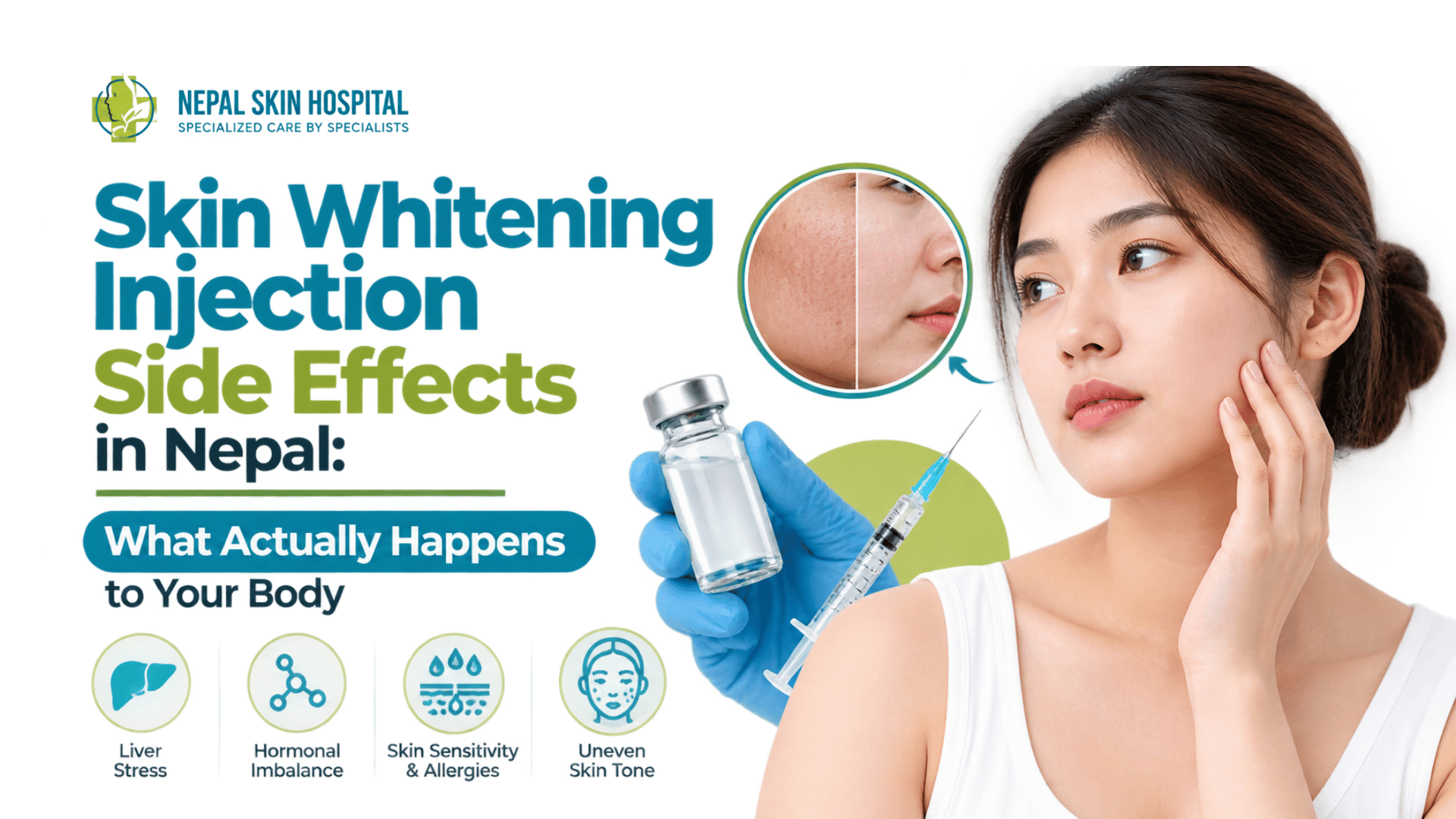
Glutathione injections have become one of the most requested cosmetic treatments in Kathmandu Valley clinics, promoted heavily on social media as a fast route to brighter, more even-toned skin. But before booking one, it’s worth understanding what the evidence actually says about skin whitening injection side effects in Nepal, because the picture is more serious than most clinic marketing suggests.
The short version: no major drug regulator in the world has approved injectable glutathione for skin whitening, and the documented side effects range from mild nausea to liver and kidney toxicity, allergic reactions, and, in rare cases, a life-threatening skin condition. This guide walks through why that is, how to tell a mild reaction from a dangerous one, and what safer alternatives actually exist.
Key facts on skin whitening injection side effects in Nepal: injectable glutathione has not been approved by the Philippines FDA, the U.S. FDA, or Saudi Arabia’s SFDA for skin lightening, and all three regulators have issued public warnings against its cosmetic use. The Philippines FDA’s official advisory states plainly that there are no published clinical trials evaluating injectable glutathione for skin lightening and no established dosing guidelines, while documented side effects include toxic effects on the liver, kidneys, and nervous system, along with the possibility of Stevens-Johnson Syndrome, a rare but severe, blistering skin reaction. Saudi Arabia’s SFDA has gone further, warning that glutathione whitening injection products are unregistered and illegally marketed due to safety concerns about their additive substances.
Why Skin Whitening Injections Carry Real Risk
To understand why regulators keep issuing warnings rather than approvals, it helps to look at what’s actually happening biologically and logistically when someone gets one of these injections.
1. No Approved Dosing or Safety Guidelines Exist
Because injectable glutathione has never gone through a formal approval process for this use, there’s no standardized dose, frequency, or duration that’s been proven safe. Clinics setting their own dosing protocols means the same treatment can vary significantly in risk from one provider to another.
2. Many Products and Clinics Operate Outside Proper Regulation
Unregulated skin-lightening products, whether creams, tablets, or injectables, have repeatedly been found in regulatory investigations to contain undisclosed steroids, mercury, or other harmful additives beyond what’s listed on the label. When a product isn’t properly registered, there’s no independent verification of what’s actually in the vial.
3. Non-Sterile Injection Practices Can Transmit Infections
Because injection bypasses the skin’s natural barrier entirely, any lapse in sterile technique, whether from a non-medical practitioner or a poorly equipped facility, carries a real risk of infection, including bloodborne pathogens like hepatitis B, hepatitis C, and HIV.
4. Combining Glutathione With Vitamin C Carries Its Own Risks
Many clinics pair glutathione injections with high-dose intravenous vitamin C to enhance the whitening effect. This combination has its own documented risks, including kidney stone formation and, in people with G6PD deficiency (a fairly common enzyme deficiency in parts of South Asia), a dangerous breakdown of red blood cells.
5. Disrupting Melanin Production Isn’t Just Cosmetic
Melanin isn’t just responsible for skin color, it’s your skin’s natural defense against UV damage. Deliberately suppressing melanin production raises theoretical long-term concerns about increased vulnerability to UV-related skin damage, a concern regulators have flagged even though long-term data is still limited.
How Serious Are Your Symptoms? A Quick Self-Check
| Severity | What It Looks Like | What It Feels Like | What To Do |
| Mild | Slight bruising at injection site, no visible skin changes | Mild nausea, headache, occasional fatigue | Monitor, stay hydrated, rest; usually resolves within a day or two |
| Moderate | Skin rash, hives, noticeable hair thinning | Persistent itching, diarrhea, ongoing discomfort | Stop further injections and consult a dermatologist promptly |
| Severe | Yellowing of skin or eyes, blistering or peeling skin, swelling of the face or throat | Difficulty breathing, severe abdominal pain, confusion | Seek emergency medical care immediately, do not wait |
Bottom line: Mild reactions are common and usually not dangerous on their own, but any rash, breathing difficulty, or yellowing of the skin needs medical attention right away, these can be early signs of an allergic reaction or organ toxicity, not something to “wait out.”
Before You Consider a Skin Whitening Injection: What To Actually Do
If you’re still considering the treatment despite the risks above, or if you’ve already had one and want to protect yourself going forward, these steps matter.
- Consult a board-certified dermatologist first, not a beauty salon or spa. In Nepal, a qualified dermatologist should hold an MBBS followed by an MD in dermatology, and you can browse our doctors’ credentials here as an example of what to look for.
- Ask directly where the product comes from and whether it’s a properly licensed pharmaceutical product, not something sourced online or through informal channels.
- Confirm the facility follows sterile injection protocols, including single-use needles and a clean clinical environment, not a converted salon room.
- Get baseline liver and kidney function tests before starting, so any changes afterward can actually be tracked against a real baseline.
- Discuss safer, evidence-based alternatives for pigmentation and brightening concerns. Chemical peeling, for instance, is a well-established, dermatologist-supervised option for uneven skin tone and pigmentation with a much longer safety track record.
- Monitor closely after the injection and stop immediately if you notice any of the moderate or severe symptoms listed above.
- Report serious reactions to your treating doctor right away rather than switching to a different unregulated product hoping it works better.
Common vs. Serious Side Effects at a Glance
| Side Effect Type | What It Involves | How Common | What To Do |
| Mild, expected reactions | Nausea, mild headache, injection-site bruising | Fairly common | Usually resolves on its own; monitor and stay hydrated |
| Allergic and dermatologic reactions | Skin rashes, hives, hair thinning or hair loss | Uncommon | Stop treatment and see a dermatologist |
| Organ toxicity | Liver stress, kidney damage, elevated liver enzymes | Rare but serious | Requires urgent medical evaluation and bloodwork |
| Severe hypersensitivity | Stevens-Johnson Syndrome, difficulty breathing, facial swelling | Rare but life-threatening | Emergency medical care immediately |
Bottom line: The most common side effects are genuinely mild and self-limiting, but the rare, serious reactions on this list are exactly why medical supervision, not a beauty salon appointment, is non-negotiable for this treatment.
What Not to Do
- Buying glutathione injections online or from unlicensed sellers: there’s no way to verify sterility, dosage accuracy, or actual contents of a product purchased this way.
- Getting injections at beauty salons or wellness spas rather than licensed medical clinics: these settings typically lack the sterile technique and emergency response capability a medical facility has.
- Combining injections with other unregulated whitening products: layering an unapproved injectable with mercury-containing creams or unlicensed tablets compounds risk rather than improving results.
- Ignoring early symptoms hoping they’ll pass: mild nausea or a small rash can be an early warning sign, not something to push through for the sake of finishing a treatment course.
- Choosing a provider based on price alone: the cheapest option is often cheap precisely because it’s cutting corners on sourcing, sterility, or medical oversight.
Frequently Asked Questions About Skin Whitening Injection Side Effects in Nepal
Are skin whitening injections approved for use in Nepal?
Nepal’s Department of Drug Administration has not published specific public guidance on injectable glutathione for cosmetic skin lightening, but the same underlying safety concerns raised by regulators elsewhere, lack of approved dosing, unregulated product sourcing, and documented serious side effects, apply here just as much as anywhere else.
What are the most common side effects of glutathione injections?
The most frequently reported side effects are nausea, headache, and mild bruising or discomfort at the injection site, most of which resolve on their own within a day or two. Less commonly, people experience skin rashes, diarrhea, or hair thinning.
Can skin whitening injections damage the kidneys or liver?
Yes, this is one of the more serious documented risks, particularly with unregulated dosing or when glutathione is combined with high-dose intravenous vitamin C. Regulatory advisories specifically list liver and kidney toxicity among the risks of injectable glutathione use.
Is it safe to combine glutathione with vitamin C injections?
Not without medical supervision. This common combination carries its own added risks, including kidney stone formation and, in people with G6PD deficiency, a serious breakdown of red blood cells, so it should only be considered under a qualified doctor’s guidance with appropriate screening beforehand.
How do I know if a clinic offering this treatment is safe?
Check that the treatment is administered by a qualified, board-certified dermatologist rather than salon staff, ask where the product is sourced from, and confirm sterile injection practices are followed. A clinic unwilling to answer these questions clearly is a red flag on its own.
What should I do if I have a bad reaction after a skin whitening injection?
For mild symptoms like nausea or a small rash, contact your treating doctor and monitor closely. For anything more serious, difficulty breathing, facial swelling, yellowing skin, or severe abdominal pain, seek emergency medical care immediately rather than waiting to see if it improves.
When to See a Dermatologist
Most people considering or recovering from a skin whitening injection should book a consultation if they notice:
- A skin rash, hives, or facial swelling that develops after treatment
- Yellowing of the skin or eyes, which can indicate liver stress
- Persistent nausea, abdominal pain, or unusual fatigue lasting more than a couple of days
- Noticeable hair thinning or shedding following a course of injections
- Any difficulty breathing, which needs emergency care, not a scheduled appointment
If you’re weighing whether a skin whitening injection is right for you, or you’ve already had one and something doesn’t feel right, our dermatologists at Nepal Skin Hospital can walk you through a proper evaluation and safer, evidence-based options for pigmentation and skin tone concerns. Book an appointment with our team before your next treatment decision, not after a reaction has already started.