

Quick Answer: The Name Change: In May 2026, PCOS (Polycystic Ovary Syndrome) was officially renamed PMOS (Polyendocrine Metabolic Ovarian Syndrome).
Why it Changed:
- The spots on ultrasound scans are stalled egg follicles, not dangerous cysts.
- The condition affects the entire body’s hormones and metabolism, not just the ovaries.
What “PMOS” Stands For:
- Polyendocrine: Involves multiple hormones (androgens/male-type hormones, insulin).
- Metabolic: Affects blood sugar, weight, and long-term risk of diabetes/heart disease.
- Ovarian: Still affects ovulation, periods, and fertility.
- Syndrome: A collection of signs and symptoms.
What It Means for Patients:
- Your diagnosis, diagnostic criteria, tests, and treatment plans do not change.
- Both terms (PCOS and PMOS)—as well as “PCOD” in regions like Nepal/India—will be used interchangeably during a 3-year transition period.
Core Management:
- Lifestyle: Balanced diet, exercise, weight control, and proper sleep.
- Medical Care: Birth control pills, Metformin, hormone blockers, and fertility treatments.
- Skin & Hair Care: Dermatology options (laser hair removal, acne treatments, chemical peels, PRP) for visible symptoms.
Big news: PCOS has a new name
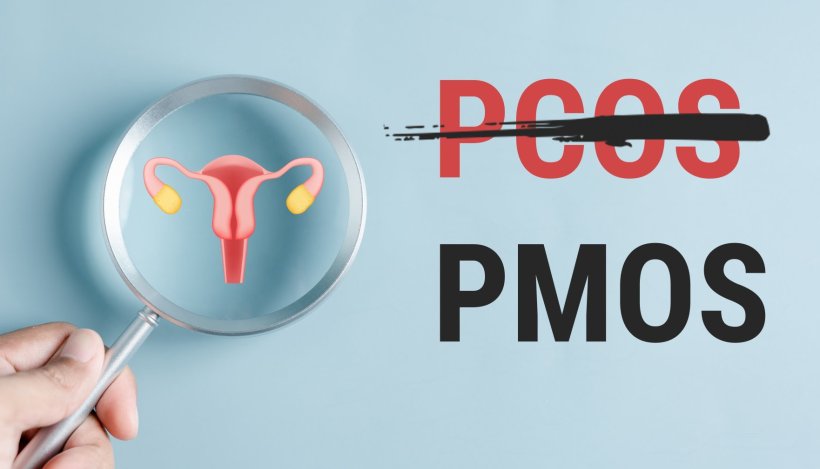
Have you heard the word PMOS lately? Here is why. In May 2026, PCOS got a new name. It is now called Polyendocrine Metabolic Ovarian Syndrome, or PMOS.
The new name came out in The Lancet, a top medical journal. It took 14 years of work. Patients and doctors from all over the world helped choose it.
But don’t worry. Your PCOS treatment stays the same.
Why did the name change?
The old name made people think of cysts on the ovaries. But the small spots seen on a scan are not harmful cysts. Also, PCOS affects the whole body, not just the ovaries. The new name tells the full story:
- Polyendocrine: many hormones are involved. These include male-type hormones and insulin.
- Metabolic: it can raise your risk of diabetes, weight gain, high fat in the blood and heart disease.
- Ovarian: it still affects the ovaries and your periods.
- Syndrome: it is a group of signs, not just one disease.
What this means for you: Your tests and treatment do not change. Doctors still use the same rules to find it. The new name will come in slowly over about three years. Until then, you will hear both PCOS and PMOS. Many people in Nepal still say “PCOD” too. In this blog, we use PCOS, since most people still search for that word.
What is PCOS (PMOS)?
PCOS is a long-term hormone problem. It also affects how your body uses sugar. Two things cause most of the trouble:
- Too many male-type hormones. All women make a small amount of these. In PCOS, the body makes too much. This can stop eggs from being released. It can also cause pimples, oily skin, facial hair and hair loss.
- Insulin resistance. Insulin helps your body use sugar. In PCOS, the body does not respond to it well. So the body makes more and more insulin. Too much insulin makes even more male-type hormones. It can also cause dark skin patches and skin tags.
No one knows the exact cause yet. It often runs in families. Weight gain can make it worse. But thin women can get PCOS too.
PCOS or PCOD? In Nepal, many people say PCOD. Most of the time, people mean the same thing. The medical name was PCOS. Now it is PMOS.
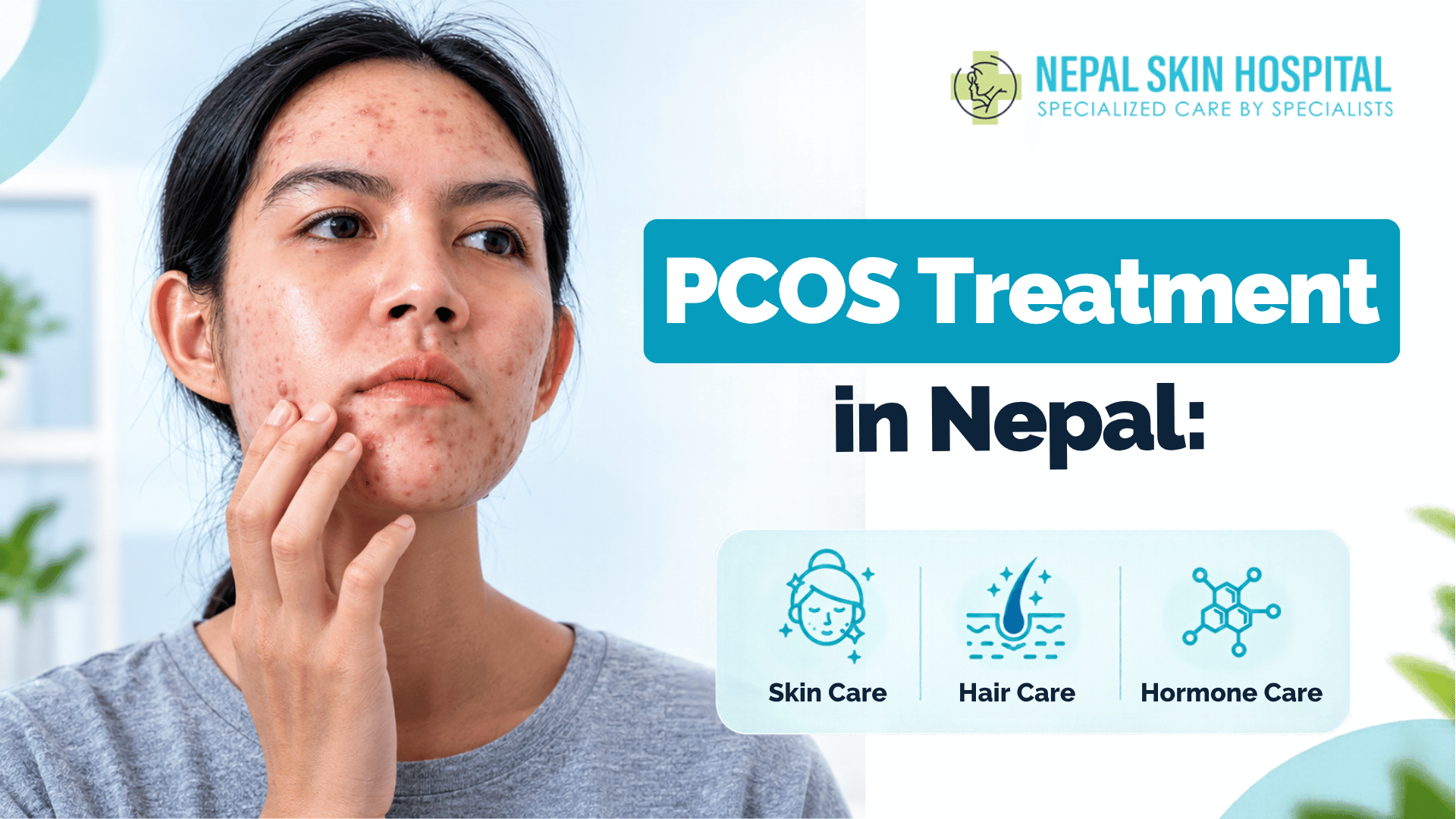
PCOS symptoms: skin and hair signs often come first
PCOS is different in every woman. Some only have late periods. Others mostly have skin problems. As a skin hospital, these are the signs we see the most:
| Sign | What it looks like | Why it happens |
|---|---|---|
| Hormonal acne | Deep, sore pimples on the jaw, chin and neck. They get worse before periods and don’t go away easily. | Too many male-type hormones make the skin too oily. |
| Unwanted hair | Thick, dark hair on the lip, chin, chest, belly or back | Male-type hormones turn soft, thin hair into thick hair. |
| Hair thinning | A wide parting or thin hair on top of the head | Male-type hormones weaken the hair roots. |
| Dark skin patches | Dark, thick, soft skin on the neck, armpits or groin. People often think it is dirt. | Too much insulin |
| Skin tags | Small, soft bumps on the neck and armpits | Linked to insulin problems |
| Oily skin | Shiny face, big pores | Too many male-type hormones |
Doctors call unwanted hair “hirsutism”. They call the dark patches “acanthosis nigricans”.
Other common signs:
- Late, rare or missed periods
- Trouble getting pregnant
- Weight gain, mostly around the belly
- Feeling tired, sad or worried
- Poor sleep
How do doctors find PCOS?
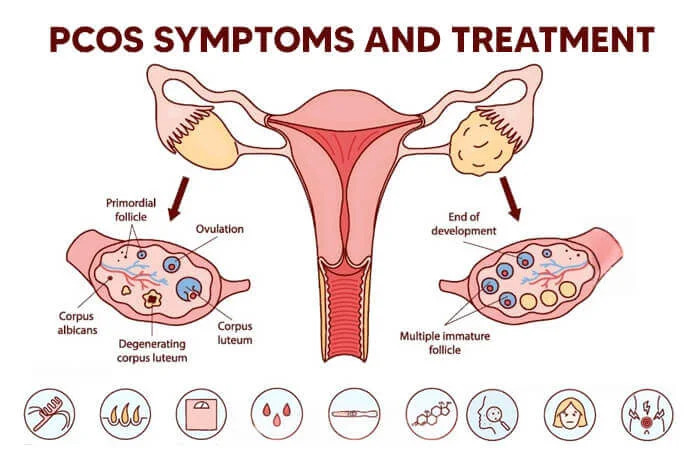
There is no single test for PCOS. Doctors check for three signs. You need at least two of them:
- Late or missing periods
- Signs of too many male-type hormones. This can be acne, extra hair or hair loss. It can also show up in a blood test.
- Many small egg sacs on an ultrasound scan, or a high AMH level in a blood test
Your doctor will also check for other problems that look the same. These include thyroid problems. You may need blood tests for hormones, sugar, thyroid and fat levels. You may also need a scan of your belly.
Not everyone needs a scan. Teens do not get a scan to check for PCOS. This is because many healthy teens have ovaries that look like PCOS.
PCOS treatment options
There is no one magic pill for PCOS. The best PCOS treatment is a plan made just for you. It depends on what bothers you most. This could be acne, facial hair, periods, weight or getting pregnant. Most plans have three parts.
1. Healthy habits come first
Healthy habits help your body use insulin better. This calms many other signs too.
- Weight: if you are overweight, losing just 5 to 10% of your weight can help a lot. Your periods may become regular. Your skin and hair may get better.
- Food: eat whole grains, dal, vegetables and protein. Cut down on sweet tea, sweets, big plates of white rice, packet snacks and soft drinks. You do not need a strict diet.
- Exercise: try to move for at least 150 minutes a week. That is about 30 minutes, five days a week. Fast walking, cycling, yoga and climbing stairs all count. Add some muscle work too.
- Sleep and stress: poor sleep and stress can upset your hormones.
2. Medicines for hormones and sugar
A doctor gives these after tests. This may be a women’s doctor (gynaecologist), a hormone doctor (endocrinologist) or a skin doctor (dermatologist). Never buy them on your own from a pharmacy.
| Medicine | What it helps | Good to know |
|---|---|---|
| Birth control pills | Periods, acne and unwanted hair | Often the first choice if you are not trying to get pregnant. Skin and hair take 3 to 6 months to improve. |
| Metformin | Insulin, weight and periods | Often used with the pill. Helpful if you have gained weight or may get diabetes. |
| Hormone blockers, such as spironolactone | Acne, facial hair and hair loss | Not safe in pregnancy. You must use birth control with it. |
| Egg-release medicines, such as letrozole | Getting pregnant | Given by a women’s doctor or fertility doctor |
| Weight-loss medicines | Weight and sugar control | Only for some people, and only with a doctor’s care |
3. Skin and hair care: how a skin doctor helps
Hormone medicines slowly stop new acne and new hair. But they do not remove the hair, scars or dark patches you already have. This is where skin treatments help.
- PCOS acne: creams from your doctor, tablets if needed, and chemical peels. Bad acne that leaves scars may need a strong tablet called isotretinoin. Your doctor will watch you closely while you take it. Read our guide on [Acne Treatment in Nepal].
- Acne scars: laser and microneedling can smooth scars. These are done after the acne is under control. Read more in [Acne Scar Removal in Kathmandu].
- Unwanted facial and body hair: laser hair removal reduces hair for a long time. Women with PCOS often need a few extra visits, because hormones keep making new hair. See [Laser Hair Removal Price].
- Hair thinning: hair growth lotion (minoxidil), PRP and mesotherapy can help. PRP uses a small amount of your own blood to help hair grow. These work best with hormone care. See [Hairfall Treatment].
- Dark patches on the neck and armpits: better insulin control is the key. Creams, peels and some lasers can lighten the skin.
- Skin tags: we can remove them quickly and simply in the clinic.
Your mind matters too
PCOS can make you feel worried or sad. It can make you feel bad about how you look. Acne and extra hair can hurt your confidence. If you feel low, tell your doctor. This is part of PCOS care.
PCOS treatment in Nepal: what to expect
In Nepal, PCOS often goes unnoticed. People say late periods are “normal”. Women remove facial hair with threading at home. They treat acne with any cream from the local pharmacy. Many women only learn they have PCOS years later, when they try to have a baby.
Some common habits are worth changing:
- Steroid and “fairness” creams from the pharmacy: these can make acne worse and harm your skin. They can also hide the real problem. Ask a skin doctor before you use any mixed cream.
- Lots of threading, waxing or bleaching: these help for a short time. But they can cause ingrown hairs, dark spots and rashes.
- Treating only the skin or only the periods: PCOS needs hormone care and skin care at the same time.
PCOS treatment at Nepal Skin Hospital
At Nepal Skin Hospital, our skin doctors treat the skin and hair signs of PCOS. We work with your women’s doctor or hormone doctor on the hormone side. Here is what a visit looks like:
- Check-up: we look at your acne, extra hair, hair loss and dark patches. We ask about your periods, weight and family health.
- Tests: we suggest or check your hormone, sugar and thyroid tests. If needed, we send you for a scan or to another doctor.
- A plan just for you: this may include acne treatment, chemical peels, laser hair removal, PRP or mesotherapy for hair, and care for dark patches and skin tags.
- Follow-up: PCOS lasts a long time. So we check how you are doing every few months and change the plan if needed.
Our skin doctors have treated many women with hormone-related skin problems. You can visit any of our branches in the Kathmandu Valley.
Can you treat PCOS (PCOD) at home?
Good habits at home are a big part of PCOS treatment. But they work best with a doctor’s care. Try these simple steps each day:
- Eat regular meals with protein and fibre. Eat less sugar and white flour.
- Walk fast for 30 minutes on most days.
- Sleep 7 to 8 hours a night.
- Wash your face twice a day with a mild face wash. Use a light moisturiser that won’t block pores. Wear sunscreen.
- Don’t pick or squeeze pimples.
Common myths
| Myth | Fact |
|---|---|
| Women with PCOS can never get pregnant. | Many women with PCOS get pregnant, on their own or with treatment. |
| Only overweight women get PCOS. | Thin women can get PCOS too. |
| Marriage or having a baby cures PCOS. | PCOS lasts for life. The signs can change, but you still need care. |
| Herbal or homeopathy medicine cures PCOS. | There is no strong proof that they cure it. Tell your doctor about anything you take. |
| One laser session removes PCOS hair forever. | Laser reduces hair for a long time. But you will usually need a few top-up sessions. |
When should you see a doctor?
Book a visit if you have any of these:
- Fewer than 8 periods a year, or periods more than 35 days apart
- Acne on the jaw and chin that keeps coming back, mostly after age 20
- New thick hair on your face, chest or belly
- Thin hair on top of your head
- Dark, soft patches on your neck or armpits
- No pregnancy after 12 months of trying, or 6 months if you are over 35
Early PCOS treatment helps your skin. It also protects your health in the long run. It lowers your risk of diabetes and heart disease.
Frequently asked questions
Is there any treatment for PCOS?
Yes. PCOS cannot be cured for good, but it can be controlled well. Healthy habits, hormone medicines and skin and hair care all work together. They can help your periods, clear acne, reduce extra hair and protect your health.
Which is the best treatment for PCOS?
There is no single best treatment. The right PCOS treatment depends on what bothers you most. Healthy habits help everyone. Birth control pills often help periods and skin. Metformin helps your body use insulin. Laser and acne care fix the signs you can see.
What is the PCOS treatment to get pregnant?
First, doctors usually suggest weight loss and healthy habits. Next, they may give medicine to help release eggs, such as letrozole. Some women need more fertility care. A women’s doctor or fertility doctor should guide you. Some acne and hair medicines must be stopped before you try for a baby. So tell your skin doctor if you plan to get pregnant.
How can PCOS affect your life?
PCOS affects more than periods and pregnancy. It can affect your skin, hair, weight, mood and sleep. Later in life, it can raise your risk of diabetes, high fat in the blood and heart disease. That is why regular check-ups matter, even if your signs are mild.
Is PCOD the same as PCOS?
In Nepal, yes. Most people use both words for the same problem. PCOD stands for polycystic ovarian disease. The medical name was PCOS. Now it is PMOS.
Does the new name PMOS change my treatment?
No. Your tests and treatment stay the same. The new name just explains the problem better. It shows that PCOS affects your whole body, not just your ovaries.
Take control of PCOS, starting with your skin
PCOS, now called PMOS, is common. It can be managed. And it is nothing to be ashamed of. Acne, facial hair or dark patches can hurt your confidence. Normal skin care often does not help enough. Our skin doctors can make a plan that works with your hormones, not against them.
Book your visit at Nepal Skin Hospital today. Take the first step to clearer skin and better health.
Note: This blog is for general information only. It does not replace a visit to a qualified doctor. Do not start or stop any medicine without your doctor’s advice.