

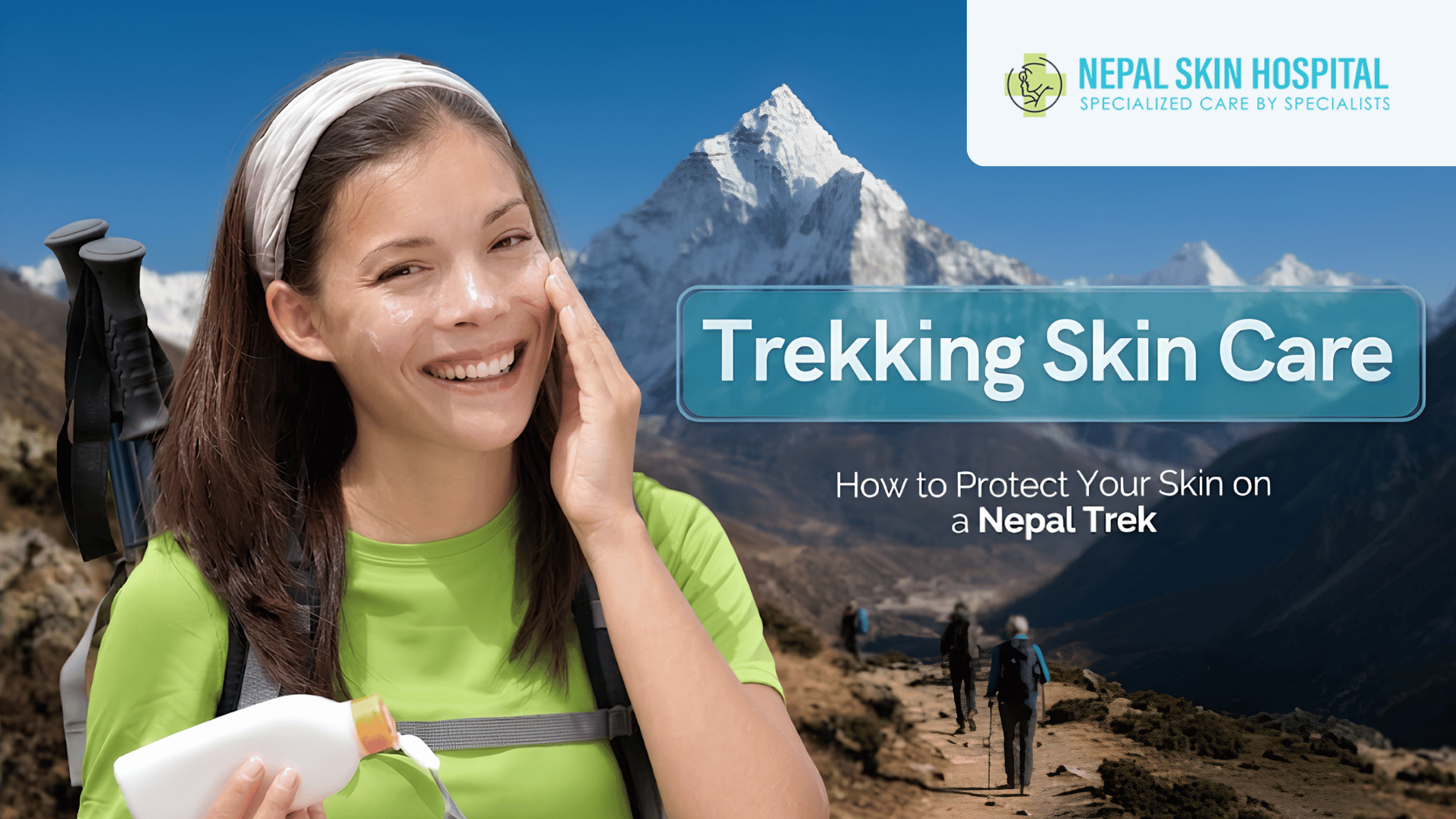
Quick Answer: This guide details a dermatologist-approved trekking skin care routine designed to protect hikers navigating Nepal’s high-altitude conditions in regions like Everest Base Camp, Annapurna, and Mustang. It outlines key environmental triggers such as intensified UV exposure, snow reflection, dry air, and cold winds, while providing preventative strategies for common issues like sunburn, windburn, cracked lips, and blisters. The post highlights a pre-trek preparation checklist (testing products and pausing active ingredients like retinol), a minimal daily trail routine, an essential packing list, post-trek recovery care, and safety precautions for severe conditions like frostbite.
Every year, thousands of people walk to Everest Base Camp, round Annapurna and explore Mustang. They come back with great photos. But many also come back with red, peeling faces, cracked lips and dry, sore hands.
The good news is that most of this can be stopped. Good trekking skin care is simple. You need the right sunscreen, a thick cream, a lip balm and a few smart habits.
In this guide, our skin doctors share easy tips for skincare on a Nepal trek. They cover what to do before you go, what to do each day on the trail, what to pack and what to do when you get home.
Why the mountains are hard on your skin
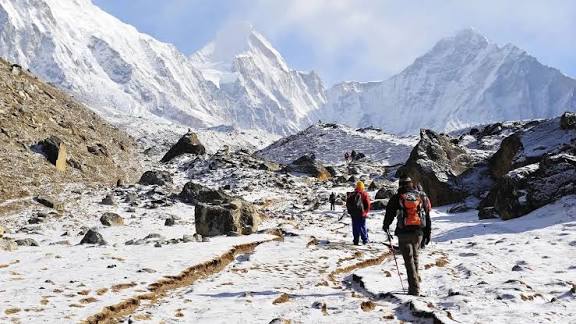
The mountains can be hard on your skin. Here are four reasons why.
1. Strong sun. The higher you go, the stronger the sun gets. UV rays go up by about 10 to 12% with every 1,000 metres you climb. At Everest Base Camp (about 5,364 m), the sun is much stronger than in Kathmandu.
2. Snow and ice. Fresh snow bounces back up to 80% of the sun’s rays. So the sun hits you twice: once from above and once from below. This is why the skin under your chin and nose can burn too.
3. Cold, dry air. Mountain air has very little water in it. It pulls water out of your skin. Your skin gets dry, tight and itchy.
4. Wind. Cold wind strips away your skin’s natural oils. This can make your face red, rough and sore. This is called windburn.
On cloudy days, most UV rays still get through the clouds. So you can burn even when it feels cold and grey.
Common skin problems on a Nepal trek
These are the skin problems we see most often in trekkers who come to our clinic.
| Problem | What it looks like | How to stop it |
| Sunburn | Red, hot, painful skin. It may blister and peel. | Use SPF 50 sunscreen. Put it on again every 2 hours. Wear a hat. |
| Windburn | Red, rough, stinging cheeks and nose | Use a thick cream. Cover your face with a buff or scarf. |
| Dry, flaky skin | Tight, itchy skin with white flakes | Use a rich moisturiser morning and night. |
| Cracked lips | Dry, split and sometimes bleeding lips | Use a lip balm with SPF many times a day. |
| Cracked hands and heels | Deep, painful cracks in the skin | Use a thick hand and foot cream at night. Wear socks to bed. |
| Blisters | Bubbles of fluid on the heels or toes | Wear boots that fit and are worn in. Cover hot spots with tape early. |
| Dark spots | New brown patches on the cheeks and forehead | Use sunscreen every day. People with melasma need extra care. |
| Frostbite | Cold, white or grey, numb skin on fingers, toes, nose or ears | Keep warm and dry. Get help fast if skin goes numb or hard. |
Frostbite is an emergency. If your skin feels numb, looks white or grey, or feels hard, tell your guide right away and get medical help.
Before you go: get your skin ready
Good trekking skin care starts at home, about two weeks before you fly out.
• Test your products at home. Don’t try a new sunscreen or cream for the first time on the trail. If it gives you a rash up there, it is hard to find a new one.
• Stop strong products. Stop retinol, acid toners and scrubs about one week before you go. These make your skin thin and quick to burn.
• Don’t get a peel or laser. Avoid chemical peels, laser treatments and waxing in the two weeks before your trek. Fresh, healing skin burns very easily.
• Ask about your medicines. Some medicines, like some antibiotics and acne pills, make your skin burn faster. Ask your doctor before you go.
• Break in your boots. Walk in your new boots for a few weeks before the trek. This helps stop blisters.
• See a skin doctor if needed. If you have melasma, eczema, rosacea or sun allergy, get advice before you go.
Skincare on a Nepal trek: a simple daily routine
On the trail, keep it simple. Water is cold and hard to find, so you only need a few steps.
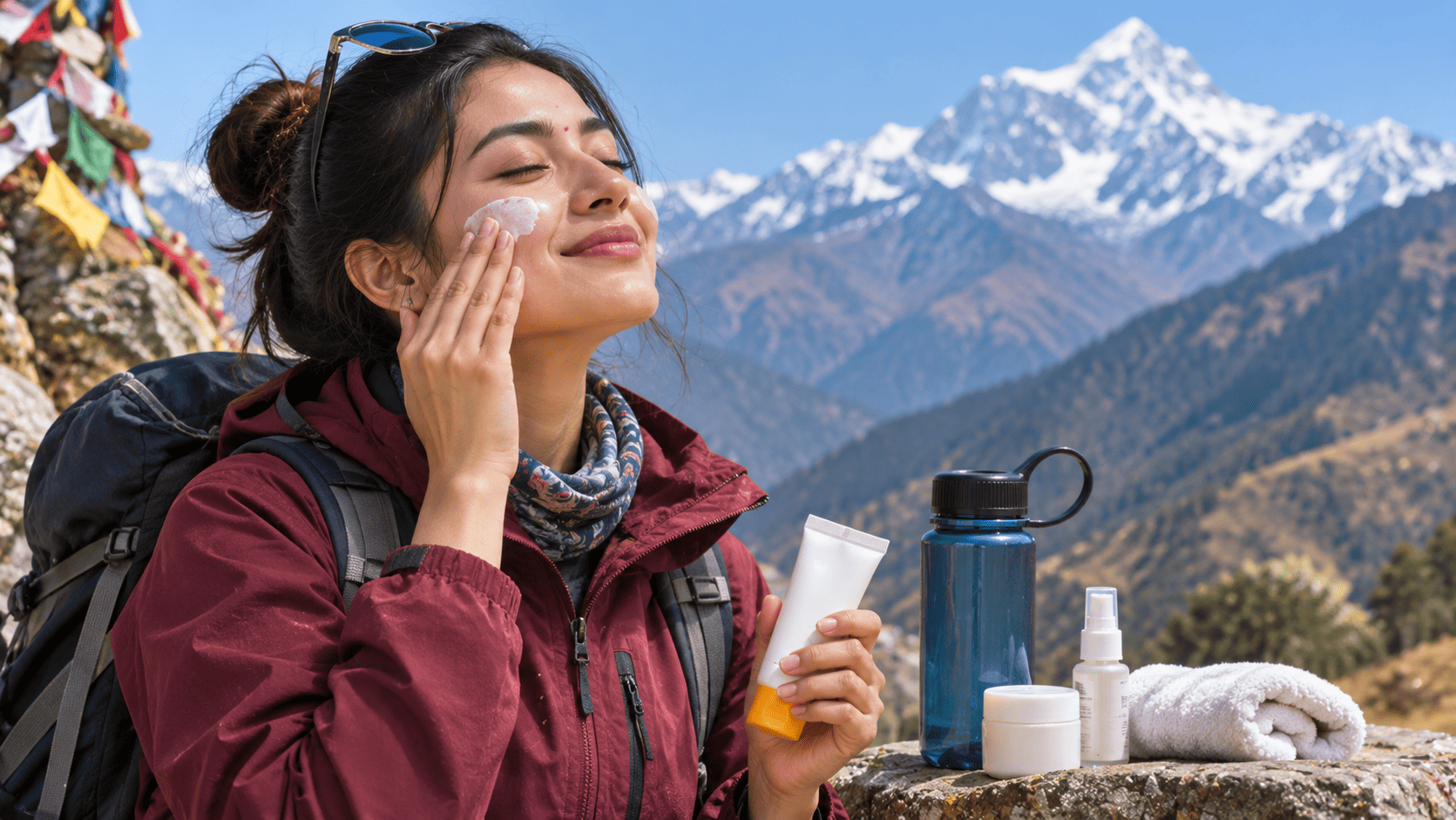
Morning
1. Wipe your face with a wet wipe, or wash with a little warm water if your tea house has it.
2. Put on a thick, fragrance-free moisturiser.
3. Put on a broad-spectrum sunscreen with SPF 50. Use about half a teaspoon for your face and neck. Don’t forget your ears, the back of your neck and under your chin and nose.
4. Put on a lip balm with SPF 30 or more.
Put your sunscreen on about 15 minutes before you start walking.
On the trail
• Put sunscreen on again every 2 hours. Do it more often if you sweat a lot or wipe your face.
• Put lip balm on every hour or so.
• Wear a wide hat or a cap with a neck cover.
• Wear sunglasses that block UV rays. Above the snow line, use dark glacier glasses. Strong sun on snow can burn your eyes too. This is called snow blindness.
• Cover your face with a buff or scarf when it is windy.
• Drink plenty of water. This is good for your body and your skin at high places.
Night
1. Clean off your sunscreen with a wet wipe or a gentle face wash.
2. Put on a rich, thick night cream. A thin layer of petroleum jelly on top locks in water on very dry nights.
3. Put a thick balm on your lips.
4. Rub a rich cream into your hands and heels. Then put on clean, dry socks.
Packing list: what your skin needs on a Nepal trek
Keep these items in a small bag. Keep your sunscreen and lip balm in a jacket pocket, so they stay warm and close by.
• Broad-spectrum sunscreen, SPF 50, water-resistant
• Lip balm with SPF 30 or more
• A thick, fragrance-free moisturiser for your face
• A rich hand and foot cream
• Petroleum jelly for lips, nose and cracked skin
• Biodegradable wet wipes
• A gentle face wash, in a small bottle
• A wide hat or a cap with a neck cover
• UV-blocking sunglasses or glacier glasses
• A buff or scarf for your face and neck
• Light gloves and warm gloves
• Blister plasters and sports tape
• Clean, dry socks for every day, plus one extra pair
• Hand sanitiser
Please carry your used wipes and empty tubes back down with you. Keep the mountains clean.
Mistakes to avoid on a trek
• Skipping sunscreen on cold or cloudy days. UV rays still get through. Many people burn on these days.
• Only putting sunscreen on once. One coat does not last all day. Put more on every 2 hours.
• Licking your lips. It makes them drier and more likely to crack.
• Using hot water on dry skin. Very hot water strips your skin’s oils. Use warm water instead.
• Picking peeling skin. Let it fall off by itself. Picking can cause scars and dark marks.
• Trying new products on the trail. Stick to what you tested at home.
• Using steroid creams without advice. Some creams from the pharmacy can harm your skin. Ask a doctor first.
After the trek: help your skin get better
When you come back to Kathmandu or Pokhara, give your skin some care.
• Use a gentle face wash and a rich moisturiser for one to two weeks.
• Put aloe vera gel or a cool, damp cloth on sunburned skin.
• Keep using sunscreen every day. Healing skin gets dark spots easily.
• Wait two weeks before you use retinol, acids, peels or laser again.
When to see a skin doctor
Visit a skin doctor if you notice any of these:
• Sunburn with large blisters, fever or chills
• Skin that stays red, swollen or painful after a few days
• New dark patches that do not fade
• Signs of skin infection, like pus, spreading redness or heat
• Fingers or toes that stay numb, hard, dark or blistered after the cold
• A mole that has changed in size, shape or colour
Frequently asked questions
What should I pack for a Nepal trek for my skin?
Pack an SPF 50 sunscreen, a lip balm with SPF, a thick face cream, a rich hand and foot cream and petroleum jelly. Add wet wipes, a hat, UV sunglasses, a buff, gloves and blister plasters. See our full packing list above.
What is the best skin care product in Nepal for trekking?
There is no single best product. The best ones for a trek are simple and gentle. Look for a broad-spectrum SPF 50 sunscreen, a fragrance-free thick moisturiser and a lip balm with SPF. Many good options are sold in Kathmandu and Pokhara. Pick ones that suit your skin and test them before you go.
What is the best Moisturizer for high altitude?
At high places, choose a thick cream, not a light gel or lotion. Look for words like “ceramides”, “glycerin”, “shea butter” or “petroleum jelly” on the label. These hold water in your skin and protect it from wind. Pick one with no added smell, as smell can bother dry skin.
What are the best skincare tips for hiking?
Use SPF 50 sunscreen and put it on again every 2 hours. Wear a hat and UV sunglasses. Use lip balm with SPF. Put on a thick cream at night. Drink lots of water. Keep your feet clean and dry to stop blisters.
What is the 4 2 4 rule in skincare?
The 4-2-4 rule is a way to wash your face. You rub an oil cleanser on your face for 4 minutes. Then you use a foam or gel face wash for 2 minutes. Then you rinse with water for 4 minutes. It is fine to do at home. But on a trek, water is cold and hard to find. So a wet wipe or a quick gentle wash is enough.
Do I need sunscreen if it is cold or cloudy on the trek?
Yes. Most UV rays get through the clouds. Snow also bounces the sun back onto your face. You can burn badly even on a cold, grey day.
Enjoy the view, protect your skin
A trek in Nepal is a trip you will never forget. With a little trekking skin care, you can come home with great memories and healthy skin, not a painful burn.
If you have melasma, sun allergy, eczema or other skin worries, see us before your trip. Our skin doctors can make a simple plan for your skin type. If your skin got hurt on the trail, we can help it heal.
Book your visit at Nepal Skin Hospital today. Get your skin ready for the mountains.
Note: This blog is for general information only. It does not replace a visit to a qualified doctor. For frostbite, severe sunburn or altitude sickness, get medical help right away.