

If you’ve been dealing with thick, scaly, red patches that won’t go away, especially on your elbows, knees, scalp, or lower back, and they seem to get worse every winter in the Kathmandu Valley’s dry, cold air, you might be dealing with psoriasis, not just “bad skin” or an allergy.
The good news is that effective psoriasis treatment in Nepal is available, and getting the right diagnosis early makes all the difference. Psoriasis is one of the more misunderstood skin conditions in Nepal. It’s often mistaken for a fungal infection, an allergic reaction, or even confused with vitiligo since both are chronic, non-contagious skin conditions, which means many patients spend months (sometimes years) trying the wrong creams before getting a proper diagnosis. This guide explains what psoriasis actually is, why it happens, how common it is in Nepal, and what real, dermatologist-backed treatment looks like.
What Is Psoriasis
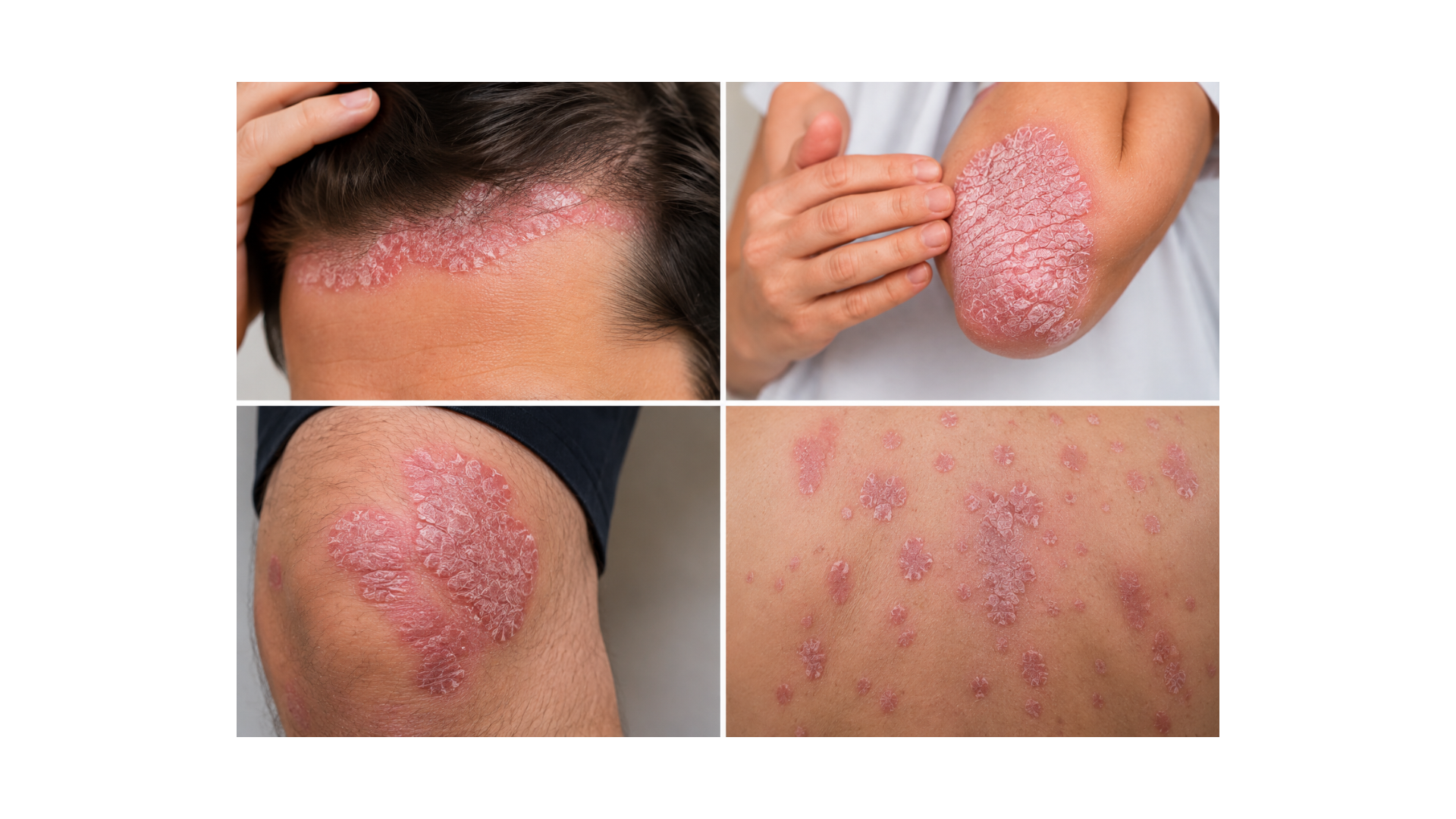
Psoriasis is a chronic autoimmune condition, not an infection. Your immune system mistakenly speeds up the growth cycle of skin cells: instead of taking about a month to form and shed, new cells are produced in just a few days. Since old cells don’t shed fast enough to keep up, they pile up on the skin’s surface, forming the thick, scaly, silvery-white patches (called plaques) that are the hallmark of the condition.
A few important things to know upfront:
- It is not contagious. You cannot catch psoriasis from someone or spread it to someone else through touch.
- It is chronic. There’s currently no permanent cure, but it can be managed very effectively, with long stretches of clear or near-clear skin.
- It tends to flare and settle in cycles, often triggered by specific factors rather than staying constant.
How Common Is Psoriasis in Nepal?
Psoriasis isn’t rare here. Dermatology research from Nepal estimates that around 2-3% of the population is affected, and it accounts for a meaningful share of all dermatology outpatient visits across the country. That’s broadly consistent with the WHO Global Report on Psoriasis, which recognizes psoriasis worldwide as a serious, often under-diagnosed noncommunicable disease. Studies from Nepali hospitals also show a few consistent patterns:
- Onset most commonly begins around the mid-20s.
- Plaque psoriasis (psoriasis vulgaris) is by far the most common type seen in Nepali patients.
- The extensor surfaces of the body (elbows, knees, and the lower back) are the most frequently affected areas.
- Treatment compliance tends to be poor, largely because patients stop treatment once symptoms improve slightly, only to see it flare up again later.
That last point matters a lot, and we’ll come back to it.
What Causes Psoriasis, and What Triggers It in Kathmandu Valley
Psoriasis itself is driven by genetics and immune system dysfunction. If a parent or sibling has it, your own risk goes up. But genetics alone don’t explain why flare-ups happen at certain times; that’s usually down to triggers, and several of these are especially relevant to life in the Kathmandu Valley:
- Cold, dry winter air: a very common trigger locally, as dry skin cracks more easily and irritates plaques.
- Stress: both emotional stress and major life changes.
- Skin injury: cuts, scrapes, tattoos, sunburn, or even scratching can trigger new patches at the injury site (known as the Koebner phenomenon).
- Infections: particularly throat infections, which are a known trigger for a specific subtype called guttate psoriasis.
- Certain medications: including some blood pressure drugs and lithium.
- Smoking and alcohol use, which are both associated with more severe disease.
Types of Psoriasis You Might See
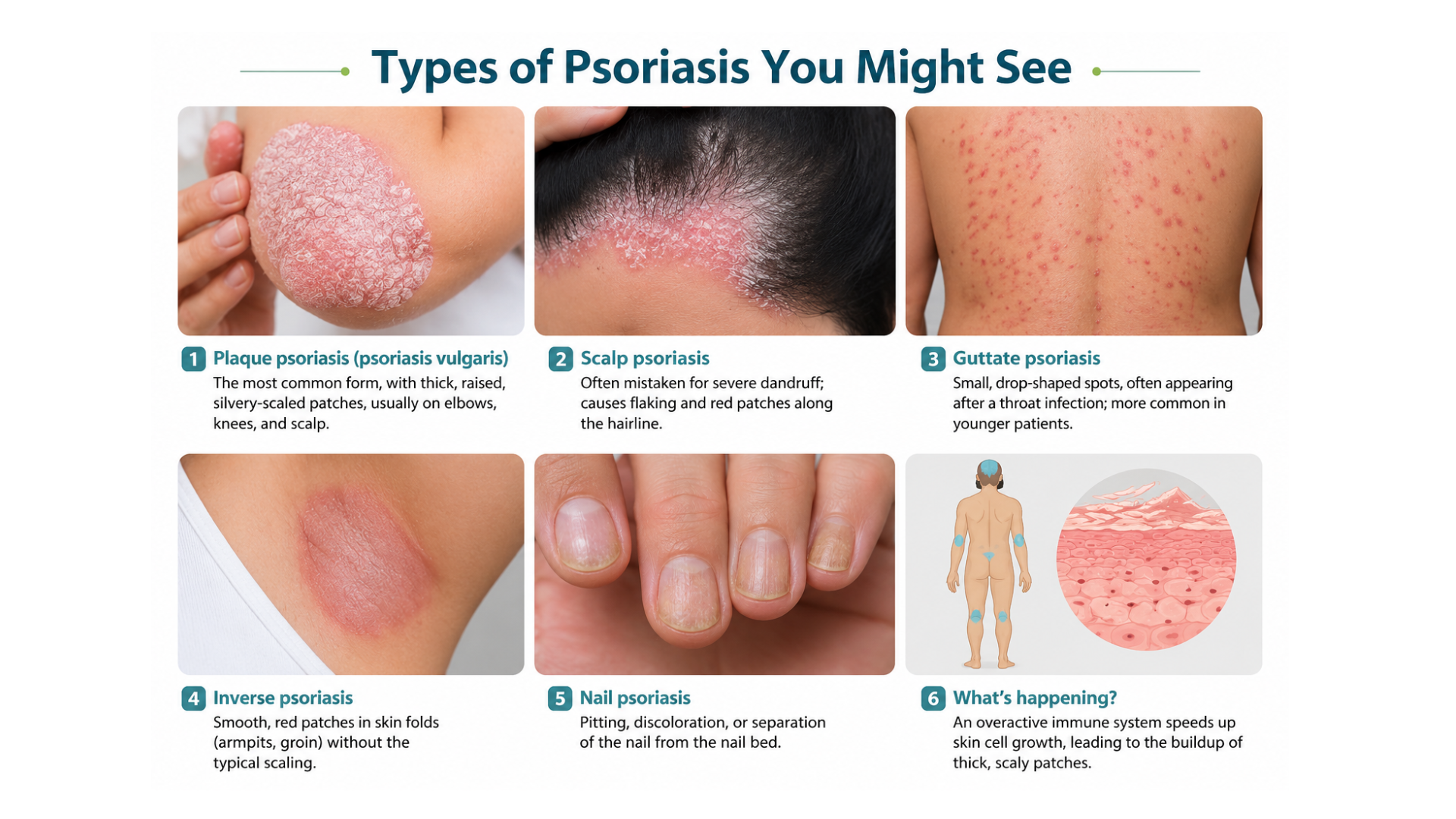
Some of the type of psoriasis are mentioned below:
- Plaque psoriasis (psoriasis vulgaris): The most common form, with thick, raised, silvery-scaled patches, usually on elbows, knees, and scalp.
- Scalp psoriasis: Often mistaken for severe dandruff; causes flaking and red patches along the hairline.
- Guttate psoriasis: Small, drop-shaped spots, often appearing after a throat infection; more common in younger patients.
- Inverse psoriasis: Smooth, red patches in skin folds (armpits, groin) without the typical scaling.
- Nail psoriasis: Pitting, discoloration, or separation of the nail from the nail bed.
Recognizing the Symptoms
Some of the symptoms of psoriasis are:
- Red or dark patches of skin topped with thick, silvery-white scales
- Dry, cracked skin that may bleed
- Itching, burning, or soreness
- Thickened, ridged, or discolored nails
- Stiff or swollen joints in some patients (a related condition called psoriatic arthritis)
If you notice patches that persist for more than a couple of weeks, don’t respond to over-the-counter creams, or keep coming back in the same spots, it’s worth booking a proper evaluation with one of our dermatologists rather than continuing to self-treat.
How Psoriasis Is Diagnosed
Diagnosis is usually clinical: an experienced dermatologist can often identify psoriasis by examining the pattern, location, and appearance of the plaques. In some cases, a skin biopsy is used to rule out other conditions like eczema or fungal infections, since the visual overlap can be significant, especially in early stages.
Psoriasis Treatment Options in Nepal That Actually Work
There’s no single “cure,” but psoriasis responds well to the right combination of treatments, tailored to how severe it is and how much of the body is affected.
1. Topical treatments (mild to moderate cases) Corticosteroid creams and vitamin D analog ointments are typically the first line of treatment, used to reduce inflammation and slow down skin cell turnover. Moisturizers and emollients also play a bigger role than most patients expect: consistent moisturizing genuinely reduces flare severity, particularly during Kathmandu’s dry winter months.
2. Phototherapy Controlled exposure to ultraviolet (UV) light under medical supervision can significantly reduce plaques for moderate cases that don’t respond well to topicals alone.
3. Systemic and oral medications (moderate to severe cases) For more extensive psoriasis, oral medications that work on the whole immune system may be prescribed, always with monitoring for side effects.
4. Biologic therapy Biologics target specific parts of the immune system responsible for psoriasis and are highly effective for severe or treatment-resistant cases. It’s worth being upfront here: biologics remain expensive and less readily available in Nepal compared to topical or systemic options, so they’re generally reserved for more serious cases where other treatments haven’t worked.
5. Lifestyle and self-care (ongoing, alongside medical treatment)
- Moisturize daily, especially in winter
- Avoid scratching or picking at plaques
- Identify and avoid your personal triggers (many patients benefit from keeping a simple flare diary)
- Manage stress through regular sleep, exercise, or relaxation techniques
- Avoid harsh soaps and very hot showers, which strip natural moisture
Why Sticking With Treatment Matters
One of the most consistent findings from Nepali dermatology studies is that patients often stop treatment as soon as symptoms improve, which leads to relapse. Psoriasis needs to be managed as a long-term condition, similar to diabetes or high blood pressure, not treated like an infection that clears up once and stays gone. Working with a dermatologist who monitors your response over time and adjusts your treatment plan is what actually leads to lasting control, rather than a cycle of flare-ups and short-term fixes.
FAQs (Psoriasis Treatment in Nepal)
Is psoriasis curable?
No. Psoriasis is a chronic autoimmune condition with no permanent cure, but it can be controlled very effectively. With the right treatment plan, most patients achieve long stretches of clear or near-clear skin.
Is psoriasis contagious?
No. Psoriasis cannot be spread through touch, sharing clothes, or close contact. It’s an internal immune system response, not an infection.
What is the fastest way to treat a psoriasis flare-up?
Topical corticosteroids combined with consistent moisturizing bring the fastest relief for mild to moderate flares. For larger or more stubborn patches, phototherapy under a dermatologist’s supervision tends to work faster than topicals alone.
Why does psoriasis get worse in Kathmandu’s winter?
Cold, dry air strips moisture from the skin, causing existing plaques to crack, thicken, and itch more. Keeping skin consistently moisturized through the winter months is one of the simplest ways to reduce flare severity.
Why does psoriasis get worse in Kathmandu’s winter?
Cold, dry air strips moisture from the skin, causing existing plaques to crack, thicken, and itch more. Keeping skin consistently moisturized through the winter months is one of the simplest ways to reduce flare severity.
Is psoriasis hereditary?
Yes, genetics play a major role. If a parent or sibling has psoriasis, your own risk of developing it is higher, though not everyone with a family history will get it.
What is the difference between psoriasis and eczema?
Psoriasis causes thick, well-defined patches with silvery scales, driven by an overactive immune system speeding up skin cell turnover. Eczema causes more diffuse, intensely itchy, inflamed skin and is usually linked to allergies or a compromised skin barrier. A dermatologist can tell them apart on examination, and sometimes a biopsy is needed since early-stage cases can look similar.
Which doctor should I see for psoriasis in Nepal?
A dermatologist, ideally one experienced in treating chronic autoimmune skin conditions, is who you should see for both diagnosis and long-term management. Psoriasis often needs ongoing adjustment of treatment, so continuity with the same doctor makes a real difference.
Can diet affect psoriasis?
Diet doesn’t cause psoriasis, but certain foods and alcohol can trigger flares in some people. Many patients find it useful to keep a simple food and symptom diary to identify their own personal triggers.
Are biologic treatments available for psoriasis in Nepal?
Yes, but they remain expensive and less widely available compared to topical or systemic treatments. Biologics are generally reserved for severe or treatment-resistant cases where other options haven’t worked.
How much does psoriasis treatment cost in Nepal?
Cost depends heavily on severity and the type of treatment needed. Basic topical treatment is the most affordable option, while phototherapy, systemic medication, and biologics cost progressively more. It’s best to get an in-person evaluation for an accurate estimate specific to your case.
Can psoriasis come back after treatment?
Yes. Psoriasis is a lifelong condition that flares and settles in cycles, even after successful treatment. This is why stopping treatment as soon as symptoms clear is one of the biggest reasons for relapse, and ongoing management matters more than a one-time fix.
Can stress alone cause a psoriasis flare-up?
Yes, stress is one of the most common triggers, even without any other risk factor present. Managing stress through sleep, exercise, or relaxation techniques is a genuinely useful part of keeping psoriasis under control, alongside medical treatment.
Getting Psoriasis Treatment at Nepal Skin Hospital
At Nepal Skin Hospital, our dermatologists diagnose and manage psoriasis using a combination of clinical evaluation, topical and systemic treatment options, and ongoing follow-up care tailored to how the condition is affecting you, not a one-size-fits-all prescription. With over a decade of experience and more than 1,20,000 patients treated across our branches in Bijuli Bazaar, Bhaktapur, and Pepsicola, we understand how psoriasis behaves in the Kathmandu Valley’s climate and how to build a treatment plan that actually fits your day-to-day life.
If you’re dealing with persistent skin patches that haven’t responded to home remedies or over-the-counter creams, don’t wait it out. Book an appointment with our dermatology team and get a proper diagnosis and treatment plan.