



A consistent daily skincare routine is one of the most effective things you can do for the long-term health and appearance of your skin. Yet despite the endless advice available online, many people still feel overwhelmed, confused, or unsure where to begin. Some use too many products and irritate their skin. Others skip important steps entirely. And a large number of people simply use whatever is available, without considering whether it actually suits their skin type.
The truth, however, is refreshingly simple. A good daily skincare routine does not need to be complicated, expensive, or time-consuming. In fact, dermatologists consistently emphasise that a basic, well-chosen routine followed consistently will always outperform an elaborate one used irregularly. According to the American Academy of Dermatology, the three non-negotiable pillars of every daily skincare routine are cleansing, moisturising, and sun protection, regardless of skin type.
In this guide, we break down everything you need to know about building a daily skincare routine that works specifically for your skin type, whether it is oily, dry, combination, normal, or sensitive. Furthermore, we explain what each step does, why it matters, and how to adapt it to Nepal’s unique climate. If you are unsure where to start, our skin specialists are always available to guide you with personalised advice.
Why a Daily Skincare Routine Matters for Your Skin

Before diving into the steps, it is worth understanding why a daily skincare routine is so important in the first place. Your skin is constantly exposed to environmental stressors, UV radiation, pollution, dust, humidity, and temperature changes, all of which degrade the skin’s protective barrier over time. Additionally, the skin undergoes a natural renewal cycle every 28 to 30 days, shedding old cells and generating new ones. A consistent daily skincare routine supports this process by keeping the skin clean, hydrated, and protected at every stage.
Moreover, the benefits of a daily skincare routine extend well beyond appearance. Regular cleansing prevents the build-up of bacteria and dead skin cells that lead to acne and infections. Consistent moisturising strengthens the skin barrier, reducing sensitivity and water loss. And daily sun protection, arguably the most important step of any daily skincare routine, prevents premature ageing, hyperpigmentation, and the cumulative UV damage that increases the risk of skin cancer.
In Nepal specifically, where Kathmandu’s altitude exposes skin to stronger UV radiation and seasonal weather swings between harsh monsoon humidity and dry winter cold, a well-structured daily skincare routine is not a luxury. It is a necessity.
Step One: Know Your Skin Type Before Starting Any Daily Skincare Routine
The single most important factor in building an effective daily skincare routine is understanding your skin type. Using the wrong products for your skin type can worsen breakouts, cause dryness, trigger sensitivity reactions, and strip the skin’s natural protective barrier. Conversely, matching your routine to your skin type ensures that every step works with your skin rather than against it.
The American Academy of Dermatology classifies skin into five primary types:
Oily skin

Oily skin produces excess sebum, giving the face a shiny or greasy appearance, particularly across the T-zone (forehead, nose, and chin). Enlarged pores, blackheads, and a tendency towards acne breakouts are common characteristics. Despite the excess oil, however, oily skin still requires moisturization; skipping this step often makes the skin produce even more oil to compensate.
Dry skin
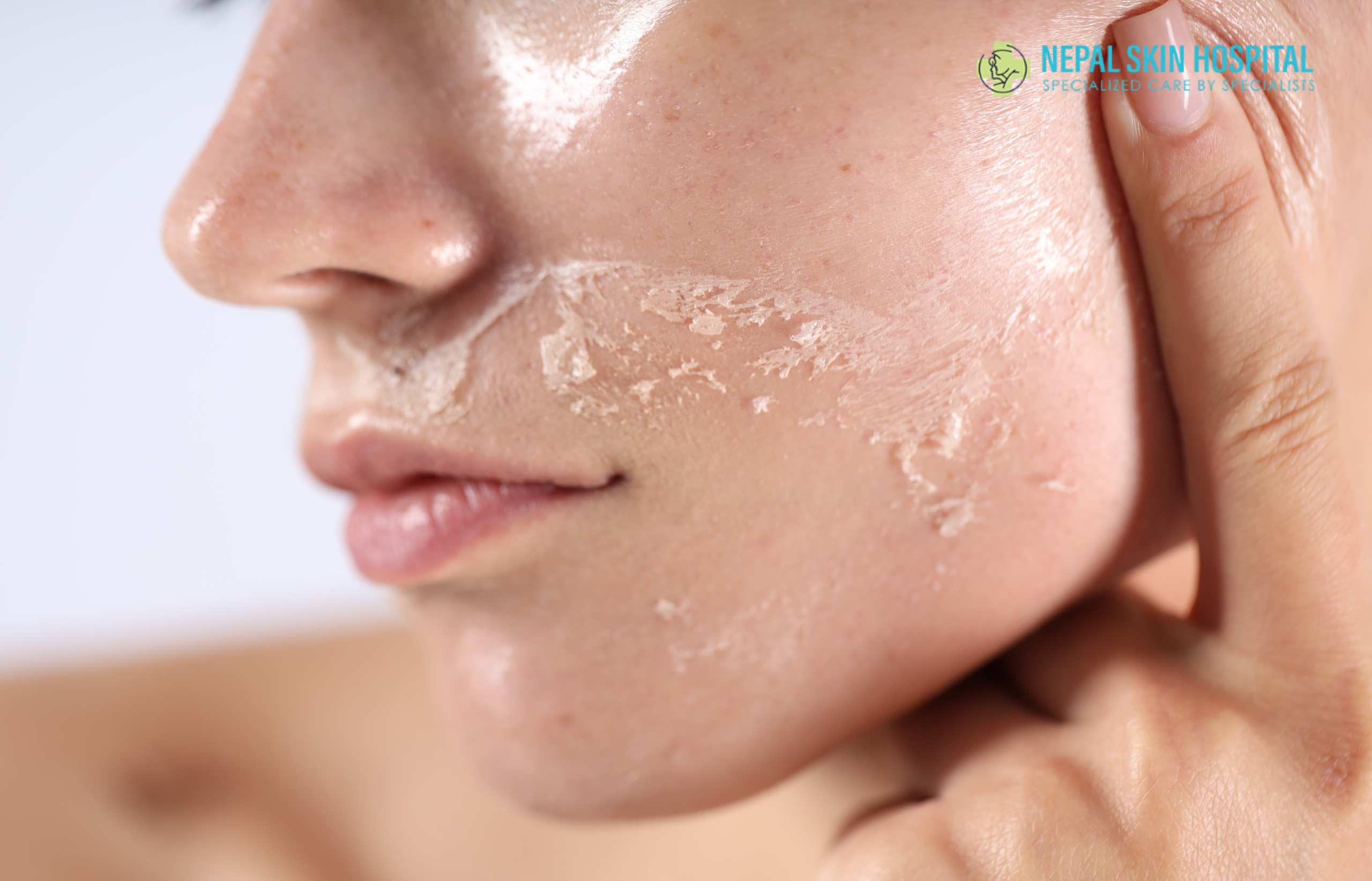
Dry skin produces less sebum than normal, leaving it prone to tightness, flakiness, dullness, and a rough texture. It is also more vulnerable to fine lines and premature ageing, since adequate moisture is essential for maintaining the skin’s elasticity. Dry skin tends to worsen in cold, windy, or low-humidity environments, conditions common in Nepal’s winter months.
Combination skin
Combination skin, as the name suggests, displays characteristics of both oily and dry skin simultaneously. Typically, the T-zone is oily with enlarged pores and occasional breakouts, while the cheeks and outer areas of the face are normal to dry. This is the most common skin type globally and requires a targeted approach, treating different zones differently rather than applying a one-size-fits-all routine.
Normal skin
Normal skin is well-balanced, neither too oily nor too dry. It has small pores, a smooth texture, and rarely experiences extreme sensitivity or breakouts. While normal skin is the most forgiving to care for, it still benefits greatly from a consistent daily skincare routine to maintain its health and prevent premature ageing.
Sensitive skin

Sensitive skin is characterised by a heightened reactivity to products, weather, and environmental triggers. It is prone to redness, itching, burning, and stinging, often without visible cause. Importantly, sensitivity is not a skin type in isolation; it can accompany oily, dry, or combination skin. People with sensitive skin benefit most from gentle, fragrance-free formulations with minimal active ingredients.
Quick skin type test: Wash your face with a gentle cleanser and wait 30 minutes without applying anything. If your skin looks shiny all over, you have oily skin. If it feels tight or flaky, it’s dry skin. Shiny only in the T-zone, combination skin. Comfortable and balanced, normal skin. Red, irritated, or stinging, sensitive skin.
The Daily Skincare Routine: Morning Steps for Every Skin Type
A morning daily skincare routine focuses on one primary goal: protecting your skin from the day ahead. Specifically, this means cleansing away overnight build-up, hydrating the skin, and forming a protective barrier against UV radiation and environmental pollutants. The order in which you apply products also matters; dermatologists recommend working from the thinnest consistency to the thickest, allowing each layer to absorb properly before the next is applied.
Morning Step 1 — Cleanse gently

Begin your morning daily skincare routine with a gentle, mild cleanser to remove sweat, excess oil, and any residue from overnight skincare products. Use lukewarm water, never hot, and apply the cleanser with soft, circular motions for 30 to 60 seconds before rinsing thoroughly.
- Oily skin: Use a gel-based or foaming cleanser to remove excess sebum without over-stripping.
- Dry skin: Choose a cream or milk cleanser that cleans without disrupting the moisture barrier.
- Combination skin: A gentle foaming cleanser that balances both oily and dry zones works well.
- Normal skin: Any mild, fragrance-free cleanser is suitable.
- Sensitive skin: Opt for a fragrance-free, sulphate-free cleanser with as few ingredients as possible.
Morning Step 2 — Moisturise
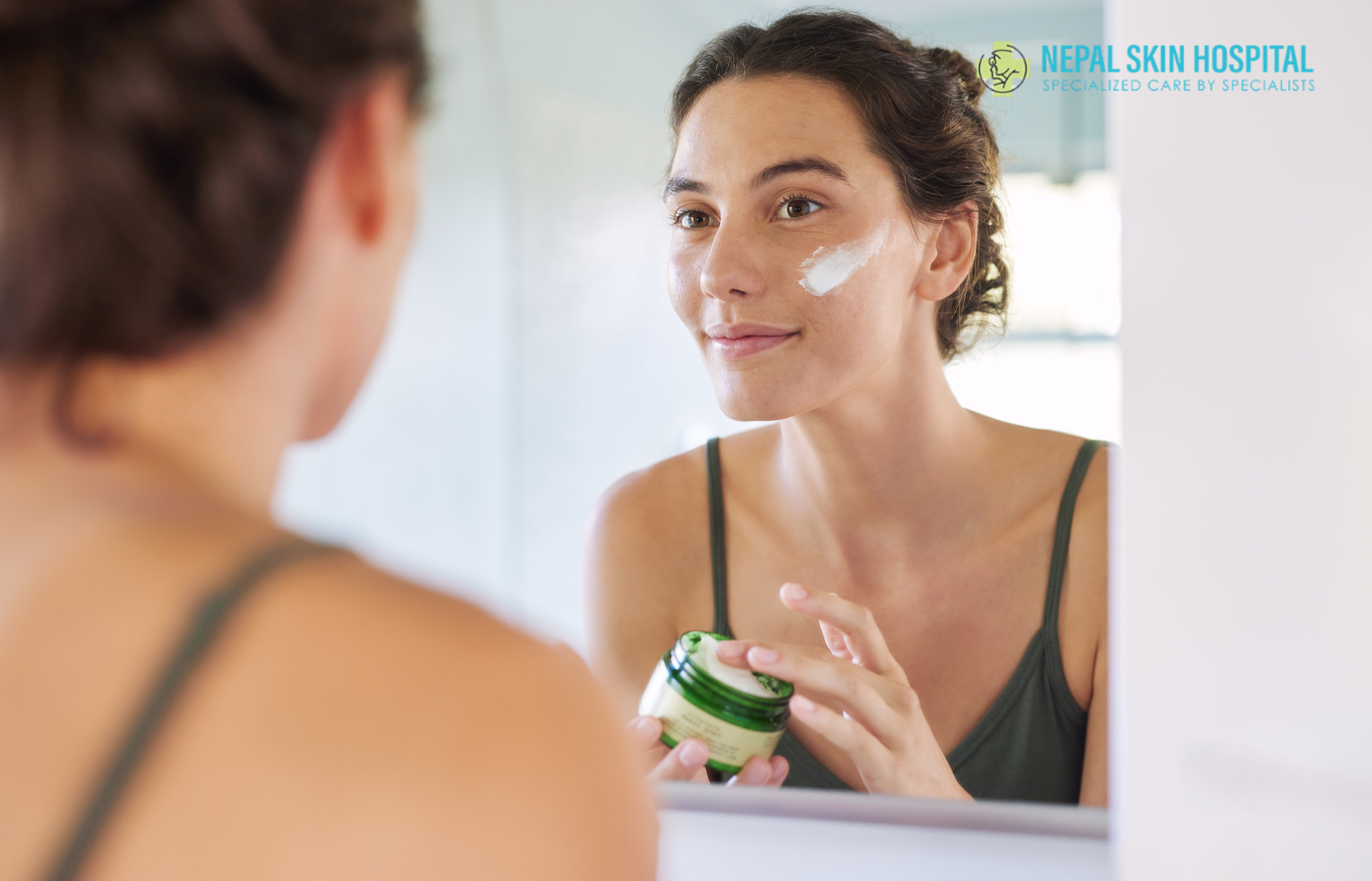
After cleansing, immediately apply a moisturiser to lock in hydration before it evaporates. This step is essential for all skin types, including oily skin, which still requires hydration to function properly. Furthermore, a well-moisturised skin barrier is more resilient against irritants, UV damage, and pollution.
- Oily skin: A lightweight, oil-free gel moisturiser or water-based lotion is ideal; heavy creams can clog pores.
- Dry skin: Choose a richer cream moisturiser containing humectants such as hyaluronic acid and glycerin to draw and retain moisture.
- Combination skin: Use a lightweight moisturiser overall, applying a slightly richer formula only to drier areas.
- Normal skin: A lightweight lotion or fluid moisturiser maintains the skin’s natural balance.
- Sensitive skin: Look for calming, fragrance-free moisturisers containing ceramides or centella asiatica to soothe and repair.
Morning Step 3 — Apply broad-spectrum sunscreen (SPF 30 or higher)

This is the single most important step of your entire daily skincare routine, morning and evening. Applying a broad-spectrum sunscreen with SPF 30 or higher every morning protects your skin against both UVA and UVB radiation, preventing premature ageing, hyperpigmentation, and the long-term cellular damage that contributes to skin cancer.
In Nepal, where Kathmandu’s altitude significantly amplifies UV exposure, especially between March and September, daily sunscreen is non-negotiable regardless of whether it is sunny or overcast. Remember that up to 80% of UV rays penetrate cloud cover. Therefore, apply sunscreen as the last step of your morning daily skincare routine, every single day. For more on this topic, read our detailed guide on sun damage and skin protection.
The Daily Skincare Routine: Evening Steps for Every Skin Type
While your morning daily skincare routine focuses on protection, your evening routine focuses on repair and renewal. Overnight, the skin enters its most active regeneration phase, cell turnover accelerates, and the skin works to repair the damage accumulated during the day. Therefore, your evening routine should support this process by thoroughly cleansing the skin and providing nourishment.
Evening Step 1 — Double cleanse if needed
In the evening, it is important to remove sunscreen, makeup, excess sebum, and the environmental pollutants that have accumulated on the skin throughout the day. If you wear sunscreen or makeup, a double cleanse is recommended, beginning with an oil-based cleanser or micellar water to dissolve these products, followed by your regular gentle cleanser to ensure the skin is thoroughly clean.
Conversely, if you do not wear sunscreen or makeup during the day, a single gentle cleanse in the evening is sufficient. Avoid over-cleansing, as this strips the skin’s natural oils and weakens the barrier function.
Evening Step 2 — Treat (optional but beneficial)
After cleansing, the evening is the ideal time to apply any targeted treatment products, such as retinoids, niacinamide, or azelaic acid, if these are part of your routine. These active ingredients work best at night because they are not exposed to sunlight, which can degrade or inactivate some formulations. Additionally, the skin’s increased permeability overnight allows these ingredients to penetrate more effectively.
However, it is important to introduce any new active ingredients gradually and one at a time, particularly for sensitive or dry skin types. Using too many actives simultaneously is one of the most common mistakes in skincare and can cause irritation, barrier damage, and increased sensitivity.
Evening Step 3 — Moisturise
Complete your evening daily skincare routine with a moisturiser, ideally slightly richer than your morning formula, to support the skin’s overnight repair process. For dry skin, this is an especially important step, as the skin loses more moisture overnight. For oily skin, even a lightweight gel moisturiser applied at night helps maintain barrier function and prevents overnight dehydration.
Beyond the Daily Skincare Routine: Weekly Habits That Make a Difference
In addition to your daily skincare routine, incorporating a few weekly practices can further improve your skin’s texture, clarity, and radiance. These steps are not daily essentials, but they enhance the results of your core routine when used consistently.
Gentle exfoliation (1–2 times per week)
Exfoliation removes dead skin cells from the surface of the skin, improving texture, brightness, and the absorption of subsequent skincare products. However, over-exfoliation is a very common mistake that damages the skin barrier and triggers inflammation. As a result, limit exfoliation to once or twice per week, and always choose a gentle formulation appropriate for your skin type.
- Oily or combination skin: Chemical exfoliants containing BHA (salicylic acid) penetrate pores and help control excess oil.
- Dry or sensitive skin: Gentle enzyme exfoliants or mild AHAs (such as lactic acid) offer effective exfoliation without irritation.
- Avoid: Coarse physical scrubs, which can cause micro-tears and worsen inflammation, especially for acne-prone or sensitive skin.
Face masks (once per week)

Weekly face masks can address specific skin concerns, such as deep hydration for dry skin, oil control for oily skin, or soothing and calming for sensitive skin. However, always choose masks suited to your skin type and limit use to once per week to avoid over-stimulating the skin.
Supporting Your Daily Skincare Routine from the Inside Out
A daily skincare routine applied topically is only one part of healthy skin. Equally important is supporting your skin from within through consistent lifestyle habits. As research consistently confirms, the skin’s condition is directly influenced by what you eat, how much you sleep, your stress levels, and your level of physical activity.
- Hydration: Drink at least 8 glasses of water daily to maintain skin moisture and support the elimination of toxins.
- Nutrition: A diet rich in antioxidants, omega-3 fatty acids, vitamins A, C, and E supports skin repair, collagen production, and protection against oxidative damage.
- Sleep: The skin regenerates most actively between 10 PM and 2 AM. Aim for 7 to 9 hours of quality sleep each night to allow this process to occur undisturbed.
- Stress management: Chronic stress increases cortisol levels, which trigger excess oil production and inflammation, two key drivers of acne and skin sensitivity.
- Exercise: Regular physical activity improves blood circulation, delivering oxygen and nutrients to skin cells and supporting a healthy, radiant complexion.
Common Daily Skincare Routine Mistakes to Avoid
Even with the best intentions, certain habits can undermine your daily skincare routine and damage your skin over time. Specifically, watch out for the following:
- Skipping sunscreen on cloudy days, UV rays penetrate cloud cover, making daily SPF essential year-round.
- Using too many active ingredients at once, this overwhelms the skin barrier and often does more harm than good.
- Over-cleansing, washing the face more than twice a day, strips natural oils and triggers reactive oil production.
- Picking or squeezing spots spreads bacteria, worsens inflammation, and significantly increases scarring risk.
- When applying products in the wrong order, always go from thinnest to thickest consistency for optimal absorption.
- Changing your routine too frequently, give new products at least 4 to 6 weeks before evaluating results.
- Neglecting the neck and hands, these areas are equally exposed to UV and environmental damage, yet are frequently missed in skincare routines.
When Your Daily Skincare Routine Needs Professional Support
A well-maintained daily skincare routine addresses the needs of most healthy skin types. Nevertheless, there are situations where professional dermatological guidance is genuinely necessary. Consider seeing a qualified dermatologist if:
- Your skin condition, such as acne, eczema, psoriasis, or hyperpigmentation, is not improving despite a consistent routine.
- You are experiencing persistent redness, irritation, or sensitivity that does not resolve with gentle products.
- You want professional guidance on building a personalised daily skincare routine suited to your exact skin type and concerns.
- You are interested in professional treatments such as chemical peeling or laser treatments to address existing skin concerns like pigmentation, scarring, or uneven texture.
- You notice any new or changing spots, moles, or growths on your skin.
At Nepal Skin Hospital, our experienced team provides comprehensive skin assessments and personalised care plans, ensuring your daily skincare routine is built on a solid, expert foundation.
Final Thoughts: Your Daily Skincare Routine Starts Today
Building a daily skincare routine is one of the most meaningful investments you can make in your long-term health and confidence. It does not require a shelf full of expensive products or hours of your time. Instead, it requires three things: the right steps, the right products for your skin type, and, above all, consistency.
To summarise: cleanse gently, moisturise daily, and never skip your sunscreen. Add exfoliation once or twice a week, support your skin with good nutrition and sleep, and avoid the common mistakes that undermine progress. Whether your skin is oily, dry, combination, normal, or sensitive, a thoughtfully constructed daily skincare routine will deliver visible, lasting results.
If you are ready to take the guesswork out of skincare, book an appointment with our dermatologists at Nepal Skin Hospital. We will assess your skin type, identify any concerns, and help you build a personalized daily skincare routine that delivers real, lasting results. Because healthy skin is not an accident, it is a habit.