


Sun damage skin protection is one of the most important yet most overlooked aspects of everyday health, especially in Nepal. Most people assume that sun protection is only necessary during the summer months or when visiting the beach. However, the reality is far more concerning. Ultraviolet (UV) radiation reaches your skin every single day, whether the sky is clear or overcast, and the effects accumulate silently over the years before the damage becomes visible.
In fact, Kathmandu sits at approximately 1,400 metres above sea level, and as altitude increases, UV intensity increases too. Research shows that UV radiation is nearly 17% stronger at Kathmandu’s elevation compared to sea level. Furthermore, the UV Index in Kathmandu peaks as high as 14 during the months of April through September, a level classified as extreme. That means on certain days, unprotected skin can begin to burn in as little as 10 minutes.
Therefore, understanding how sun damage occurs, what signs to look for, and, most importantly, how to protect yourself is essential. In this guide, we break down everything you need to know to keep your skin safe, healthy, and youthful for years to come. If you are already experiencing skin concerns related to sun exposure, our skin specialists in Kathmandu are here to help.
What Is Sun Damage and How Does It Happen?
To begin with, sun damage, also known as photoaging or photodamage, refers to the premature ageing and injury of skin cells caused by repeated exposure to ultraviolet radiation. Unlike natural skin ageing, which happens gradually due to genetics and time, photoaging is entirely preventable.
The sun emits two types of UV rays that reach the Earth’s surface and affect your skin:
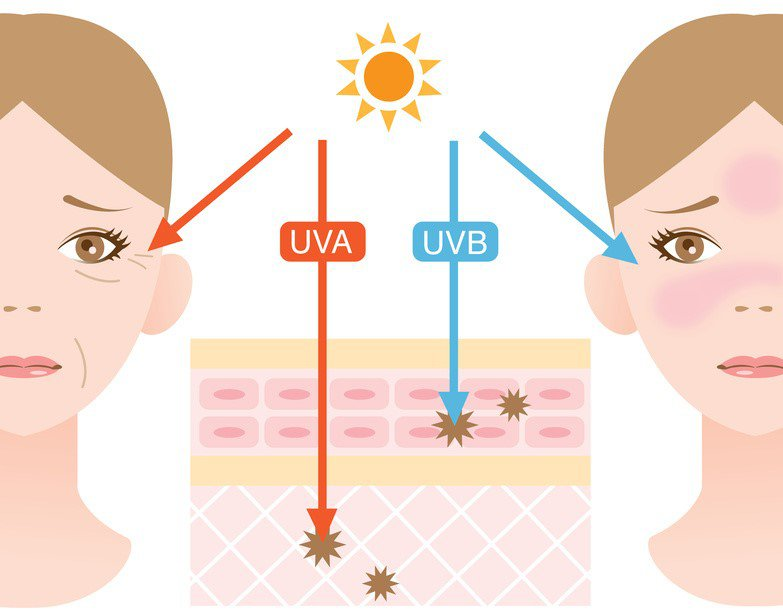
UVB rays (Ultraviolet B)
UVB rays have shorter wavelengths and primarily affect the outer layers of the skin. They are the main cause of sunburn, redness, and direct DNA damage in skin cells. Additionally, UVB rays are a major contributing factor to skin cancer. Notably, UVB rays are strongest between 10 AM and 4 PM and are more intense during Nepal’s spring and summer months.
UVA rays (Ultraviolet A)
UVA rays, on the other hand, have longer wavelengths and penetrate deeper into the skin, reaching the dermis, the skin’s second layer. As a result, they break down collagen and elastin, the structural proteins responsible for keeping skin firm and smooth. Over time, this leads to wrinkles, sagging, uneven skin tone, and dark spots. Importantly, UVA rays are present at relatively consistent levels throughout the entire year, including on cloudy days and even through glass windows.
Furthermore, scientific research has confirmed that up to 80% of visible facial ageing may be directly related to cumulative sun exposure rather than chronological ageing alone. This makes sun damage skin protection not just a cosmetic concern, but a genuine long-term health priority.
What Are the Visible Signs of Sun Damage?
Sun damage does not always appear immediately. Instead, it builds up over time and becomes visible in the following ways:
- Sunburn: Redness, pain, and peeling after unprotected sun exposure are the most immediate signs of UV damage.
- Hyperpigmentation: Dark patches or spots on the skin, also known as sun spots or age spots, are caused by excess melanin production triggered by UV rays.
- Wrinkles and fine lines: Premature creasing of the skin due to the breakdown of collagen and elastin by UVA rays.
- Uneven skin tone: Patchy or blotchy skin texture caused by irregular melanin distribution.
- Rough or leathery skin texture: A coarsening of the skin surface from years of UV exposure.
- Visible blood vessels: Broken capillaries near the skin’s surface, particularly on the face and nose.
- Actinic keratosis: Rough, scaly patches on sun-exposed skin that can, in some cases, progress to skin cancer if left untreated.
Consequently, if you notice any of these changes on your skin, it is worth consulting a qualified dermatologist to assess the extent of the damage and explore appropriate treatment options.
Why Is Sun Protection So Important in Nepal?
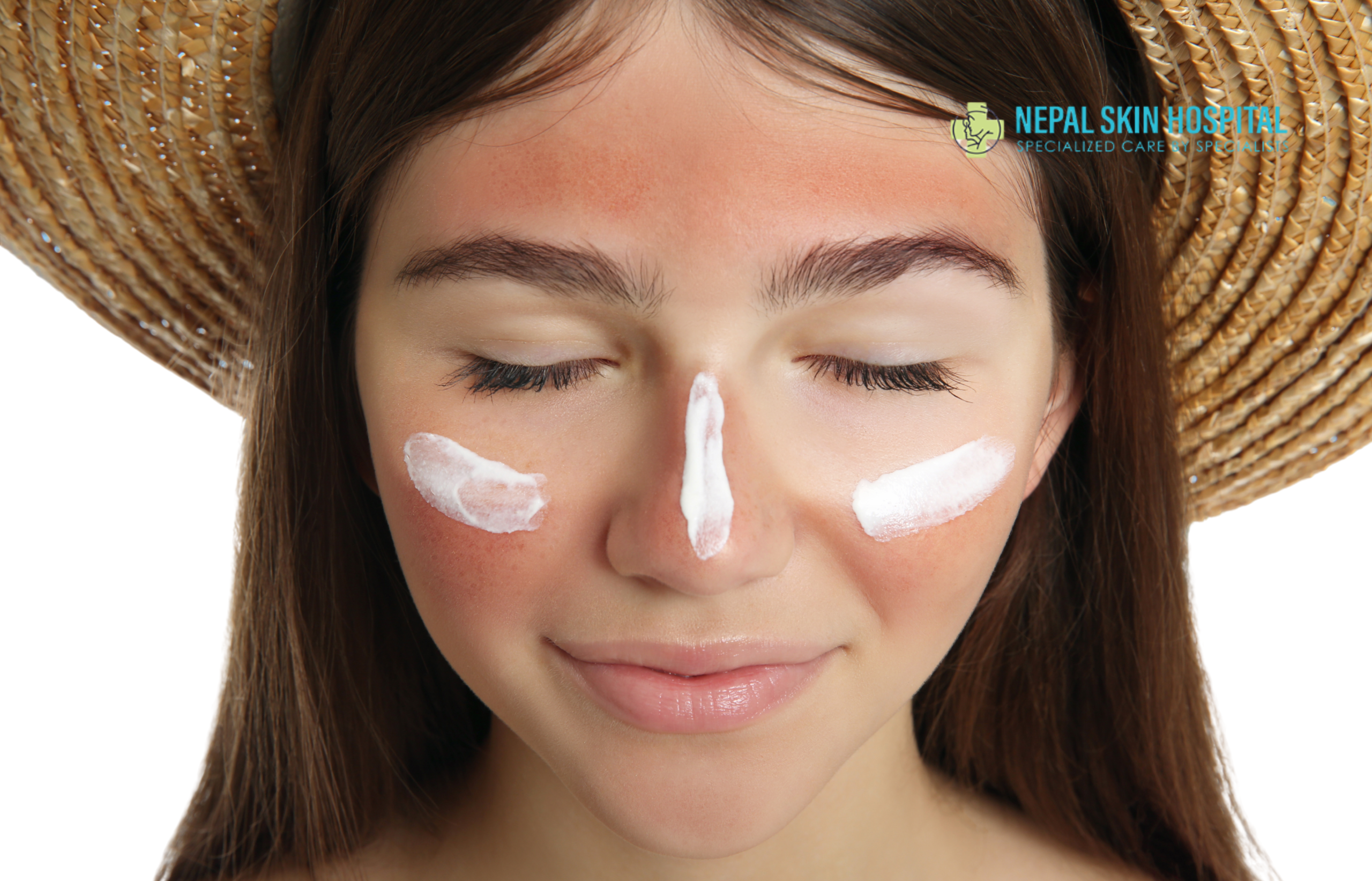
Nepal’s geography makes sun damage skin protection especially critical. Because Kathmandu is located at a high altitude, the atmosphere is thinner and filters less UV radiation compared to cities at sea level. As a result, the UV Index regularly reaches extreme levels, particularly from March to September, which coincides with festivals, outdoor activities, trekking season, and the school year.
Moreover, awareness of UV protection remains relatively low in Nepal. Many people believe that darker skin tones provide complete natural protection. While it is true that higher concentrations of melanin offer some natural defence against UVB radiation, no skin type is fully immune to UV damage. In particular, people with darker skin are more susceptible to conditions such as melasma and post-inflammatory hyperpigmentation caused by visible light and UVA rays.
Therefore, regardless of your skin tone, age, or daily routine, adopting a consistent sun protection habit is one of the most valuable investments you can make for your long-term skin health.
How to Protect Your Skin from Sun Damage: A Practical Daily Guide
The good news is that effective sun damage skin protection does not require dramatic lifestyle changes. Instead, it involves building a few simple, consistent habits. Here is how to do it:
1. Use a broad-spectrum sunscreen every day
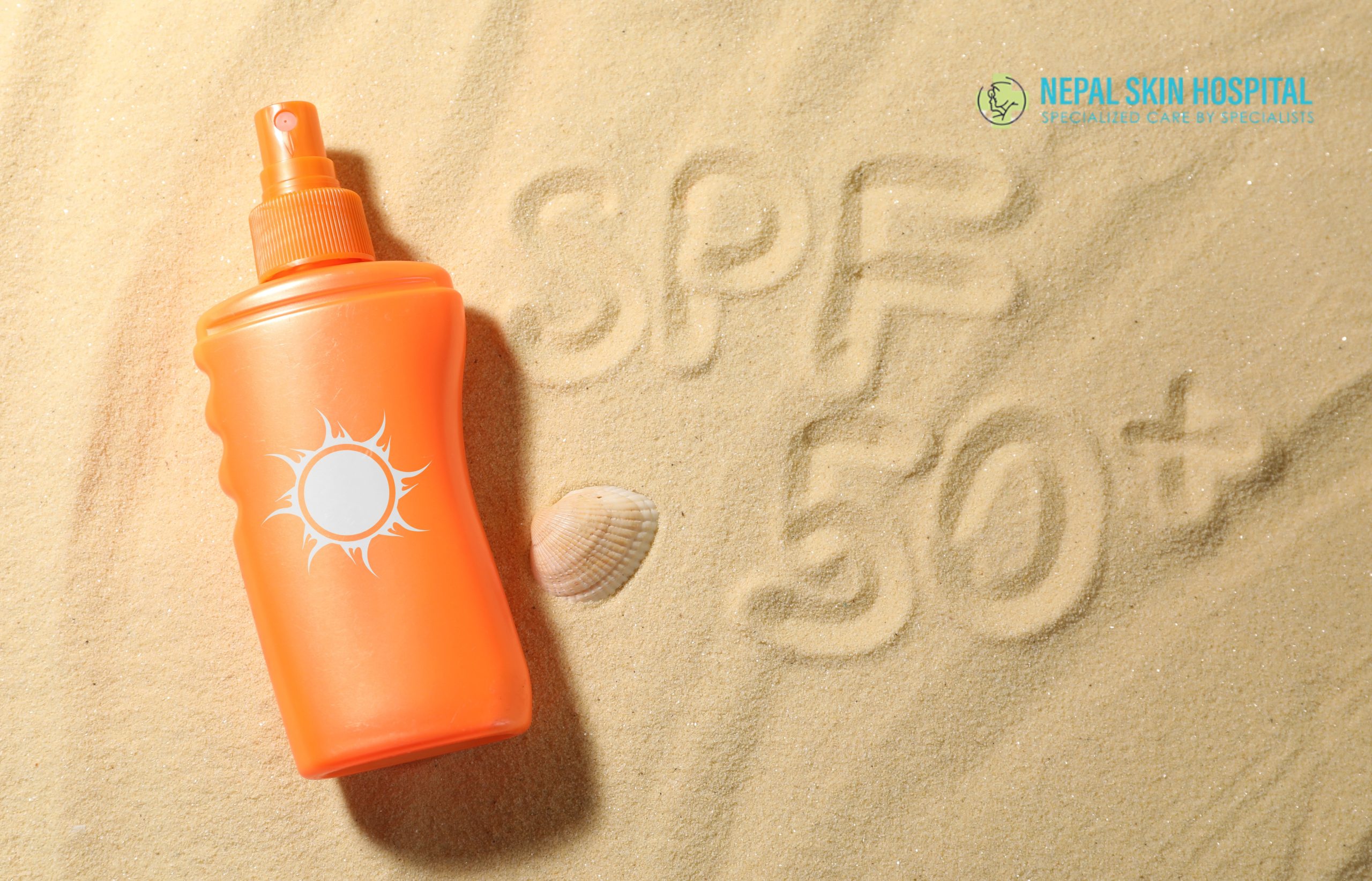
First and foremost, applying a broad-spectrum sunscreen with an SPF of at least 30 is the single most important step you can take. Broad-spectrum means it protects against both UVA and UVB rays. For Nepal’s intense UV conditions, especially in Kathmandu and higher altitude areas, dermatologists recommend an SPF of 50 or higher for outdoor activities.
Additionally, timing and technique matter. Apply sunscreen generously to all exposed skin approximately 20 to 30 minutes before going outdoors. Reapply every two hours, and more frequently if you are sweating or have been in contact with water. A common mistake is applying too little; most people use only 25 to 50% of the recommended amount, significantly reducing the sunscreen’s effectiveness.
2. Seek shade during peak UV hours
Furthermore, limiting direct sun exposure during the peak UV window, typically between 10 AM and 4 PM, is highly effective. During these hours, the UV Index in Kathmandu can reach dangerous levels, especially in spring. Therefore, if you need to be outdoors, seek shade under trees, awnings, or covered structures whenever possible.
However, keep in mind that shade is not a complete shield. UV rays can reflect off surfaces like concrete, water, and sand, meaning you can still receive significant UV exposure even while standing in the shade. As a result, protective clothing and sunscreen remain important even in shaded environments.
3. Wear protective clothing
In addition to sunscreen, clothing is one of the most reliable and consistent forms of sun protection. Long-sleeved shirts, full-length trousers, and tightly woven fabrics significantly reduce UV penetration. For the best protection, look for clothing with a UPF (Ultraviolet Protection Factor) rating. A UPF 50 garment, for example, allows only 1/50th of UV radiation to pass through to the skin.
Moreover, a wide-brimmed hat is invaluable for protecting the face, neck, and ears, which are frequently exposed and particularly vulnerable to photoaging and skin cancer. Pair this with UV-protective sunglasses to shield the delicate skin around the eyes and reduce the risk of cataracts caused by UV radiation.
4. Be aware of reflective surfaces and unexpected exposure
An often-overlooked aspect of sun damage skin protection is indirect exposure. UV rays reflect off surfaces such as water, snow, sand, and even glass. This means that activities like swimming, skiing, or driving can expose your skin to significant UV radiation even when you feel sheltered from direct sunlight.
Similarly, UV rays penetrate cloud cover, and up to 80% of UV radiation still reaches the ground on overcast days. As a result, many people incorrectly assume they are safe without sun protection on cloudy days, only to discover they have experienced significant UV exposure later. Therefore, applying sunscreen should be a daily habit regardless of the weather forecast.
5. Support your skin from the inside out
Beyond topical protection, your diet and lifestyle habits also play a significant role in your skin’s ability to resist and recover from UV damage. A diet rich in antioxidants found in colourful fruits and vegetables such as tomatoes, berries, leafy greens, and carrots helps neutralise the free radicals generated by UV exposure.
In addition, staying well-hydrated supports the skin’s barrier function, while regular, adequate sleep allows the skin to repair and regenerate overnight. Conversely, smoking accelerates photoaging and should be avoided, as it compounds the oxidative stress already caused by UV radiation.
Can Sun Damage Be Reversed?
This is one of the most common questions asked about photoaging, and the answer is: partially, yes. While it is not possible to completely undo years of UV damage, modern dermatological treatments can significantly improve the appearance of sun-damaged skin.
For instance, treatments such as chemical peeling work by removing damaged outer layers of skin to reveal smoother, more even-toned skin beneath. Similarly, laser treatments can target hyperpigmentation, reduce fine lines, and stimulate collagen production to restore a more youthful appearance.
Nevertheless, prevention will always be more effective than treatment. The earlier you start protecting your skin from sun damage, the less corrective work will be required in the future. As the saying among dermatologists goes, the best anti-ageing treatment is the one you apply before you go outside.
Special Considerations for Different Groups
Children
Children’s skin is particularly sensitive to UV radiation, and sun exposure during childhood is considered a critical risk factor for melanoma later in life. Therefore, keep infants under six months out of direct sunlight entirely. For children above six months, apply sunscreen generously and dress them in protective clothing and hats when outdoors.
People with darker skin tones
As mentioned earlier, melanin offers some natural UV protection, but it does not eliminate the risk of sun damage. People with darker skin in Nepal are more prone to melasma, dark spots, and uneven skin tone due to UVA and visible light exposure. Therefore, daily broad-spectrum sun protection is equally important regardless of skin tone.
Outdoor workers and trekkers
Farmers, construction workers, delivery drivers, trekkers, and others who spend extended periods outdoors in Nepal face the highest cumulative UV exposure. For these groups, comprehensive sun protection is not optional; it is essential. In addition to sunscreen, protective clothing and regular skin checks are strongly advised.
When Should You See a Dermatologist?

While daily sun protection can be managed at home, there are situations where professional evaluation is important. Specifically, you should consult a dermatologist if:
- You notice new, unusual, or rapidly changing spots, moles, or growths on your skin.
- You have existing dark patches, sun spots, or hyperpigmentation that is spreading or darkening.
- You experience recurrent severe sunburns despite taking protective measures.
- You are concerned about the long-term effects of your cumulative sun exposure.
- You would like to explore professional treatments for existing sun damage, such as chemical peeling or laser therapy.
In any of these situations, do not hesitate to book an appointment with one of our experienced dermatologists. Early evaluation and treatment can make a significant difference in outcomes.
Final Thoughts
Sun damage skin protection is not a seasonal concern; it is a year-round commitment, particularly in a country like Nepal, where UV radiation reaches extreme levels for much of the year. Fortunately, protecting your skin does not require complicated routines or expensive products. Instead, it requires consistency: applying broad-spectrum sunscreen daily, dressing sensibly, seeking shade during peak hours, and supporting your skin with good nutrition and hydration.
In summary, the sun is not your enemy; unprotected exposure is. By making sun protection a non-negotiable part of your daily routine, you are not only preserving your skin’s appearance but also safeguarding your long-term health. And if you are already seeing signs of sun damage, know that effective treatments are available. Our team at Nepal Skin Hospital is here to guide you every step of the way from skin assessments to advanced laser and cosmetic treatments. Your skin deserves the care it needs today, not tomorrow.