


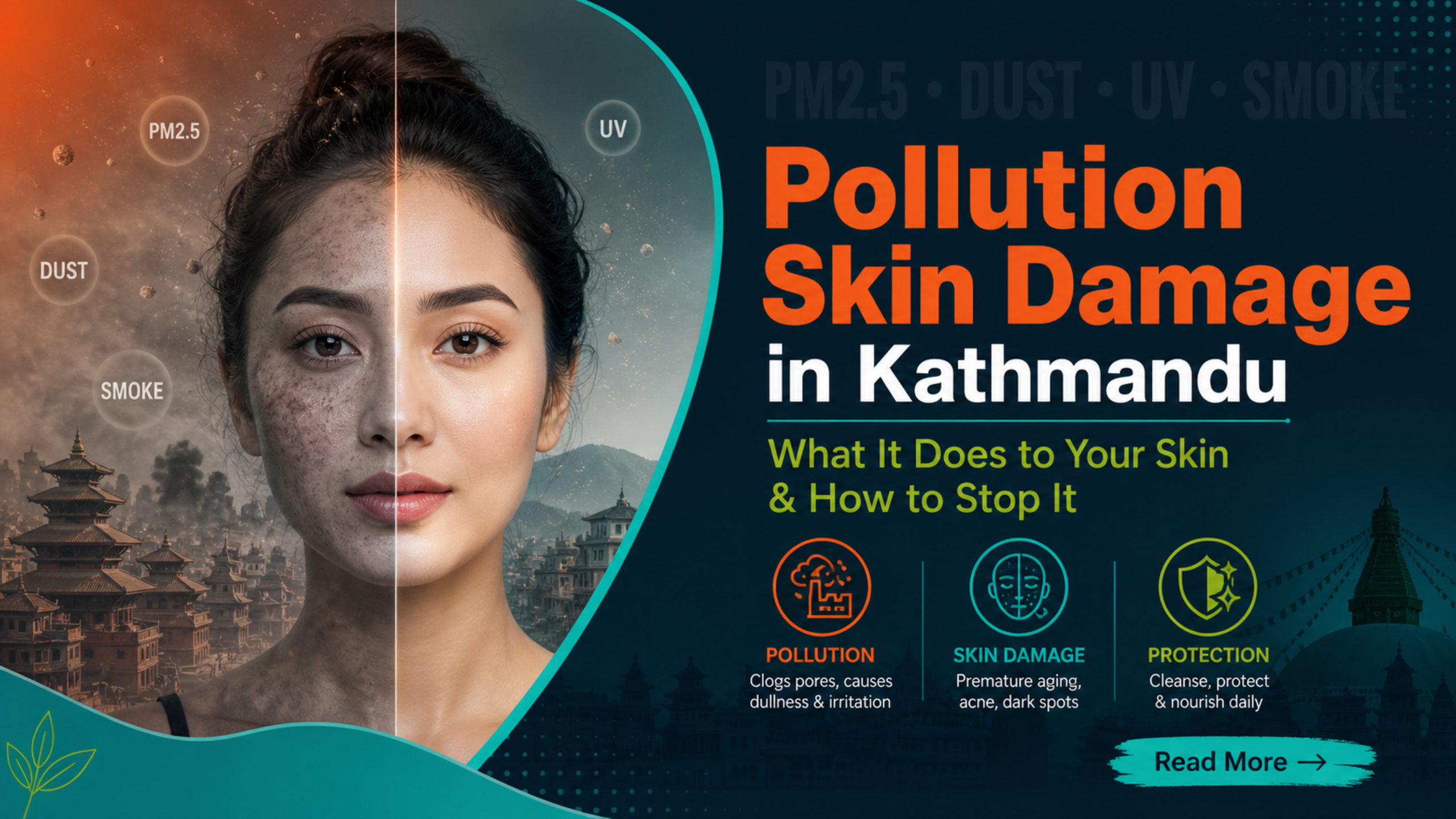
Pollution skin damage in Kathmandu is a problem most people don’t even know they have. You wash your face. You sleep well. But your skin still looks dull, feels rough, or breaks out, and you can’t figure out why. The answer might be in the air you breathe every day.
Kathmandu’s air is among the most polluted in the world. In fact, data from IQAir shows that Kathmandu’s average PM2.5 level was 45.1 µg/m³ in 2024, around 9 times higher than the WHO’s safe limit. In November 2025, Kathmandu ranked 7th among the most polluted major cities on earth.
Every day, tiny pollution particles land on your skin. They go deep. They cause damage you can’t always see right away. Over time, this leads to premature ageing, dark patches, acne, and a damaged skin barrier. The good news? You can protect your skin if you know what to do. Our skin specialists in Kathmandu help patients deal with pollution-related skin damage every single day.
What Is in Kathmandu’s Air and Why It Hurts Your Skin
Kathmandu sits deep inside a bowl-shaped valley. This traps pollution. The air cannot move freely. So dust, smoke, and fumes build up, especially in winter, when pollution levels are highest.
The main things in Kathmandu’s polluted air that damage your skin are:
- PM2.5 Tiny particles smaller than 2.5 micrometres. They are 30 times smaller than a human hair. They go straight into your pores and deep into your skin.
- PM10 Slightly larger dust particles from roads, construction, and brick kilns. They sit on the skin surface and clog pores.
- Nitrogen dioxide (NO2) comes from vehicle engines. It causes skin inflammation and breaks down collagen.
- Ozone (O3) is found close to the ground in polluted cities. It weakens the skin’s natural oil layer and causes oxidative stress.
- Polycyclic aromatic hydrocarbons (PAHs) come from vehicle exhaust and burning waste. They trigger dark spots and speed up skin ageing.
According to a 2025 review in the Annals of Dermatology, all of these pollutants damage the skin by generating free radicals, unstable molecules that attack healthy skin cells and break down the skin’s protective barrier.
How Pollution Skin Damage Actually Happens in Kathmandu
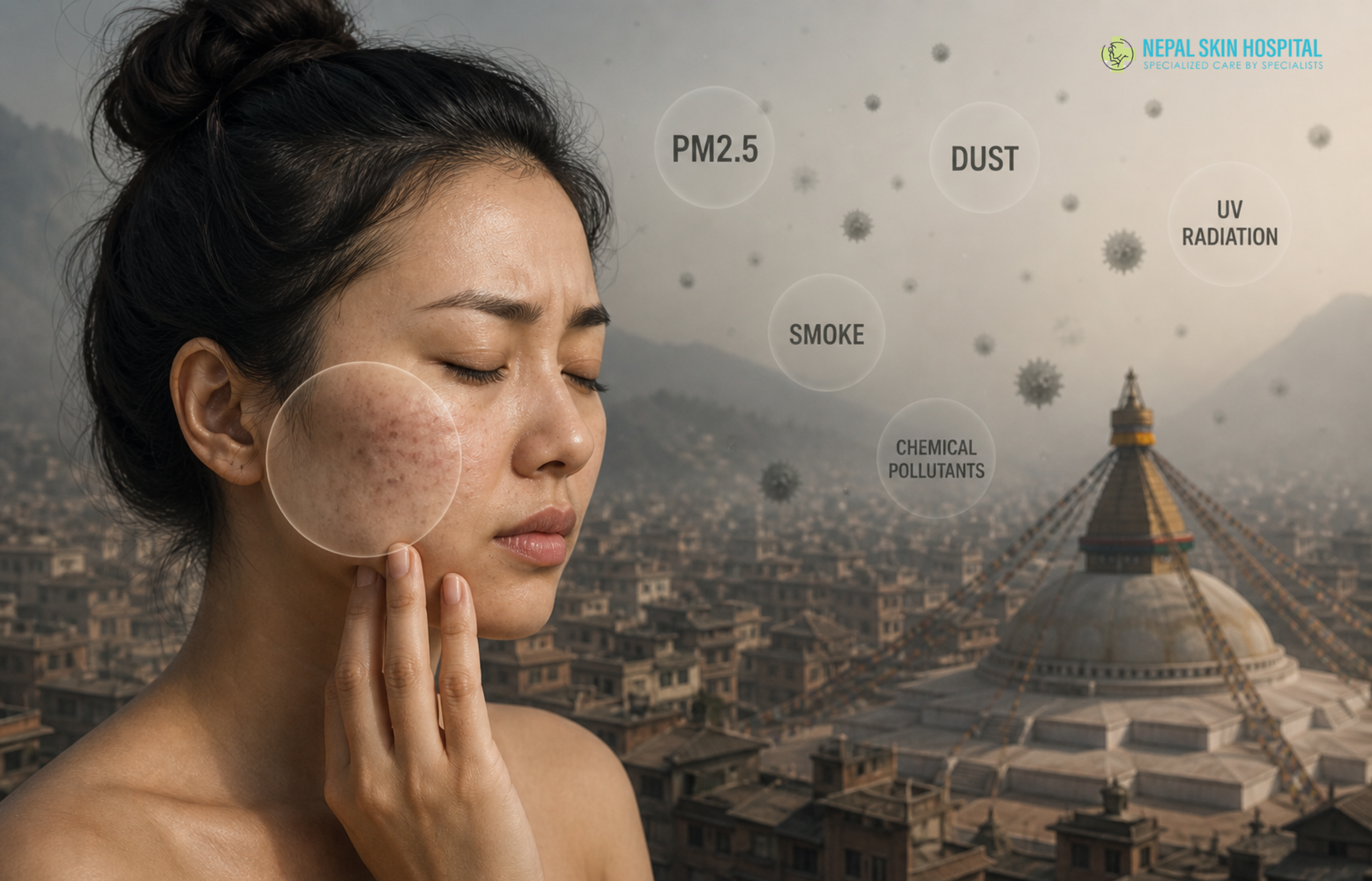
Here is what happens to your skin when you step outside in Kathmandu’s polluted air:
Step 1: Particles land on your skin.
PM2.5 and PM10 particles from traffic, dust, and brick kilns settle on your face and body throughout the day. They bring toxins with them.
Step 2: Free radicals form.
The pollutants trigger your skin to produce free radicals. Free radicals are unstable molecules. They attack your healthy skin cells like a chain reaction. This is called oxidative stress.
Step 3: Your skin barrier weakens.
Your skin has a natural barrier, like a wall, that keeps moisture in and bad things out. Pollution breaks this wall down. When the barrier is weak, your skin loses water fast and lets in more irritants.
Step 4: Inflammation starts.
Your body fights back against the damage. This causes redness, irritation, and inflammation. For people already dealing with acne or eczema, pollution makes it much worse.
Step 5: Long-term damage builds up.
Over months and years, repeated exposure causes permanent damage, wrinkles, dark spots, uneven skin tone, and a dull complexion that no cleanser can fix on its own.
5 Ways Pollution Is Damaging Your Skin Right Now
1. Premature ageing and wrinkles
This is one of the biggest effects of pollution on skin damage in Kathmandu. Pollution breaks down collagen, the protein that keeps your skin firm and smooth. It also damages elastin, which keeps skin bouncy. When these two proteins are broken down, wrinkles form faster. Skin starts to sag earlier than it should.
A large 2025 study published in JAAD Reviews confirmed that long-term exposure to particulate matter and nitrogen dioxide significantly speeds up visible skin ageing, even in people who are careful about sun protection.
2. Dark spots and hyperpigmentation
Do you notice dark patches on your face, especially around the cheeks and forehead? Kathmandu’s pollution could be making them worse.
Pollutants, especially PAHs from vehicle exhaust, activate receptors in your skin that produce too much melanin (the pigment that gives skin its colour). The result? Dark spots, uneven skin tone, and melasma. Combined with Kathmandu’s intense UV levels, pollution makes hyperpigmentation much harder to treat and much faster to develop.
If you are already struggling with dark spots, read our guide on sun damage and skin protection. UV and pollution together are a particularly damaging combination.
3. Acne and clogged pores
Many people in Kathmandu notice that their skin breaks out more during the dry season from November to May, when pollution levels are highest. This is not a coincidence.
When PM10 particles settle on your face, they mix with your skin’s natural oil and dead skin cells. This mixture clogs your pores. Blocked pores lead to blackheads, whiteheads, and inflamed pimples. Pollution also changes the balance of bacteria on your skin, making acne-causing bacteria more aggressive.
If acne is already a problem for you, pollution will make it worse. Learn how to treat acne at every age, and make sure your skincare routine takes pollution exposure into account.
4. Dry, sensitive, and irritated skin
Kathmandu’s winter air is both cold and polluted, a difficult combination for skin. Pollution strips away the natural oils on your skin’s surface. This weakens the skin barrier. When the barrier breaks down, moisture escapes quickly. The result is skin that feels tight, rough, and dry,, even if you are drinking enough water.
Ozone and NO2 are especially damaging to the skin’s lipid layer, the natural fats that make up the skin’s outer barrier. Once this layer is damaged, your skin becomes reactive and sensitive. Small things that never bothered you before, like a new cleanser or a change in weather, suddenly cause redness and irritation.
5. Dull and uneven skin tone
One of the most common complaints among people living in urban areas like Kathmandu is skin that just looks dull. No glow. No life. Even after a good night’s sleep.
This happens because pollution blocks light from reflecting off the skin evenly. It also slows down the skin’s natural cell turnover process, the way your skin sheds dead cells and replaces them with fresh ones. When this process slows down, dead, damaged cells pile up on the surface. The result is a flat, grey, tired-looking complexion.
Who Is Most at Risk of Pollution Skin Damage in Kathmandu?
Everyone in Kathmandu is affected by pollution. But some people face a much higher risk of serious skin damage:
- People who spend long hours outdoors, such as delivery workers, traffic police, teachers, street vendors, and trekkers who travel through the city.
- People with existing skin conditions, acne, eczema, psoriasis, and rosacea all get worse when the skin barrier is already compromised by pollution.
- People with lighter or sensitive skin have less melanin, which means less natural protection against pollution-triggered oxidative damage.
- Children’s skin barrier is thinner and less developed, making them more vulnerable to pollutant penetration.
- People who commute by motorbike or walk near main roads, direct exposure to vehicle exhaust is one of the most damaging sources of skin-harming pollutants in Kathmandu.
According to a 2025 study published in the Journal of Nepal Medical Association, traffic police in urban centres like Kathmandu face prolonged exposure to vehicular dust, leading directly to skin and eye ailments.
How to Protect Your Skin from Pollution Damage in Kathmandu
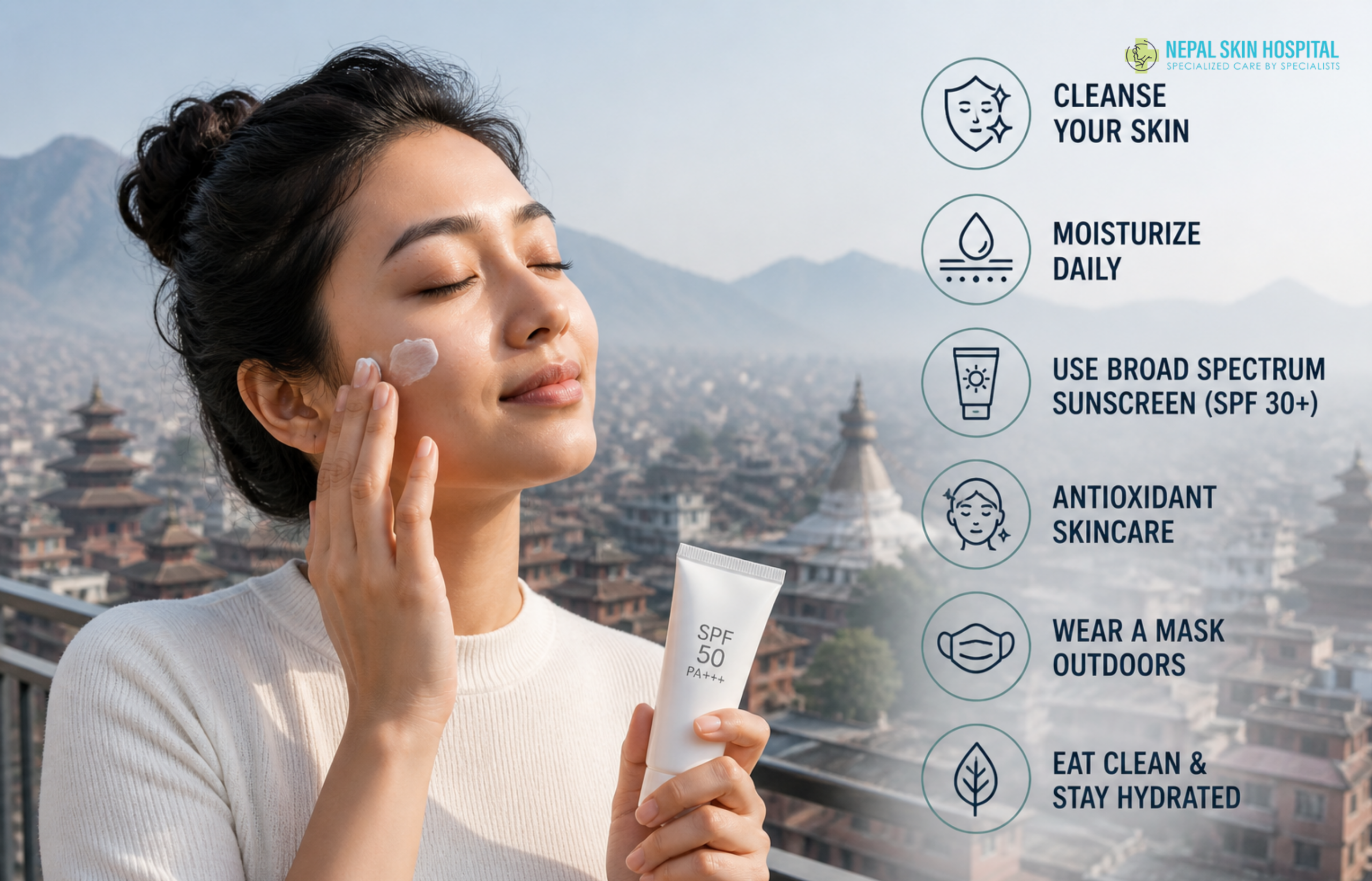
The good news is that protecting your skin from pollution skin damage in Kathmandu is very possible. You do not need expensive products or complicated routines. You need the right steps, done consistently.
Step 1: Cleanse your skin every evening properly
This is the most important step. Every night, pollution particles, dust, and toxins sit on your face. If you go to sleep without removing them, they spend 8 hours penetrating deeper into your skin and causing damage.
Use a gentle, fragrance-free cleanser every evening. Take your time. Make sure you are removing everything, including sunscreen, sweat, and pollution residue. A double cleanse, first with an oil-based cleanser to remove surface pollutants, then with a gentle foaming cleanser, works especially well for people living in highly polluted areas like Kathmandu.
Step 2: Use antioxidants every morning
Antioxidants are your skin’s defence against free radicals. They neutralise oxidative stress before it can damage your skin cells. In a polluted city like Kathmandu, antioxidants in your morning skincare routine are not optional; they are essential.
The most effective antioxidants for skin include Vitamin C, Vitamin E, niacinamide, and green tea extract. Apply an antioxidant serum every morning before you go outdoors. This creates a layer of protection against the free radicals generated by Kathmandu’s polluted air.
Step 3: Never skip sunscreen
In Kathmandu, UV radiation and pollution act together to damage skin faster than either does alone. UV rays activate the toxic effects of many pollutants, making the combination more damaging than either factor on its own.
Apply a broad-spectrum sunscreen with SPF 50 or higher every morning. This protects you from UV damage and also forms a physical barrier that reduces the amount of pollution particles that can settle on your skin. For more details, read our complete guide on sun damage and skin protection in Nepal.
Step 4: Moisturise to repair the skin barrier
Because pollution strips away your skin’s natural oils, keeping your skin barrier strong with a good moisturiser is critical. Look for moisturisers containing ceramides, glycerin, or hyaluronic acid. These ingredients help rebuild and seal the skin barrier, reducing pollution’s ability to penetrate deeper layers of your skin.
For a full breakdown of how to build the right routine for your skin type, read our guide on building a daily skincare routine for every skin type.
Step 5: Eat and drink to support your skin
Your skin also fights pollution damage from the inside. A diet rich in antioxidants, from colourful fruits and vegetables like tomatoes, berries, spinach, and carrots, helps your body neutralise free radicals more effectively. Drinking enough water (at least 8 glasses a day) keeps the skin hydrated and supports its natural repair processes.
Omega-3 fatty acids, found in fish, walnuts, and flaxseeds, also help rebuild and strengthen the skin barrier from within. Think of food as your second line of defence against pollution skin damage.
Step 6: Reduce peak-hour exposure when possible
Kathmandu’s pollution is worst during morning and evening rush hours, when traffic is heaviest. If you can, try to avoid outdoor activity during these times. Walking or commuting between 10 am and 2 pm, when traffic is lighter, reduces your skin’s exposure to vehicle exhaust significantly.
If your work or daily routine means you cannot avoid peak-hour exposure, wearing a well-fitted mask helps reduce the amount of PM2.5 and PM10 particles that settle on your face.
When Home Care Is Not Enough: Professional Treatments for Pollution Skin Damage
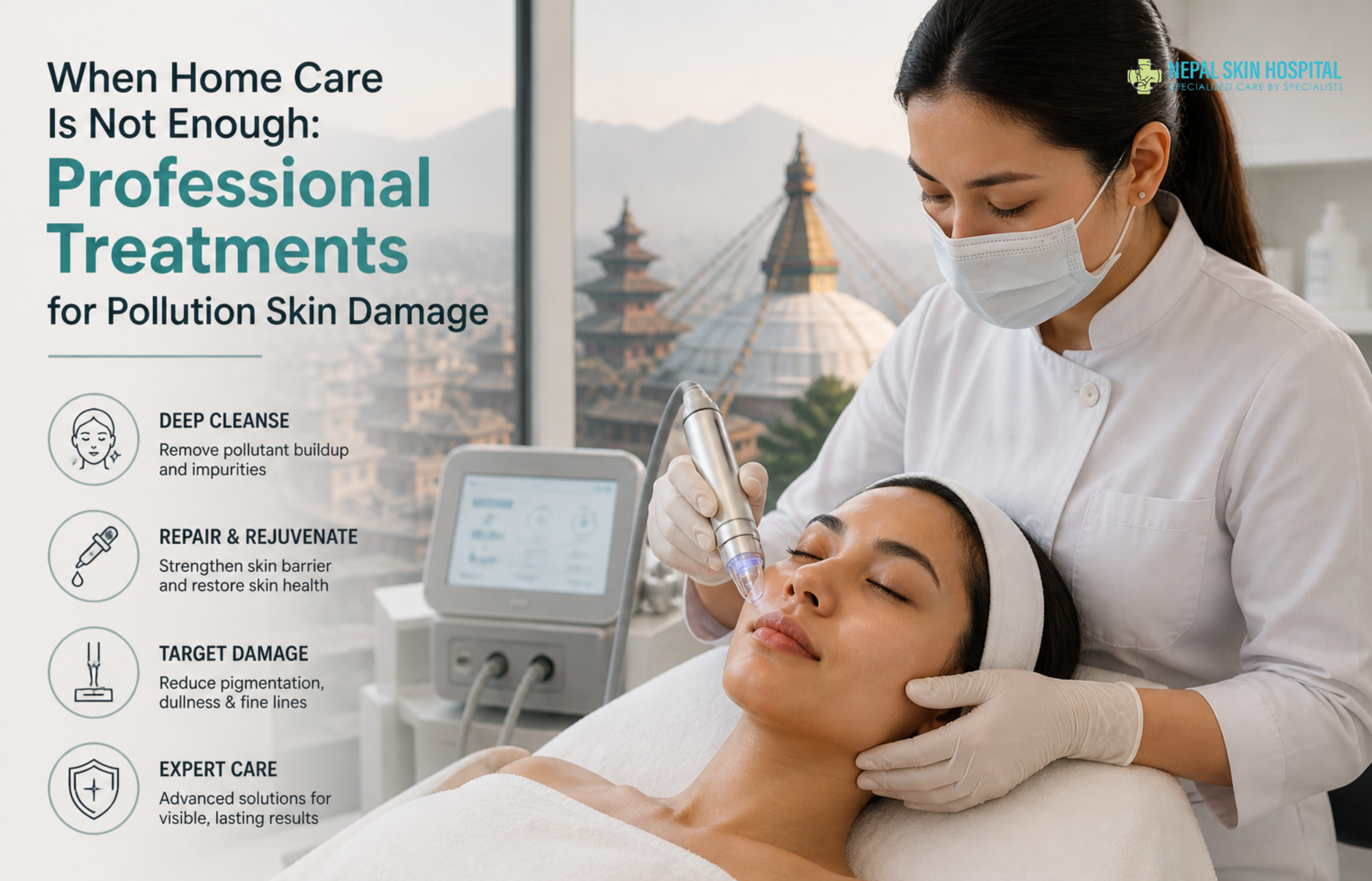
If you have been living in Kathmandu for years, some of the damage from long-term pollution exposure may already be visible, and home skincare alone may not be enough to reverse it. The good news is that professional dermatological treatments are very effective at repairing pollution-damaged skin.
Treatments that work well for pollution skin damage include:
- Chemical peeling removes the outer layers of damaged, dull skin and stimulates the growth of fresh, healthy skin underneath. Excellent for dark spots, uneven tone, and rough texture caused by long-term pollution exposure.
- Laser treatments target hyperpigmentation, broken capillaries, and accelerated ageing caused by oxidative stress from pollution particles.
- Antioxidant infusion treatments deliver high concentrations of skin-repairing antioxidants directly into the skin for maximum effect.
- Professional skin barrier repair treatments restore the skin’s lipid layer and reduce the sensitivity caused by long-term pollution damage.
Our team at Nepal Skin Hospital will assess your skin and recommend the most appropriate treatment plan for your specific concerns. To get started, book an appointment with our dermatologists today.
Frequently Asked Questions About Pollution Skin Damage in Kathmandu
Can pollution really cause acne?
Yes. PM10 particles mix with your skin’s oil and dead skin cells to clog pores. Pollution also changes the balance of bacteria on your skin. Both of these things cause or worsen acne. This is especially common in Kathmandu’s winter and pre-monsoon months, when pollution levels are at their peak.
Is pollution skin damage permanent?
Not always. Early-stage damage, like dullness, dryness, and minor dark spots, can be reversed with the right skincare routine and professional treatments. However, long-term damage such as deep wrinkles, severe hyperpigmentation, and a chronically weakened skin barrier may need medical treatment to significantly improve. The sooner you act, the better the outcome.
Does wearing a mask protect my skin from pollution?
A well-fitted mask reduces the amount of PM2.5 and PM10 particles that reach your skin, particularly your nose, mouth, and chin area. However, masks do not cover the full face, and they do not block ozone or NO2, which affect exposed skin. Therefore, a mask is a useful addition to your routine, but it does not replace proper skincare.
Which months are worst for pollution skin damage in Kathmandu?
January through May and November through December are the worst months. During these periods, Kathmandu’s bowl-shaped valley traps pollutants, and the lack of monsoon rain means particles stay in the air much longer. In January 2019, for example, Kathmandu recorded a PM2.5 level of 102.7 µg/m³, placing it in the ‘unhealthy’ category. Your skin care routine should be most intensive during these months.
Does moisturising really help with pollution damage?
Yes, significantly. A strong, well-moisturised skin barrier is much harder for pollution particles to penetrate. Moisturisers containing ceramides are particularly effective because ceramides are the natural fats that make up your skin’s barrier. Keeping this barrier healthy is one of the most powerful defences against pollution skin damage.
Final Thoughts: Your Skin Deserves Better Than Kathmandu’s Air
Pollution skin damage in Kathmandu is real, it is serious, and it affects every person who lives and works in the city, whether they can see it yet or not. The good news is that it is also very manageable.
You cannot control Kathmandu’s air. But you can control how well you protect your skin from it. If you are ready to take that next step, book a consultation with our team at Nepal Skin Hospital. We will assess your skin, identify the damage, and build a plan that works for your skin in your city.